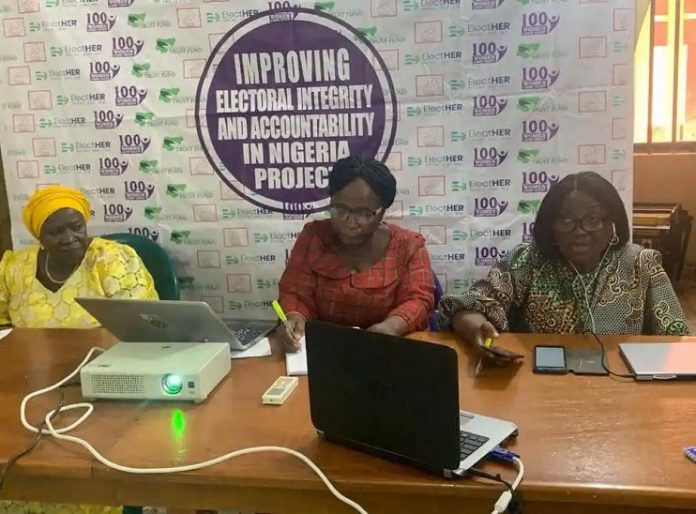
A coalition, 100 Women Lobby Group, has blamed the low number of female candidates in the 2023 general election on lack of internal democracy in political parties, saying that most parties are not gender sensitive.
The National Coordinator of the Group, Mrs Felicia Onibon, stated this at a meeting tagged, “Dissemination on the Analysis/Review of the 2022 Party Primaries and its Implication on Women Political Participation in 2023” in Abuja on Thursday.
The Centre for Democracy and Development (CDD) had released a report indicating that only 10.1 per cent of the candidates for the 2023 general election were females.

“We all know that political parties have been having alot of issues around party democratic system particularly in the area of primary election.
“A lot of things happened that actually helped in pushing down women in the governance system and structures of Nigeria.
“I would like to say that the primaries in the Nigerian political system is the foundation of women not been given adequate space in the development of the political space in Nigeria,” she said.
While reviewing the dissemination report, Prof. Mabel Evwierhoma, the Director, Center for Gender and Security Studies and Youth Advancement at the University of Abuja, said the survey involved six states.
The states included: Rivers, Ondo, Adamawa, Delta, Imo and the FCT.
Ewierhoma said that over 60 per cent of the respondents were youths and they blamed women low representation on money politics, inadequate awareness, gender based violence, lack of women’s visibility amongst others as the bane of women’s progress.
She said most of the women were not happy with what transpired at the 2022 party primaries, saying that there was need for more political sensitisation on the 2022 electoral act, especially at the grassroots.
“The lack of visibility within the political party structure is responsible for some of the negation they felt on the field of active politics.
“Monetisation of politics was another finding from the research and many women were not happy that political violence left them at the receiving end at political processes.
“A lot want violence to be curbed and the implication would mean family should support women realise their political dream,” she said.
The university don harped on the need for women to have more political sensitisation and education.
She added that a politically conscientised woman would not be easily asked to renege from the block of vote she has enjoyed within the community, state and the party when it concerns party primaries.
“Another solution would be that women should recognise that their pursuit of political equity means their engagement early enough within the political process and familiarisation with political hierarchy.
“So that no one would ask them to step aside for lack of confidence in their candidacy,” she said.
She, however, expressed optimism that women would be actively involved in governance, in spite of the low percentage of female candidates contesting in various positions in the 2023 general election.