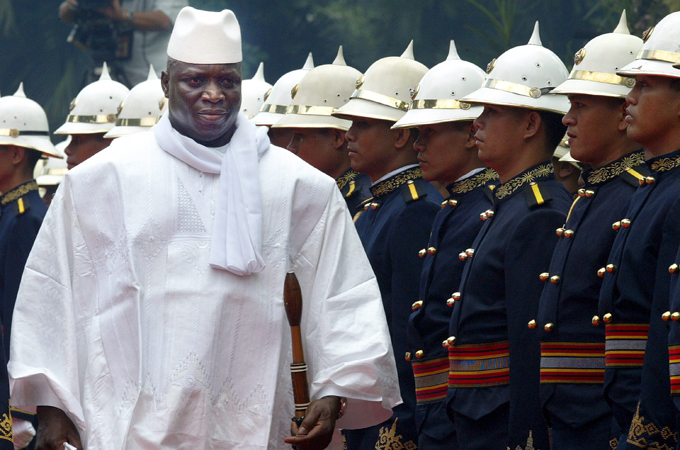
SAN FRANCISCO, January 02, (THEWILL) – President of the Gambia, Yahya jammeh, has shut down 2 radio stations, in a move to retain power as the deadline for his supposed hand over draws closer.
Jammeh has insisted that the elections which he lost was flawed and announced the closure of two private radio stations, Teranga FM Radio and Hilltop Radio, based in Banjul, for calling for his handover.
The closure came amidst an escalating political crisis caused by President Yahya Jammeh’s refusal to accept his election defeat, by real estate businessman Adama Barrow.

Jammeh, who seized power in a 1994 coup, initially conceded defeat to Barrow but then called for fresh elections, drawing condemnation from local opponents and foreign powers.
The veteran leader’s refusal to step down has opened up the possibility of a military intervention by West African forces after the ECOWAS body said it was putting military forces on alert. Jammeh called that a “declaration of war”.
Teranga FM and Hilltop Radio were closed on Sunday by a police officer and four members of the National Intelligence Agency.
Teranga’s station Managing Director, Alagie Ceesay, was arrested in July, 2015, and charged with sedition. He was hospitalized twice in early 2016 while still in detention, Amnesty International said, and later fled to neighbouring Senegal.
In contrast, President Joseph Kabila of DR Congo has signed a deal with opposition leaders that aims to end his 15-year-rule after weeks of negotiations.
The accord, which was mediated by the Catholic Church in Congo and signed late on Saturday night, allows Kabila to remain president until elections are held by the end of 2017.
The agreement comes after months of protest against Kabila’s staying in power beyond his second term. Dozens of demonstrators have been killed.
Kabila would normally have relinquished power on December 19 at midnight, but the elections due in November were postponed to April 2018, citing logistical problems.
On Dec. 19, Kabila announced a transitional government that had been agreed with part of the opposition.
It was not accepted by the main opposition parties which regard the postponement of the elections as a ploy for the president to stay in power beyond the two terms allowed by the constitution.
Story by Oputah David