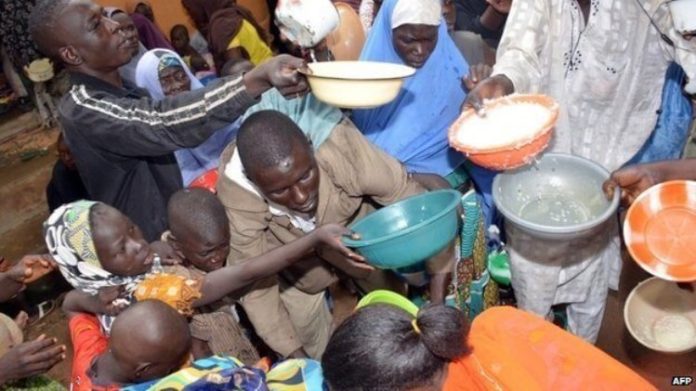
July 21, (THEWILL) — The International Committee of the Red Cross (ICRC) has warned that at least 3.7 million people across northeast are facing acute food insecurity, as years of conflict continue to cripple farming, displace families, and deepen hunger in the region.
In a statement issued by the ICRC to newsmen in Maiduguri on Monday, warning that thousands of farmers are now struggling to survive after losing access to their farmlands due to insecurity and displacement.
“Right now, we face severe food shortages. Some families walk for hours each day just to collect firewood to sell for food. Farming is the only way out of hunger”, Modu Umar, a community leader in Dikwa, said.

In areas like Gajibo, insecurity has forced farmers to trek up to three hours just to reach their farms—an exhausting journey that leaves little time or energy to cultivate.
“Even when you’re afraid, you have to go. If you miss the rainy season, your family won’t have anything to eat”, Bintu Konto, a mother of five, added.
As the lean season begins—a period when food stocks are depleted and market prices soar—families are being pushed to the brink.
Diana Japaridze, the Head of the ICRC office in Maiduguri, said, “Households are now forced to drastically limit their food intake. Many cannot afford the little food available.”
The statement added that the hunger crisis is also fuelling a rise in malnutrition, especially among children under five and pregnant or breastfeeding women.
In response, the ICRC is supporting malnutrition stabilisation centres and conducting community education to help vulnerable families care for affected children.
To tackle both immediate and long-term needs, the ICRC has scaled up its agricultural assistance program, reaching over 21,000 farming households with seeds suited to local conditions, farming tools, and training on sustainable agricultural practices.
The support includes crops like rice, maize, tomatoes, and okra, helping to improve food availability and nutritional diversity.
A recently completed water source rehabilitation project for the National Agricultural Seed Council (NASC) is also expected to boost seed production and improve resilience in the sector.
The ICRC emphasised that the humanitarian crisis in the northeast requires sustained national and international support, especially as communities continue to rebuild their lives amid insecurity.