April 7, (THEWILL)- Monday Wisdom needs regular power in his metal workshop in Sokoto, north-west Nigeria. But, unable to rely on the public grid, he depends on a diesel generator, at significant personal expense, pollution and noise.
“I spend no less than 4,000 naira (about US$5) to purchase diesel on a daily basis,” he says. “What’s more, I still have to pay the power distributor’s bill for what I didn’t consume at the end of month.”
Due to power failure in the state, many of his colleagues in the welding profession have resorted to menial jobs for survival such as bricklaying and commercial motorcyclists, he said.

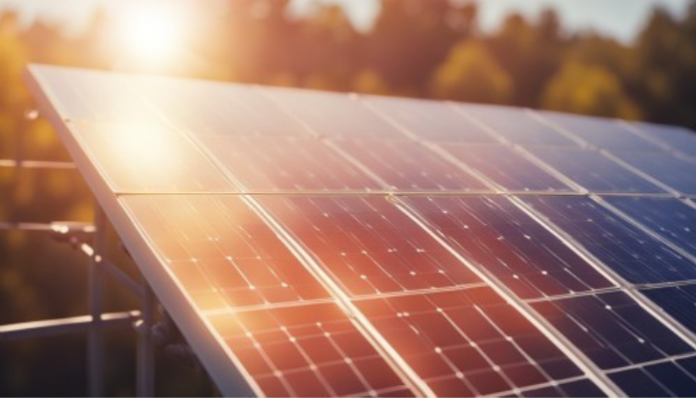
Most Nigerians living in cities also experience regular power cuts, while a majority of rural Nigerians remain without access at all. One solution is off grid solar systems like rooftop solar and rechargeable solar powered systems, and Chinese firms have been increasingly active in meeting Nigeria’s growing demand.
Grid collapses
The reliability of Nigeria’s national grid has been deteriorating. In 2011, there were 13 complete grid collapses, and 6 partial outages. By 2022, the number had risen to 22 collapses and 20 partials. In March of that year, the grid collapsed twice within 48 hours, plunging millions into darkness.
In terms of electricity access, in 2020, 55.4% of the country’s population had access, according to World Bank data. That’s far lower than the global proportion of 90.4%, though higher than the sub-Saharan African figure of 48.2%.And of course, the regular grid failures mean electricity is frequently curtailed.
In August last year, the Nigerian government launched its Plan, which maps out measures to cut greenhouse gas emissions to net zero by 2060. The plan aims to ensure electricity provision to all Nigerians by 2030, which is in line with UN Sustainable Development Goal 7.
During the launch, then vice president Yemi Osinbajo said the plan also targets, by 2060, a complete phase-out of diesel and petrol generators, which are widely used by households, businesses and industry.
Renewable energy renews hopes
A renewable expert and team lead at Prime Renewable Energy Solution Ltd, Lagos, Nigeria, Nikki Adams says the Nigerian solar off-grid market is among the fastest-growing in Africa, having increased at a 22%average annual rate in both Nigeria’s rural communities and the cities over the past five years. This, he puts down partly to the strong need for alternatives to the faulty power grids, and recent government policies favouring solar installations
In 2021, Nigeria and Power China signed a memorandum of understanding to boost renewable electricity supply to rural communities across Nigeria.
Few months later, as a result of the pact, Yunnan province’s Department of Commerce donated 200 sets of off-grid photovoltaic equipment to rural Nigeria under the ‘Green Energy Africa, One Belt, One Road lightening Up of Thousands of Households’.
Speaking to THEWILL, Magaji Shehu, 83-year-old head of Gidan Yunfa community in Sokoto, north-west Nigeria, a recipient of solar panels under the project, described their impacts as a dream to most community members, who had lost hope of living in an electrified environment.
Prior to the solar energy supply, he said, the villagers used to go to bed early, but now children play around the street lights provided for the village.“We are very happy to have this electricity project in our domain.”
Garba Ali, a 34-year-old farmer from the community, said that the community is happier with off-grid solar than a connection to the national grid, given the unreliability of electricity in cities.
Meeting demand
It is far from just donations that have found a place in Nigeria’s solar system. Business is booming too. “The presence of Chinese solar firms in Nigeria’s energy markets is making households’ hope a reality,” says Amadi Joshua, an electrical engineer with AY Global Energy, an Abuja-based renewable distribution company.
“They are providing affordable solar panels, solar street lights, energy-saving bulbs, rechargeable lamps and fans, among other clean energy products, to Nigerians, “he adds. Nuhu Isaac, a sales representative with Beebeejump Technology, a company based in Shenzhen with multiple offices in Nigeria, in an interview said: “Solar power is what matters to all Nigerians now irrespective of their economic status.” The company says it sells off-grid solar products across Nigeria’s 36 states, using flexible billing and payment solutions to reach more customers. Beebeejump Technology says it hopes to solve the power supply issues for 3 million people in areas vulnerable to blackouts.
In 2020, another Shenzhen-based company, Kang Ming Sheng Technology, says it has helped in providing alternative sources to millions of Nigerians especially those in remote hinterlands. “Our rechargeable bulbs and solar bulbs serve millions of poultry farmers as well as shop owners,” said Nnaji Collins, the company’s customer service manager for Nigeria.
Collins also explained that their power banks and solar power kits power agency banks ‘point-of-sale machines and phones.
Opportunities and challenges
Babatunde Fashola, former minister of works, power and housing, is optimistic about solar power development in Nigeria. “The prospects of clean energy leapfrogging conventional sources are certainly within reach for Nigeria, particularly in light of rising diesel costs, and partly due to the increased market penetration of renewable energy solutions,” Fashola said.
Toyin Ilo, executive director of Gennex Technologies, one of Nigeria’s leading solar companies, says that despite the great progress made over the last several years, “one of the major challenges include the proliferation of experienced and unequal solar installers who unethically advise commercial, industrial and even residential customers on solutions design, sizing, and choice of input.” Ilo said.
With grid collapses and blackouts a frequent reality for all Nigerians, off-grid solar developments offer one route to better and cleaner power connectivity for the people.
•This work was produced as a result of a grant provided by the Africa-China Reporting Project at the Wits Centre for Journalism at the University of the Witwatersrand, Johannesburg. The views of this report are of the authors.

Tunde Omolehin is an award-winning Journalist with prose in investigative and storytelling that is connecting the dots between the under-reported communities and policymakers to ensure good governance and accountability.