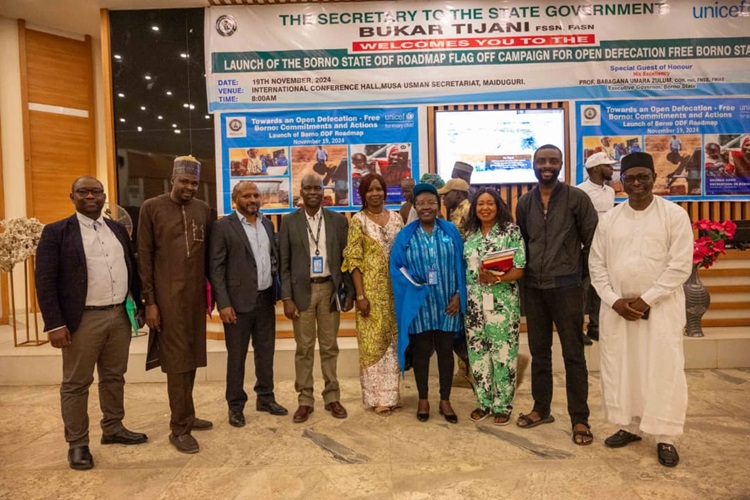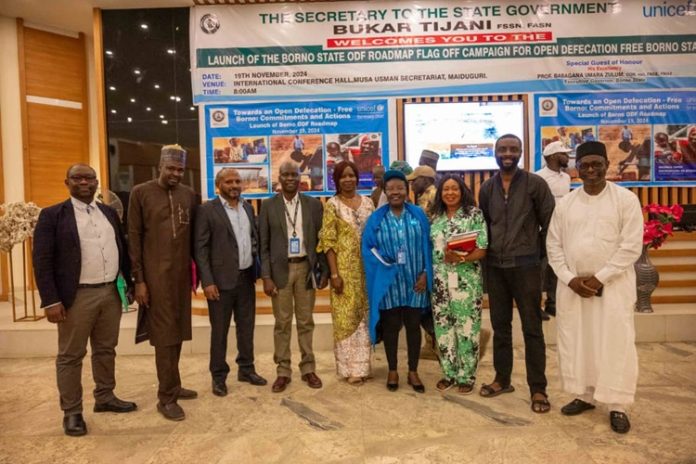
November 19, (THEWILL) – The Borno State Government, in collaboration with the United Nations Children’s Fund, has launched a statewide campaign to eradicate open defecation as part of efforts to improve hygiene and sanitation across the state.
Governor Babagana Zulum, represented by his deputy, Umar Kadafur, unveiled the initiative during a ceremony in Maiduguri on Tuesday, urging residents to support the drive toward achieving an Open Defecation-Free Borno.
Zulum reiterated his administration’s dedication to tackling challenges across critical sectors such as education, health, and infrastructure, emphasizing the importance of access to clean water and sanitation under the framework of Sustainable Development Goal 6.

“For six years, we have been resolute in our commitment to improving lives despite fiscal constraints. Poor hygiene, open defecation, and lack of access to safe water compromise the dignity and health of our people, contributing to child mortality, undernutrition, and educational barriers for girls,” Zulum said.
He outlined a comprehensive action plan to address sanitation challenges, including, expanding access to safe and clean water within 30 meters of every household through durable, community-managed systems.
The governor also directed the Ministry of Information to work closely with the Office of the First Lady and media outlets to promote sanitation practices and mobilize communities.
“A clean Borno State means a prosperous people. Together, we can leave a legacy of dignity and health for future generations,” he added.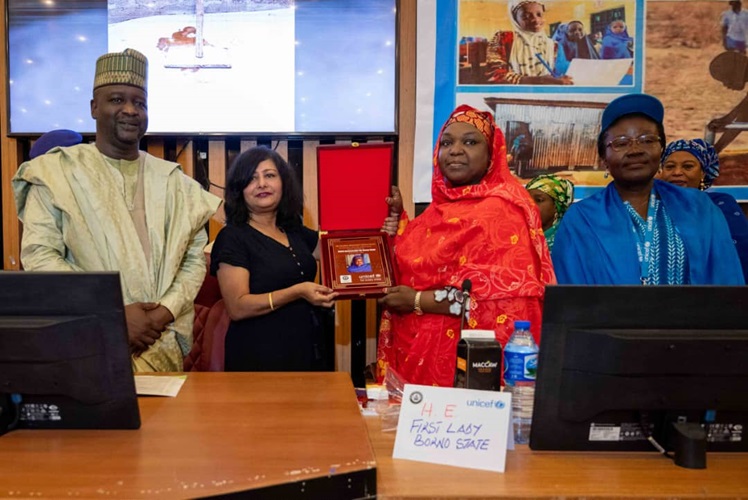
UNICEF Representative in Nigeria, Cristian Munduate, reaffirmed the organisation’s commitment to supporting the Borno government in eradicating open defecation and improving access to WASH facilities.
Represented by the Chief of UNICEF’s Borno Field Office, Phuong Nguyen, he emphasised the dire consequences of poor hygiene practices on health, education, and economic productivity, particularly among children.
“It’s not enough to have toilets or water; people must understand their significance. Open defecation and poor hygiene lead to severe health consequences, including diarrhea and malnutrition, which stunts children’s growth and affects their ability to learn,” Munduate said.
She noted that inadequate sanitation disproportionately impacts girls, who often miss school during their menstrual periods due to a lack of facilities.
“Adults are also affected, with illnesses such as diarrhea leading to absenteeism from work and reduced productivity,” she added.
Munduate lauded Borno State’s leadership in the fight against open defecation and expressed optimism that the campaign would yield significant results.
“We believe that by this time next year, most areas of Borno, if not the entire state, will be free from open defecation,” she said.