SAN FRANCISCO, March 21, (THEWILL) – The Monetary Policy Committee (MPC) of the Central Bank of Nigeria (CBN) has retained the Monetary Policy Rate at 14 per cent.
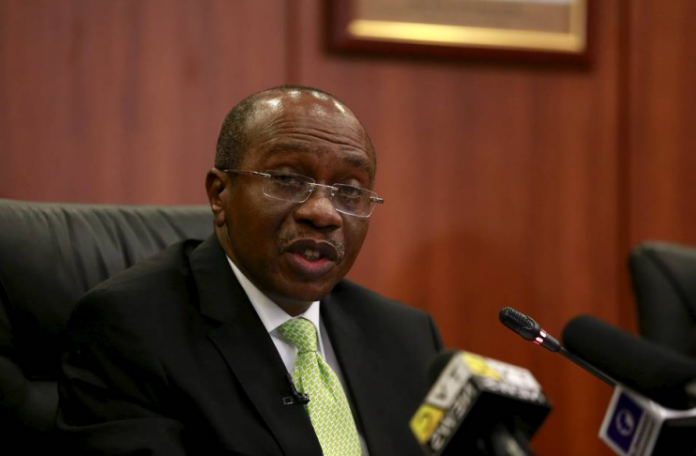
Addressing reporters on Tuesday, at the end of the two-day MPC meeting held at the apex bank’s headquarters in Abuja, CBN Governor, Godwin Emefiele, explained that out of the ten members that attended the meeting, nine voted to retain the rate while one voted for an increase.
He also said the committee retained other monetary policy parameters such as the Cash Reserves Ratio at 22.5 per cent, Liquidity Ratio at 30 per cent and the Asymmetric Corridor at +200 and -500 basis points around the MPR.

Emefiele said members of the MPC, before arriving at the decision, considered the headwinds in the domestic economy and the global environment and evaluated the challenges confronting the domestic economy and the opportunities for achieving price stability and conducive to growth in 2017.
He revealed that the CBN’s intervention in the Foreign Exchange (FX) is to bring about a convergence of all the rates insisting that it has the muscle to sustain its battle to stop the Naira from falling out of control.
“The direction is that there is determination to see the convergence of those rates and with what we have seen so far we are very optimistic that those rates will converge and all the elements in the foreign exchange market will no doubt be implemented,” he said.
“In terms of sustainability, reserves at this time are still trending upwards, almost close to $31 billion as I speak with you, and the fact that we have done this consistently for four to five weeks should convince everybody who doubts the strength of CBN to sustain this policy.
“It is a programme that is on course. We are happy that it is looking good beyond our expectations and those who still remain on the side-lines, doubting the CBN’s ability to sustain this policy, they are on the wrong side of the bet.”
Emefiele revealed that the CBN made a presentation on the Nigerian economy and FX to the National Economic Council (NEC) which thereafter advised that “we look into all the issues discussed.”
“Before then, we had started to see the rising trend in the FX, particularly in the parallel market and we had taken a decision that there was a need to reverse the trend that is the reason we specifically started the FX intervention and I am happy it is indeed very gratifying that those interventions have proved positive, we’ve seen rates converging; we are strongly optimistic that the rates will converge.
“The Committee noted the persisting inflationary pressures; continuing output contraction; high unemployment rate; elevated demand pressure in the foreign exchange market; low credit to the real sector and weakening financial system indicators, amongst others.”
“The Committee expressed satisfaction on the release of the Economic Recovery and Growth Plan, and urged its speedy implementation with clear timelines and deliverables and, on the strength of these developments, the Committee felt inclined to maintain a hold on all policy parameters.”
“The Committee noted the arguments for tightening policy, which remained strong and persuasive. These include: the real policy rate, which remains negative, upper reference band for inflation remains substantially breached and elevated demand pressure in the foreign exchange market. The reality of sustained pressures on prices (consumer prices and the naira exchange rate) cannot be ignored, given the Bank’s primary mandate of price stability.
“The MPC noted that the moderation in inflation in February was due to base effect as other parameters, particularly month-on-month CPI, continued to rise. However, tightening at this time would portray the Bank as being insensitive to growth. Also, the deposit money banks may easily reprice their assets which would undermine financial stability.
“Besides, the Committee noted the need to create binding restrictions on growth in narrow money and structural liquidity and the imperative of macroeconomic stability to achieving price stability conducive to growth.
“The Committee also considered the arguments for loosening the stance of monetary policy, noting its desirability in stimulating aggregate demand if credit increased with lower rates of interest.
“Members of the committee considered the arguments that loose monetary policy was capable of delivering cheaper credit, making it more attractive for Nigerians to acquire assets, thus increasing wealth and stimulating aggregate spending and confidence by economic agents, which would eventually lead to lower non-performing loans in the system.
“However, the counterfactual arguments against loosening was anchored on the upward trending month-on-month inflation and its impact on the exchange rate. Loosening would thus worsen the already negative real interest rate, widen the interest rate spread and reverse the positive outlook for the current account position.
“The Committee noted that the banking sector was becoming less resilient as a result of the adverse macroeconomic environment. Nevertheless, the MPC reiterated its resolve to continue to pursue financial system stability.
“To this end, the Committee enjoined the Management of the Bank to work with DMBs to promptly address rising NPLs, declining asset quality, credit concentration and high foreign exchange exposures.”