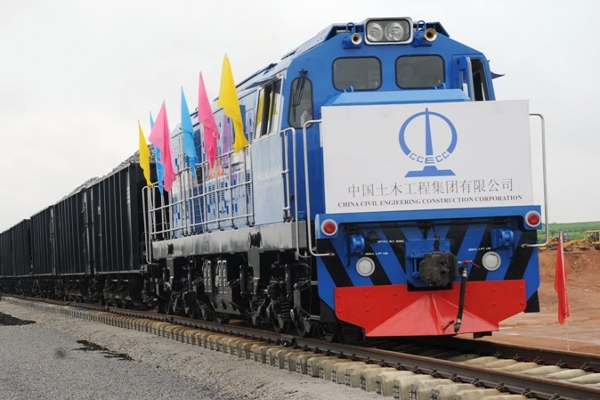
SAN FRANCISCO, February 16, (THEWILL) – A construction firm handling the Abuja Rail project, Chinese Civil Engineering And Construction Company, CCECC, on Monday told the Senate committee on the Federal Capital Territory, FCT, that former President Olusegun Obasanjo awarded the contract in 2007 without an engineering design or the drafting of a Memorandum of Understanding, MOU.
The company’s project manager, Etim Abak, who briefed members of the committee while on oversight visit, said the contract was awarded based on conceptual design and estimates were not properly done, adding that its signing was predicated on “uncalculated estimate by the then minister of FCT and present Kaduna State Governor, Mallam Nasir el-Rufai.”
This revelation is coming on the heels of the Senate committee’s discovery that, while the 60.67 kilometres rails contract was inflated by $10m per kilometres, the length was later reduced to 45 kilometres without a refund of the cost for the 15.67 kilometres which was dropped.

The Senate Committee chaired by Senator Dino Melaye consequently demanded that the sum of $195,878,296.74, being the amount for the 15.67 kilometres cut out from the Chinese firm be refunded.
Noting that the project was shrouded in fraud, Melaye said: “The Federal Government has so far invested $31.5bn and another $7.6bn from the SURE-P fund and if you put these together, we have altogether $39.1bn invested in the rail project, leaving the balance of $113. 233,155.32.
“I did research and looked at rail construction of the same specifics, of the same technology across the globe and one cannot but complain that this railway project in Nigeria is on a very high side.”
The Committee Chairman further questioned the rationale behind the government’s loan of $500m from Exim Bank of China for the project calling it misplaced.
His words, “From my comparison with other rail projects across the world, the federal government’s investment in this project is enough to execute the project without taking a loan as high as $500m from China. From our research and it’s very simple, the world is now a global village.
“As you are sitting here now, on your phone you can google details, even in India and Egypt. Fortunately, one of those projects in Zambia was also done by this same company, CCECC. We have six countries and the average cost per kilometre, none is above $4m per kilometre. Why is the Nigerian project costing approximately $14m per kilometre?” Melaye queried.