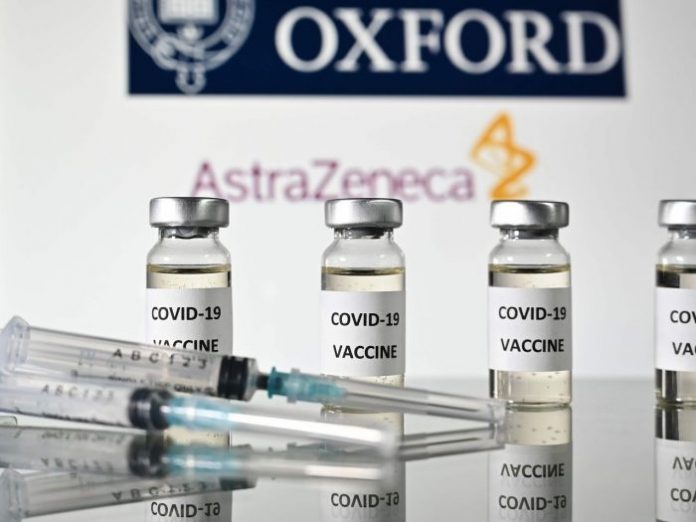
BEVERLY HILLS, January 31, (THEWILL) – An Oxford professor who was part of the team that developed the Covid-19 vaccine with AstraZeneca, has disputed comments by French President, Emmanuel Macron appearing to question the efficacy of the jab in over-65s.
Asked on BBC Radio about Macron’s comments that the vaccine is “quasi-ineffective” in people over 65, professor John Bell said Saturday, “I’m not sure where he got that from.”
Acknowledging that the number of elderly people participating in the original study was “small” at around 12%, Bell added that “in vaccinology the way you deal with that problem is you identify the level of immunity that a vaccine generates.”

“The elderly people responded just as well as people in other age groups and there’s really persuasive evidence that this is a protective vaccine in those populations”, Bell said.
On Friday, Macron told reporters, “what I can tell you officially is that the first results are not encouraging for those over 60-65 years old”, adding that “very little information” is available on the Oxford-AstraZeneca vaccine.
“I suspect this is a bit of demand management from Mr. Macron”, Bell said.
Pushed on the point by the host, Bell added that “if he didn’t have any vaccine, the best thing you could do is reduce demand.”
Macron’s comments have been widely criticized in the UK press as the bitter row between the EU, drugmakers and the UK over vaccine supply continues to dominate headlines.
The EU’s medicines regulator approved the Oxford-AstraZeneca vaccine for all age groups on Friday.
Earlier in the week, Germany’s vaccine commission said it would not recommend its use in the over-65s due to insufficient data on its effectiveness in that population.
Meanwhile, Macron on Saturday, defended his decision to hold off on a third lockdown.
Macron told the public he had faith in their ability to rein in COVID-19 with less severe curbs even as a third wave spreads and the vaccine rollout falters.
From Sunday, France will close its borders to all but essential travel to and from countries outside the European Union, while arrivals from within the bloc will have to show a negative test.
Large shopping malls will be shut and police patrols increased to enforce a 6.00 p.m. curfew.
But Macron has stopped short of ordering a new daytime lockdown, saying he wants to see first if other measures will be enough to slow the spread of the coronavirus.
With 10 per cent of cases now attributable to the more contagious variant first found in Britain, senior medics have recommended a new lockdown, and one opinion poll showed more than three-quarters of French people think one is now inevitable.
The poll also showed falling public confidence in the government’s handling of the crisis.
“I have trust in us; these hours that we are living through are crucial.
“Let’s do all we can to slow the epidemic together,”, Macron tweeted.
He has also been under fire for rolling out vaccines at a slower pace than other big EU countries, and far slower than Britain or the United States.
France’s latest figures showed it had given just 1.45 million vaccine doses so far. Britain, by comparison, has recorded 8.4 million.
France reported 24,393 new COVID-19 infections on Saturday while the number of COVID-19 patients in hospital stayed above 27,000 for a fifth straight day.
The rate of new infections is still lower than it was when the last lockdown was ordered in October. But hospitalisation rates are already comparable.
Paris resident, Sami Terki, said it was “a good thing for now – even mentally – to not have to go through a new lockdown’’.
But he added “my only concern is that we then take the decision to lock down too late’’.
The public health authority said the number of COVID-19 patients in intensive care dipped slightly to 3,113.
In a sign of the pressure on hospitals, two critically-ill COVID sufferers were airlifted from Marseille to the western Brittany region on Friday.
Prof. Dominique Rossi, who heads the Marseille Hospitals’ Medical Commission, said the local health authority had asked hospitals in the Bouche-du-Rhone area to cancel 40 per cent of all non-urgent medical interventions.
Managing the flow of COVID and non-COVID patients was “a real ethical headache. The (COVID-19) projections are really worrying and the lack of personnel, who are already exhausted, adds another element of concern”, Rossi told Reuters.