
May 24, (THEWILL) — In countries such as Nigeria, Ghana, and Uganda, with South Africa ranking 135 out of 237 countries for having expensive mobile data prices according to BestBroadbandDeals.co.uk, high data prices and unreliable electricity make sustained participation in digital work difficult.
Freelancers and remote workers often rely on costly mobile data and alternative power sources to remain active on global platforms.
According to the Alliance for Affordable Internet, mobile data in many African countries still costs more than 2 percent of average monthly income, exceeding the affordability benchmark set by the United Nations.

For digital workers, this means that earning online often requires absorbing additional infrastructure costs such as data, electricity and equipment that workers in more stable environments do not face.
Even when African workers successfully enter global digital markets, they often encounter unequal valuation of their labour. Research on online labour markets by the Oxford Internet Institute shows that workers from lower-income countries are frequently paid less for similar digital tasks compared to workers from higher-income regions.
Currency volatility compounds this inequality. Two freelancers performing identical work may receive the same nominal pay but experience vastly different outcomes depending on exchange rates, inflation, and the cost of infrastructure required to perform their jobs. For some workers, digital income may comfortably cover living expenses. For others, high data costs, unstable electricity, and currency depreciation significantly reduce the real value of their earnings.
Perhaps the most challenging barrier is the absence of strong policy frameworks designed to protect digital workers. Millions of freelancers across Africa operate without formal contracts, labour protections, health benefits, or job security. Classified as independent contractors, they remain vulnerable to sudden platform changes, unpaid work, and unstable income.
Yet the stakes are enormous. The International Finance Corporation estimates that Africa’s digital economy could be worth $180 billion by 2025, with the potential to reach $712 billion by 2050. This raises an important question: What does participation in the digital economy truly mean if workers lack bargaining power?
Case Study: South Africa’s gig workers and the fight for labour recognition.
In Southern Africa, the rise of platform-based work has also sparked debates about labour rights. Ride-hailing drivers working for companies such as Uber and Bolt in South Africa have increasingly challenged their classification as independent contractors rather than employees.
Driver groups have brought cases before the Commission for Conciliation, Mediation and Arbitration (CCMA), arguing that platform companies exert significant control over their work through pricing structures, performance ratings, and algorithm-based management.
The disputes highlight a broader question facing the digital economy across Africa: whether platform-based workers should be treated as independent contractors or recognised as employees entitled to labour protections.
Case Study: Kenya’s content moderators and the hidden labour behind global platforms.
Kenya has emerged as one of Africa’s most prominent hubs for outsourced digital labour, particularly in the field of content moderation. In 2023 and 2024, content moderators working for outsourcing firm Sama, which provided moderation services for Meta, filed lawsuits in Kenya alleging poor working conditions, psychological harm, and inadequate pay. Workers reported being exposed to graphic and disturbing material, including violence and abuse, while receiving limited mental health support.
Legal action supported by organisations such as Foxglove and the Kenya Human Rights Commission argued that the moderators were performing critical labour that helped keep global platforms safe yet remained largely invisible within the global technology ecosystem.
Case Study: Nigerian freelancers and payment barriers.
Nigeria has one of Africa’s largest digital labour pools, with thousands of young professionals working remotely for international clients in fields such as design, writing, software development, and digital marketing.
However, many Nigerian freelancers face persistent barriers when receiving international payments, including delays. According to an analysis of the 2026 Global Payment Delay Index by Jobbers, Nigerian freelancers wait an average of 51 days to receive payment—one of the slowest payment timelines globally and across Africa.
Other barriers such as currency volatility, foreign exchange restrictions, and intermediary fees often reduce the real value of earnings.
For Africa to secure a strong position within this system, participation alone will not be enough. The continent must invest strategically in digital infrastructure, local platforms, and regional payment systems that reduce dependence on foreign intermediaries. Stronger labour protections must also emerge to safeguard the growing number of workers who depend on digital work for their livelihoods.
Most importantly, Africa must begin shifting from exporting digital labour to building digital ownership. Because the future of Africa’s digital economy will not be defined simply by how many people are connected to the internet, it will be defined by how many Africans own the platforms, shape the systems, and capture the value created within them.
Only then can the continent move from being a global workforce in the digital economy to becoming a true global stakeholder in it.
The findings and conclusions contained within are those of the author and do not necessarily reflect the positions or policies of Africa No Filter.
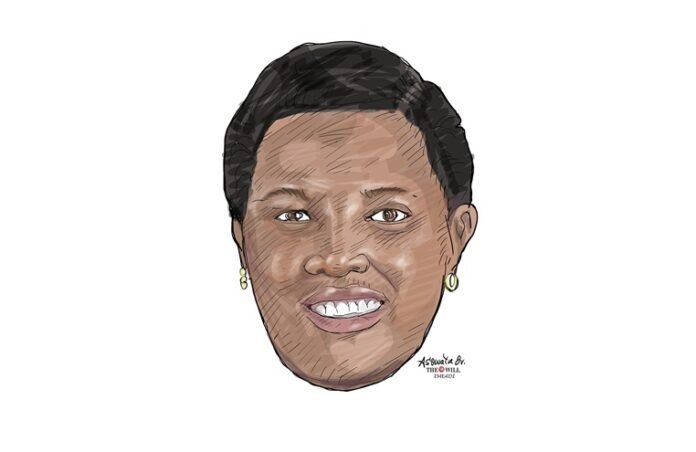
The author, Vanessa Emeadi is a media and communications specialist.

