
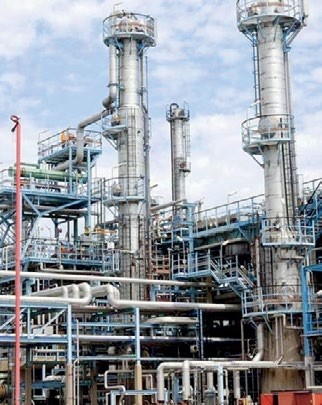
President Bola Tinubu on August 2, 2023 gave his commitment to the leaders of Organised Labour that the Port Harcourt Refinery will start production by December. He said this would be after the completion of an ongoing rehabilitation contract on the facility between the Nigeria National Petroleum Company Limited (NNPCL) and Maire Tecnimont SpA, an Italian firm.
This was the fallout of a meeting between the President and the Labour leaders at the State House after the nationwide protests by the unionists earlier in the day. The protest was over removal of petrol subsidy by the Tinubu-led government without fixing the refineries which has been the stand of the organised labour.
“President Tinubu gave his commitment to the labour leaders that the Port Harcourt refineries will start production by December 2023 after the completion of the ongoing rehabilitation contract between NNPCL and Italian firm, Maire Tecnimont SpA,” said Dele Alake, outgoing Presidential spokesman in a statement.

The leadership of the Nigeria Labour Congress (NLC) led by its President, Comrade Joe Ajaero, and that of Trade Union Congress (TUC), Comrade Festus Usifo, agreed to give directives to workers to end further protests, having “extracted a commitment” from the government on the refineries, a key demand by the Organised Labour.
The December 2023 completion date for the Port Harcourt Refinery repairs must have come as a surprise to most Nigerians. There has been an endless narrative on refinery repairs since the All Progressives Congress (APC)-led government was first inaugurated in 2015 with former President Muhammadu Buhari doubling as Petroleum Minister for eight consecutive years.
President Tinubu was obviously compelled to announce the December 2023 completion date to avert a nationwide strike which the Organised Labour had insisted on embarking. He had never mentioned the situation of the refineries since his inauguration on May 29, 2023.
In his reaction to President Tinubu’s nationwide address on Tuesday August 1, Chairman, Independent Petroleum Marketers Association of Nigeria (IPMAN), Rivers state, Joseph Obele, argued that the president had not shown much interest in revamping the nation’s refineries into their production state. According to him, the president was seeking to apply wrong solutions in addressing the myriad of economic challenges facing the country.
Obele who spoke in Port Harcourt recalled that Tinubu had in the broadcast mentioned billions of naira budgeted for different palliatives, loans for students, and free buses, and how the government had saved over N1 trillion from subsidy removal within a month.
Obele therefore questioned why the president and his team cannot make meaningful investments in restoring the status of all the refineries in the country to address the issues of subsidy. He noted that the speech of the president lacked a good insight into how Nigeria can come out of the persistent economic mess, adding that the proposed palliatives would be faulty.
He said: “Why won’t they just invest all the billions in fixing our refineries within a few days. The truth is that, until we fix the Nigeria refineries, the price of fuel will be expensive since we are buying from the international market and the prices of other commodities will reflect as such.
“I’m beginning to think that Mr President has an interest in the foreign refineries that Nigeria is buying fuel from. In his 13 minute speech, nothing was said about fixing Nigeria’s refineries, then I asked myself, who are the advisers of Mr President?
“I will say on good authority that all the proposed palliatives will be in futility. Administrative experts will tell you that, if you really want to solve any problem, you must attend to the root cause of the problem. Until then, the problem will continue.
“The address of Mr President doesn’t contain the solutions to Nigeria’s current economic conditions as the problems, pains and hardship will definitely continue until Nigeria’s refineries are functional.”
With the commitment to fix only the Port Harcourt Refinery after several failed promises to get the facility working, it becomes necessary to ask what happened to the billions of Naira already expended in fixing the four refineries since 2015?
Nigeria’s four refineries in three locations – Port Harcourt (2), Warri and Kaduna – with a combined refining capacity of 650,000 barrels per day, are idle – the state they have been for about 15 years. Meanwhile, businesses and citizens are languishing in pains of hardship arising from high cost of fuel and deteriorating standard of living.
The Nigerian National Petroleum Company Limited (NNPCL) last year announced that the country will end fuel importation by mid-2023. This has not been achieved.
Former Minister of State for Petroleum, Timipre Sylva, had assured that the rehabilitation of the 60,000 barrel per day (bpd) Port Harcourt refinery was being completed – to resume operations in the first quarter of 2023.
While giving an update on the Port Harcourt Refinery during the Ministry of Petroleum Resources scorecard presentation in Abuja on January 9, 2022, Sylva shifted grounds: He claimed that the promise (originally) made was not to complete the rehabilitation of the refinery by May 2022 but that the fuel plant will be rehabilitated by the end of Q4 2022.
It is on record, however, that in September 2022, Sylva who spoke to Journalists after a Federal Executive Council (FEC) meeting, assured Nigerians that the country’s biggest refinery would become functional by December 2022. The minister later admitted that the timeline was no longer feasible, hence the adjustment in the programme.
“The promise was to start the fuel plant, which is the 60,000 bpd component of this activity by the last quarter of 2022, but it is not practical. So, we will start it off in the first quarter of 2023, otherwise every other process is going on,” NNPC Group Managing Director, Mele Kyari, who accompanied Sylva during the briefing, stated.
But ground-shifting has been the pattern of behaviour of the Petroleum Ministry and the NNPC Limited as several project timelines have not been achieved and, in some cases, ended in a confusion.
On August 3, 2022, Sylva, told Journalists that FEC had approved $1.48 billion for the rehabilitation of both Kaduna and Warri refineries. He added that 15 percent of the contract sum had been disbursed to the contractors: Saipem SPA, and Saipem Contracting Ltd to be executed in 3 phases across 77 months (over six years).
On October 27, 2022 (barely two months after), then Special Adviser on Media & Publicity to President Buhari, Femi Adesina, in a statement, said President Muhammadu Buhari during his visit to Seoul, South Korea, expressed delight as he witnessed the signing of the MoU between NNPC and Daewoo Group on the rehabilitation of Kaduna and Warri refineries and constructing NLNG Train-7 project. The same Kaduna and Warri refineries.
The Senate on July 5, 2023, rejected a motion seeking to investigate the moribund condition of the nation’s refineries despite spending several trillions of naira on their maintenance.
This came barely two months after former President Muhammadu Buhari left office on May 29, 2023 when he doubled as Minister of Petroleum Resources for eight years. The motion was moved by Karimi Steve (APC, Kogi West) at the plenary.
In the motion, Steve prayed the Senate to constitute an ad-hoc committee to investigate all contracts awarded for the rehabilitation of all four federal government-owned refineries between 2010 and 2023.
He also prayed that the committee should visit all the government refineries to ascertain their conditions, prevent any attempt to waste resources, stop any form of corruption and also interrogate authorities in the Ministry of Petroleum Resources and officers of Nigerian National Petroleum Company Limited (NNPCL) for their role in the failure of the refineries to produce oil.
Mr Steve added that the Nigerian government had spent N11.35 trillion on the renovation of refineries from 2010 till date.
He also said the federal government had spent over N6 trillion between 2010 and 2020 on fuel subsidy due to Nigeria’s low refining capacity, and almost twice the amount also spent on rehabilitating refineries in Port Harcourt, Kaduna and Warri between the same period under review.
The Kogi senator noted that despite the moribund condition, the operating cost of the federal government refineries between 2010 and 2020 is estimated at N4.8 trillion.
Mr Steve said he was disturbed that the Port Harcourt Refinery is still not functioning despite the Nigerian government carrying out rehabilitation projects in the facility for seven years between 2013 – 2019 at an estimated cost of over N12 billion.
He also said over N28 billion had been spent on revamping the Warri Refinery and Petrochemical Company Limited from 2014 to 2019.
He added that over N2 billion have also been spent on the rehabilitation of the Kaduna Refinery and Petrochemical Company in the past 10 years, but it remains unproductive.
Now that President Tinubu’s attention is on Port Harcourt Refinery, what is the status of the Warri and Kaduna refineries and who accounts for the huge amount expended on them?

