
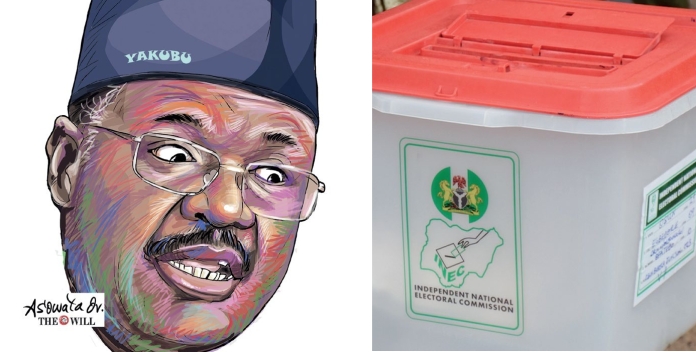
The European Election Observation Mission (EU/EOM) to Nigeria on Tuesday, June 27 published its final report on the February/ March 2023 General Election.
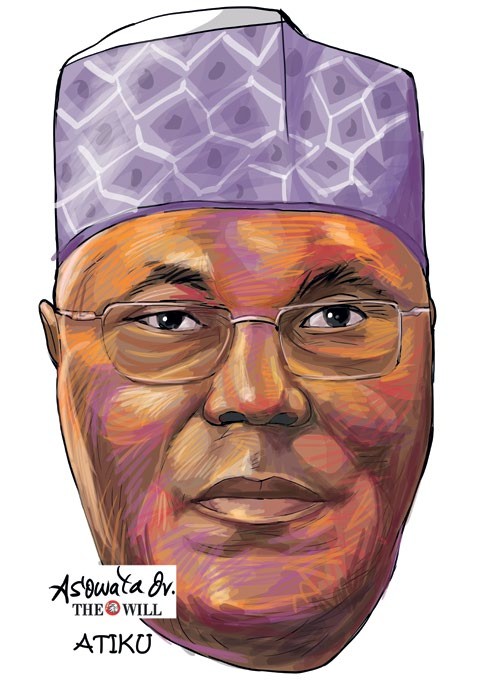
The report has attracted reactions not only from the Independent National Electoral Commission (INEC) whose credibility was thoroughly dented with the way and manner it conducted the elections but also many concerned Nigerians, including the winner of the Presidential election, Asiwaju Bola Tinubu and the candidate of the Peoples Democratic Party (PDP), Alhaji Atiku Abubakar, who came second in the election.
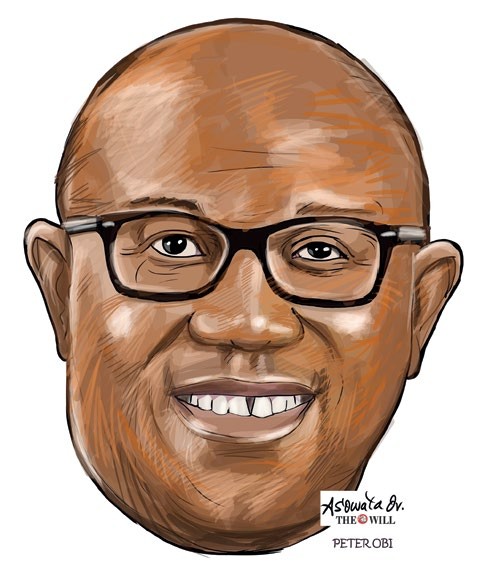
Atiku and the presidential candidate of the Labour Party (LP), M. Peter Obi, are already in court to challenge Tinubu’s victory in the election. Both candidates found the EU/EOM report useful in the pursuit of their cases and it was said to have been accepted by the Election Petition Tribunal, as evident in the case.

Following a three-month-long observation across Nigeria and in accordance with its usual practice, the EU/ EOM presented its findings and recommendations, disclosing that shortcomings in law and electoral administration had hindered the conduct of a well-run and inclusive election, as well as damaged public trust in INEC.
While presenting the report, the EU/EOM through its Chief Observer, Barry Andrews, also a member of the European Parliament, stated: “In the lead up to the 2023 general election Nigerian citizens demonstrated a clear commitment to the democratic process. That said, the election exposed enduring systemic weaknesses and therefore signaled a need for further legal and operational reforms to enhance transparency, inclusiveness, and accountability.”
As part of its plan to contribute to the successful future elections in the country, the EU/ EOM offered 23 recommendations for consideration by the Nigerian authorities.
Andrews said the Mission was particularly concerned about the need for reform in six areas which were identified as priority recommendations.
He said the EU EOM believed that if implemented, these key areas could contribute to improvements in the conduct of elections. According to him, the six priority recommendations will remove ambiguities in the law; establish a publicly accountable selection process for INEC members; ensure real-time publication of and access to election results; provide greater protection for media practitioners; address discrimination against women in political life, and remove impunity regarding electoral offenses.
“Importantly, there is a need for political will to achieve improved democratic practices in Nigeria. Inclusive dialogue between all stakeholders on electoral reform remains crucial. The European Union stands ready to support Nigerian stakeholders in the implementation of these recommendations,” Andrews added.
The EU/ EOM said that at the invitation of INEC it carried out its work between January11 and April11, 2023 and it was joined by a delegation from the European parliament to observe the Presidential and National Assembly elections.
The mission said it accredited a total of 110 observers from 25 EU member states, as well as Norway, Switzerland and Canada.
INEC’s Reaction
In its reaction, INEC, through its National Commissioner and Chairman, Information and Voter Education Committee, Barrister Festus Okoye, said that international observers had reported significant improvements on the 2023 elections.
He said: “From the report presented, the EU made mention of the fact that there have been significant improvements in our electoral process and there have been so many positives to this particular election.
“One of the positives is that we registered over 93 million Nigerians during this election. Not only that, if you look at the reports submitted by international observers, in terms of voter accreditation, the BVAS performed optimally.”
Okoye, however, admitted that there were challenges, promising that recommendations from international observers would be worked on and implemented.
He said: “But there were also a few challenges and looking at those challenges, one must look at the context and the environment of the election.
Okoye said there was a glitch that stopped the uploading of the presidential election result on IREV Portal.
During an interview on Channels Television, he also asked why opposition political parties were relying on results posted on IREV instead of their agents.
Okoye said that it is wrong to suggest that the electoral body wasted taxpayers’ money during the election as the Bimodal Voter Accreditation System (BVAS) was successfully used for voter accreditation and result upload for the polls.
He said: “It is not fair to judge the entire performance of the commission on the basis of a glitch in the result uploaded for the presidential election.
“Almost all the political parties nominated and got accredited at least over 170,000 polling agents. What that means is that they had primary evidence of the results from the polling units.
“It is those results from the polling units, together with the BVAS as a machine itself that goes to the collation centre. So, it is not true for a political party to rely only on result upload in order to get the evidence with which it wants to prosecute its case in court.”
He however failed to explain what caused the glitch, saying that he did not know much about technology and could not delve into the subject.
Reacting to the report, the Presidency noted that the process and factors that resulted in the EU/ EOM’s report on the election were faulty.
It added that the parameters used by the body exposed its inadequacies and its ability to conduct credible monitoring.
In a release issued by the Special Adviser to the President on Special Duties, Communication and Strategy, Mr. Dele Alake, the Presidency also noted that the said report was predetermined, recalling that the EU group had manifested signs of bias earlier in the run up to the elections, adding, however, that the report was merely collated to justify its already manifested bias against the system.
It, however, rejected the EU EOM’s report for its inability to adequately reflect the largest and true picture of the elections, especially the presidential election, citing the inadequate coverage by the body, which was only able to deploy 40 election observers to the 36 states and the Federal Capital Territory (FCT), and based its judgement on incidences from less than 1,000 polling units out of 176,000 locations.
Reactions from Tinubu, Atiku others
The Presidency in its reaction rejected the European Union’s final report, which highlighted fault lines in the February 25 presidential elections.
“We strongly reject, in its entirety, any notion and idea from any organisation, group and individual remotely suggesting that the 2023 presidential election was fraudulent,” a statement signed by the President’s Special Adviser on Special Duties, Communication and Strategy, Dele Alake read.
In the statement titled ‘We reject European Union’s conclusions on 2023 general elections the presidency alleged bias and an intention to “impeach the integrity of the 2023 elections” which it described as the “best organised general elections in Nigeria since 1999.
The Presidency faulted the data-gathering technique employed in the report, saying, “With the level of personnel deployed, which was barely an average of one person per state, we wonder how EU-EOM independently monitored elections in over 176,000 polling units across Nigeria,” Alake queried.
It insisted that the 2023 general election, “most especially the presidential election, won by President Bola Tinubu/All Progressives Congress, was credible, peaceful, free, fair and the best organised in Nigeria since 1999.”
“There is no substantial evidence provided by the European Union or any foreign and local organisation that is viable enough to impeach the integrity of the 2023 election outcomes.”
Describing the findings as “unfounded,” the Presidency said, “We can now categorically let Nigerians and the entire world know that we were not unaware of the machinations of the EU.”
“We are convinced that what EU-EOM called the final report on our recent elections is a product of a poorly done desk job that relied heavily on a few instances of skirmishes in less than 1000 polling units out of over 176,000 where Nigerians voted on Election Day,” it concluded.
In his own reaction, former Labour and Employment Minister, Festus Keyamo, said the European EUEOM report on the 2023 polls was a “reflection of a one-sided narrative.”
Keyamo described the report as very disappointing and unfortunate on the part of the observers as their first assignment was to observe and report, not to investigate claims made by candidates against one another.
The Youth Initiative for Advocacy, Growth, and Advancement (YIAGA) Africa said the report by the European Union (EU) Election Observation Mission of the 2023 general election in Nigeria was a welcome development.
YIAGA also noted that the issues highlighted in the EU’s report were not new to the international community, adding that Nigeria has some lessons to learn from the just concluded general election in Sierra Leone.
The Executive Director of YIAGA Africa, Mr. Samson Itodo, also noted that the EU’s observations were not intended to judge the credibility of the election process.
Itodo, however, quickly added that Nigeria has an existing bilateral relationship with the international communities thus, does not and cannot exist in isolation in its dealings.
Commenting on the reports coinciding with the ongoing post-election judicial process, Itodo explained that the reports were in no way whatsoever intended to influence the cases in court.
He further said; “There is nothing wrong with the timing of the European Union’s post-mortem report on Nigeria’s 2023 elections. I don’t think that the intention is to influence the current cases being handled by the court.
“It is not in any way an attempt to interfere with that process. It is just part of the practice in the election observation ecosystem
“The EU has a comprehensive framework for measuring and assessing elections based on certain values and principles of the country in our electoral law and constitution,” Itodo said.
The PDP Presidential Campaign has described the EU report on the last election as credible.
The Special Assistant on Public Communications to the PDP Presidential Candidate, Atiku Abubakar, Mr. Phrank Shaibu said this in a statement
He took a swipe at the Spokesperson for President Bola Tinubu for trying to discredit the EU’s report.
Shaibu noted that “even the dead” knew that the last election lacked credibility and even the INEC had been unable to explain why nearly five months after the election, it had refused to upload the full result on its result viewing portal.
He said, “Even primary school children who did not vote know that INEC failed woefully and that Tinubu rigged the last election.
“The Presidential election held on February 25, 2023 and yet as of July 2, 2023, the result of the Presidential election has not been fully uploaded. This is despite the fact that this election was the most expensive in the history of West Africa.
“How can an election in which the full results have not been fully uploaded after nearly five months be described as credible by any sane human being?”
He described as nonsensical Alake’s claim that the EU was a meddlesome interloper for discrediting the poll.
Shaibu said it was hypocritical of the Nigerian government to receive millions of dollars from the EU as election funds and then turn around to claim that the EU has no right to make comments on the election.
The EU not only provided training for INEC staff but also donated equipment only for INEC to conduct a shambolic poll. So why would Alake claim that the EU has no right to speak when it was the largest single donor to INEC? Mr. Alake should rather be quiet rather than try to defend the indefensible.”
AYO ESAN, has been actively reporting and analyzing political events for different newspapers for over 18 years. He has also successfully covered national and state elections in Nigeria since the inception of this democracy in 1999.
