
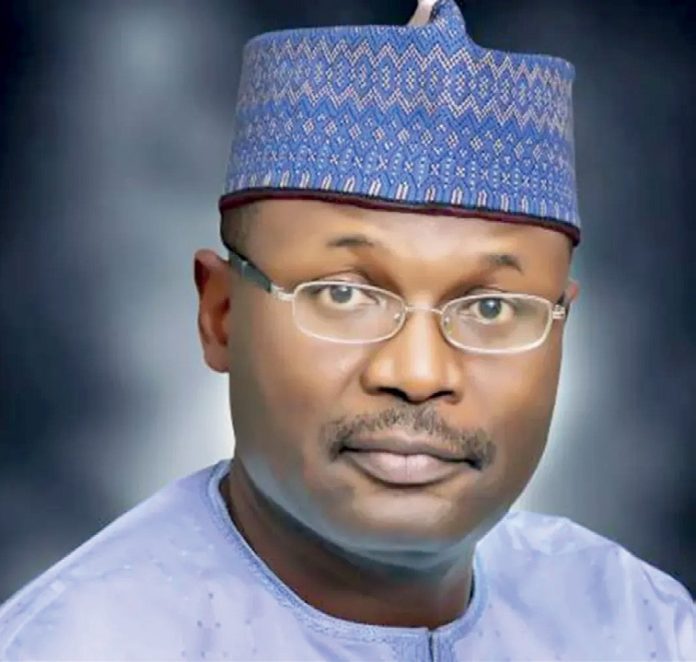
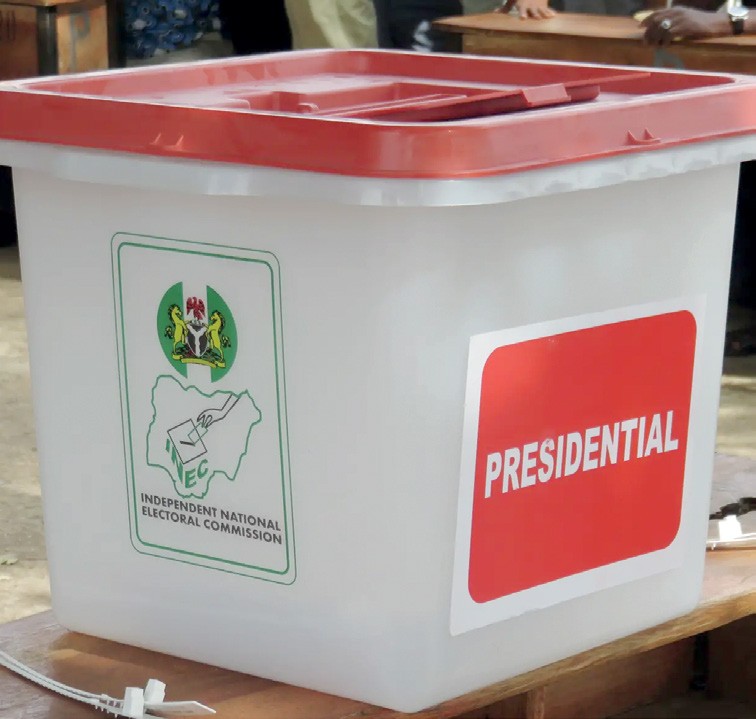
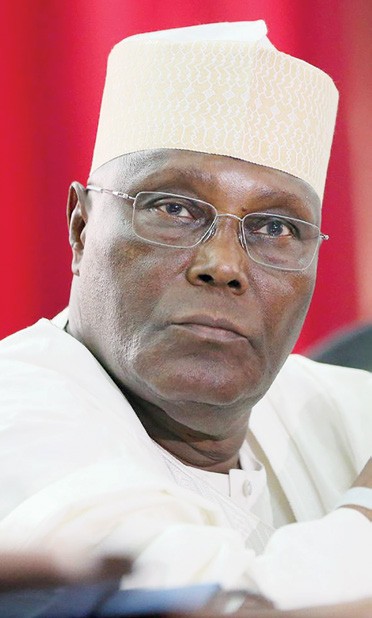
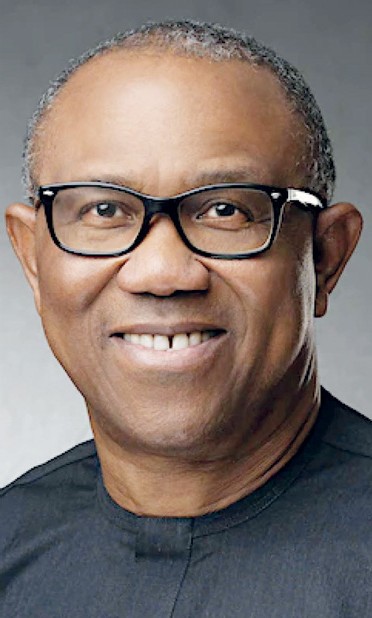
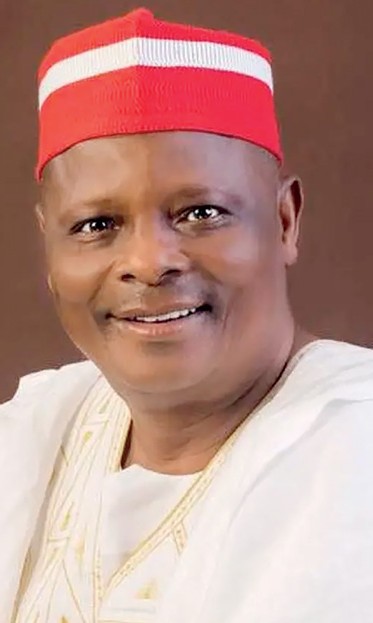
With less than 13 days to the February 25, 2023 Presidential Election, political parties are rounding up their campaigns across the nooks and crannies of the country. Out of the 18 political parties registered by the Independent National Electoral Commission, (INEC) for the election, four candidates stand out . They are Bola Tinubu of the All Progressives Congress, (APC); Rabiu Kwankwaso of the New Nigeria People’s Party, (NNPP); Peter Obi of the Labour Party, (LP) and Atiku Abubakar of the Peoples Democratic Party, (PDP).
Although there are ongoing permutations among loyalists of these candidates as to who will emerge winner of the election, there are certain factors that may shape the final outcome.
Prominent among such factors is religion. Religion has been playing a greater role in the outcome of elections in Nigeria. Nigeria being a secular state, it is no surprise that religion will have influence on the politics of the country as adherents of different religions will want one of their members to be at the helm of affairs.

From the beginning of this nascent democracy, efforts have been made to strike a balance between the two highest offices in the country – President and Vice President – and to ensure that both positions are equitably shared among adherents of the country’s two main religions, Islam and Christianity.
Since the North is predominantly Muslim and the South is largely dominated by Christians, the task of choosing the presidential and vice presidential candidates of any of the parties has always been undertaken in such a manner as to ensure that both candidates do not belong to the same religion. Thus in a situation where a presidential candidate turns to be a Christian, the vice presidential candidate is expected to be chosen from a Muslim community or vice versa.
In 1999, Chief Olusegun Obasanjo who emerged as the President was a Christian and his Vice President for eight years, Atiku Abubakar, was a Muslim. When Goodluck Jonathan was President, being a Christian, he had Namadi Sambo, a Muslim as Vice President. The incumbent President Muhammadu Buhari not only has a Christian as his deputy but also an ordained pastor of the Redeemed Christian Church of God, (RCCG), Professor Yemi Osinbajo.
As it is, the presidential candidate of the L P, Peter Obi is a Christian from the South and his running mate is Yusuf Baba Ahmed, a Muslim from the North. Similarly while the NNPP’s Rabiu Kwankwaso, a northerner, has picked a Southern Christian, Bishop Isaac Idahosa, as his running mate, Atiku Abubakar of the PDP has picked Ifeanyi Okowa, a Christian and Governor of Delta State as his deputy.
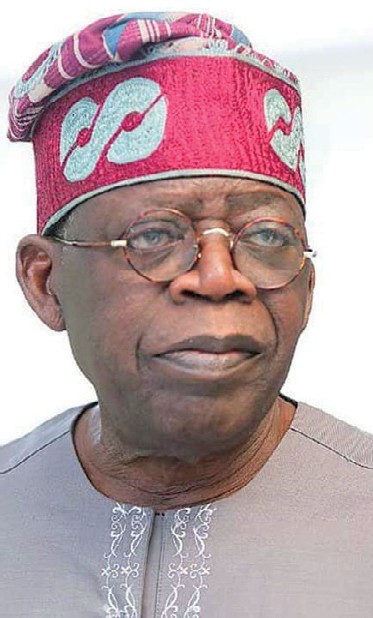
Only Tinubu of the APC has jettisoned the religious balance. He chose a former governor of Borno State, Kashim Shettima, a fellow Muslim, as the vice presidential candidate of the party. What this means is that the ruling APC is having what we call a Muslim – Muslim ticket.
The APC Muslim – Muslim ticket has attracted much criticism, especially from Christians in the North and the Christian Association of Nigeria (CAN). In fact, the party’s decision to settle for the ticket had left many shocked and disappointed such that some of its leaders of the APC were forced to defect to rival parties. They include a former Secretary to the Government of the Federation, Babachir Lawal and former Speaker of the House of Representatives, Rt. Hon. Yakubu Dogara. Dogara has since joined the PDP, while Babachir Lawal joined the Labour Party.
One of those who dumped the APC as a result of the religious factor is Prince Tonye Princewill, a former governorship candidate of the party in Rivers State and close ally of the immediate past Minister of Transportation, Rotimi Amaechi. In his resignation letter, which was addressed to the Chairman of APC, Ward 3 (Royal Ward) in Buguma City of Asari Toru Council, Princewill said he could not defend the decision of his party to field a Muslim-Muslim ticket against a public outcry by well-meaning Nigerians.
“I can’t argue for equity in my state and defend inequity in my country,” Tonye said, adding that in such a situation he could not continue to remain in a party that was “totally insensitive”.
Princewill’s resignation came a day after another chieftain of the party, Daniel Bwala, joined the league of members who announced their resignation after the party’s presidential candidate, Tinubu, announced a Muslim running mate.
Bwala, in a post on his Twitter account, said that he had decided to dump the ruling party based on principles and convictions that he held dear. “What Nigeria needs is for us to work towards uniting the country,” he noted.
Also, the lawmaker representing Adamawa North Senatorial District, Ishaku Abbo, who described Tinubu’s decision to pick a Muslim as his running mate as irresponsible, resigned his membership of a Tinubu support group.
Abbo said: “For Tinubu now to be given the ticket and turn around to do what he couldn’t achieve in 2015, despite opposition from Christian leaders, is extremely irresponsible. Buhari fought a civil war and understands the consequences of a divided nation.
When Tinubu wanted to be VP in 2015, Buhari said no because he understood the importance of unity.”
The last time that a party fielded a Muslim – Muslim ticket in Nigeria was in 1993 when the Social Democratic Party, (SDP) fielded late Chief Moshood Abiola and Alhaji Babagana Kingibe as presidential and vice presidential candidates, respectively. The duo, both of them were Muslims, later won the June 12, 1993 presidential election that was annulled by the military.
The question on the lips of political analysts and watchers of political developments is whether Tinubu / Shetttima can achieve the same result, come February 25 or whether the Muslim-Muslim ticket will be an albatross that will cost the APC the presidential election.
Another factor that will shape the presidential election is power rotation between the North and the South.
Since the beginning of the current democracy in 1999, there has been an unwritten convention that power must rotate between the North and South after two terms of four years each. This was conceptualised to ensure that the two major political zones of the country, the North and the South are allowed to rule the country. So, the arrangement has been that if a President from the North completes a tenure of eight years, the South takes over for another eight years.
The four leading candidates in the presidential election come from the three dominant ethnic groups in the country. The groups are the Yoruba and Igbo from the southern part of Nigeria, and the Hausa/Fulani from the northern part of the country. Tinubu is a Yoruba from the South-West, Peter Obi of the Labour Party is an Igbo from the South-East and Atiku Abubakar is a Fulani from the North-East.
The presidential candidate of the New Nigeria People’s Party, Rabiu Musa Kwankwaso is also from the North-West.
Many ethnic nationality leaders are sympathetic to Obi and willing to support his ambition. According to them, only the Igbo out of the three regions in the South has not produced a President since 1999. Many individuals and groups from the South-East have also argued that because the region is yet to produce a president, it should get its turn in 2023.
Similarly many northerners are saying that the North-East, where Atiku Abubakar comes from, has not produced the president, so it should be their turn. They are of the view that since the death of the First Nigerian Prime Minister, Tafawa Balewa, nobody from the zone has been chosen to govern the country.
Many Nigerians equally believe that it is wrong to allow a northerner to succeed Buhari, who is also a northerner, when he completes his two terms in May this year. So this ethnicity factor may sway voters in favour of different candidates in the election.
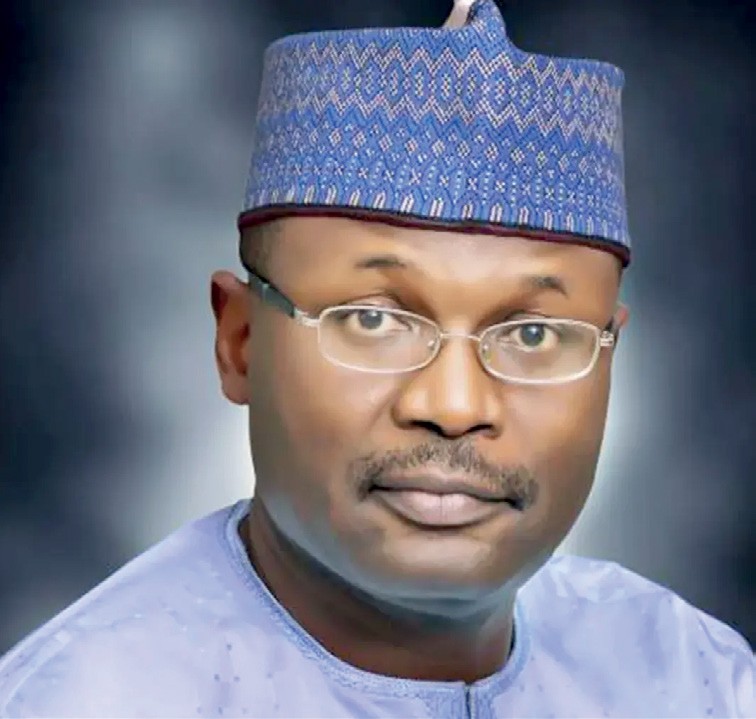
INEC ‘s independence and the new 2022 Electoral Act which allows for the electronic accreditation and transmission of results will also shape the presidential election. It introduced innovations, such as the electronic transmission of results from the polling units and the Bimodal Voter Accreditation System (BVAS) intended to curb election rigging.
Money is also crucial in any election, especially in Nigeria, where there is high level of poverty. This means that people need financial support before they can even attend campaign rallies.
The past experience has also shown that vote buying and selling influences the election results. In fact some analysts have described election results in Nigeria as the outcomes often determined by the highest bidder.
Money has therefore become a prominent feature of elections.
Despite measures to improve the transparency of the electoral system, it is most likely that money will remain a big factor in the next month’s presidential election.
The structure of political parties is another factor that may determine who wins the election. Nigerian political parties are special purpose vehicles for winning elections. That is why there is likely to be sharp divisions and crises within parties, even the smaller ones.
The Centre for Democracy and Development (CDD), report also stressed that “money will continue to play a huge role in determining who emerges the winner if the presidential primaries and recent gubernatorial elections offer any lesson.”
On how sentiments would influence the presidential poll, CDD added that “religion, ethnicity, and money politics would shape the people’s choice among the four major candidates – Atiku of the PDP, Bola Tinubu of the All Progressives Congress (APC), Labour Party’s Peter Obi and Rabiu Musa Kwankwaso of the New Nigeria Peoples Party (NNPP).
Speaking, a lawyer and news analyst, Dr Sam Amadi, stated that many factors would shape the 2023 presidential election. “Many issues will affect the 2023 presidential election. One of them is the collapsed economic and social life of Nigerians.
“Another factor is religion. The Muslim-Muslim ticket debate will affect voting. In the South and North-Central , many Christians will reject the APC’s Muslim-Muslim ticket because of its lack of religious diversity.
The unknown is how much it can mobilise Muslim votes for the ticket in the North. Ethnicity may not be such a strong factor. The South-West seems poised to share votes between the old and the new; between the status quo and the future. Ethnicity may improve voter enthusiasm in the South-East where the candidate of the Labour Party hails from. But it may be displaced by religion and social and economic issues,” Amadi observed.
He added, “Demographic changes will affect the result. We will see rural-urban divide. It is expected that whereas the rural electorate may remain attached to the status quo parties, we will see significant urban shifts.
The winner of the election will be the person who takes much of those urban voters who have in the past not been keen to participate in presidential election.”
Also speaking with THEWILL, a public affairs commentator, Comrade David Akpan, said the 2023 elections will be shaped by three major factors.
According to him, one will be ethnicity, the second will be religion and the third one will be sectionalism.
He said “Sectionalism will play out in the Middle Belt and the South-South geo-political zones. The Middle Belt is a place where the people of different ethnic backgrounds have a common agenda protecting their land from invaders. They have an agenda cut across religion and ethnicity because protection of their ancestral land is what binds them together. These three factors will definitely underscore the direction of the election in 2023”.
AYO ESAN, has been actively reporting and analyzing political events for different newspapers for over 18 years. He has also successfully covered national and state elections in Nigeria since the inception of this democracy in 1999.
