
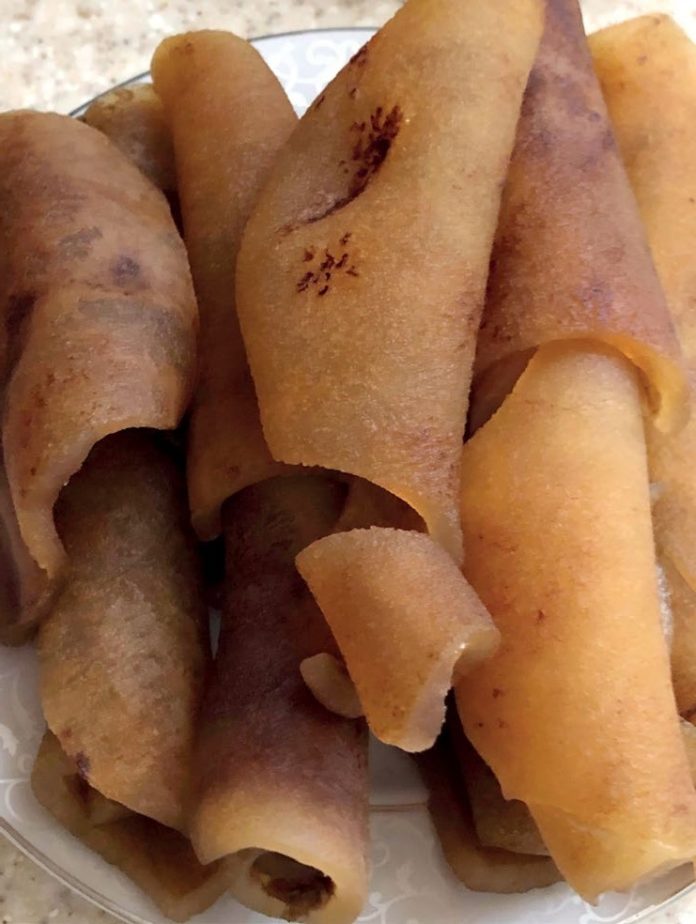
Tanners in Nigeria have a boot-sized grudge against their compatriots because they prefer snacking on leather instead of turning them into fancy footwear that should compete with imported brands from Brazil, Italy or Spain. That culinary preference alone by millions of Nigerians is making business difficult for local shoe manufacturers. But now, there just might be some respite for the leather workers. Last week, the Federal Ministry of Agriculture issued a warning that consuming cowhide aka ponmo and bush meat comes with risks of Anthrax infection. The fungi disease is now a health hazard in parts of Burkina Faso, Ghana and Togo. Can Nigerian gastronomes forgo what has since become a staple in their diet? THEWILL asks. Michael Jimoh reports…
For roadside caterer Imaobong on Sasegbon Street GRA Ikeja, her soups are not quite complete without the chunky pieces of cowhide her customers prefer to beef or fish. Of the regular recipes ranging from afang to egusi, ogbono and oha she cooks every day, the bovine pelt otherwise known as ponmo is an indispensable ingredient.
Fleshier, bigger in size than the miniscule beef in an ocean of egusi or oha soup, for instance, they are cheaper substitutes for customers hoping for a mouthful of something to chew as the bolus of ‘swallows’ ripple down their gullet. Plus Imaobong dices portions of the cowhide into the smorgasbord of dishes she sells briskly at her open and roofless restaurant by the side of a 12-ft high fence in Ikeja.

It is true that the beef and fish sauce enhance the flavour of the broths. But once sufficiently cooked, Imaobong scoops them from the soup before adding other condiments. Only the cowhide alias ponmo is dunked in the soups, “to give them a unique taste,” the 35-year-old caterer from Ikot-Udo-Aduak in Akwa Ibom told THEWILL last week.
There is garri, fufu (both derived from cassava) and semovita to go with the chowder depending on the customer’s preference. As she ladles soups from an assortment of coolers, the male and female customers with take-away plastic containers like panhandlers on the dole hang around Imaobong in a semi-circle. Nothing is for free though.
A plate of garri, fufu or semo with any of the soups goes for N600. Extra helpings cost a few more, depending on the quantity. On a makeshift table is a container of different sizes of Titus fish – extra-large heads, moderate mid-sections and tail. There’s beef, too, cut into N100 portions. The real attraction is the cowhides in the broth from which the cook ladles into take-away packs.
Most times, Imaobong sells the ponmo faster than beef or fish. At one time in the past, she bought N8, 000 worth of cowhide daily. But because of the recent economic downturn, her customers’ purchasing power has fallen correspondingly. Now, she buys about N5, 000 worth. Even so, the hide sells like hot cake. And such is the customer crush at her roadside eatery that she is sold out by 6pm every day. Imaobong concedes however that she sometimes returns home with unsold beef and fish but never the ponmo which is known by another moniker ‘show boy’ in parts of Edo state.
Somewhere in a canopied restaurant on Egbado Road Dalemo in Ogun state, diners come in twos and threes around midday. Unlike Imaobong’s open-air spot in Ikeja, there are plastic chairs and tables. There is a sink somewhere with a plastic container of liquid detergent. “Ki le fe ra?” (“wetin una wan buy?”a young girl in white hijab demands of the already seated guests.
From a large show glass, there is a variety of food: steaming silver wares of jollof, fried and white rice are in plain sight; in another container are oil-soaked beans; nearby chicken and turkey wings and drumsticks compete for attention. But what gets the most attention are the pieces of ponmo cut into sizable portions in a pyramidal heap. By early evening, a source told the newspaper, the heap would have gone down considerably, bought by drive-by customers sitting in their jeeps, schoolboys and girls stopping by for choice picks with their plates of soup without.
And then, there is the phalanx of touts who have made a habit of coming around, pinning some pieces down with toothpicks then tossing them into their mouths at once thus distending their cheek muscles reminiscent of chipmunks.
If you think only lowly types like area boys gorge on the leather, then you are mistaking. Once considered a meal the very poor resorted to because they could not afford to buy meat or fish, everyone seems to be digging in on the succulent tissue now, making it something of a national pastime as a culinary delicacy.
While millions of gourmands in Nigeria cutting across age, class and gender delight in sinking their canines into the fleshy bovine epidermis as part of their meals on in-betweens, it has left nothing but bitterness in others, thus provoking what has now come to be known as the leather wars.
Leather Wars
To be sure, it isn’t such a conventional war as you might expect. For one, the warring factions are in the same country. Two, there are no guns and bullets, no human casualties or even POWs. Still, the economic consequences of the leather wars parallel those of a conventional confrontation between countries at war.
On one side of the battling forces is Muhammed Yakubu DG of Nigeria Institute of Leather and Science Technology (NILEST) Zaria in Kaduna state. On the other side are the millions of uncompromising consumers of cowhide in Nigeria. Though the war has been on a low boil for some time, it only came to a head recently when Yakubu blew his top on what his countrymen and women were doing to themselves in particular and the tanning industry in general.
“To the best of my knowledge,” Yakubu thundered at a meeting of stakeholders in the industry in Abuja last year, “Nigerians are the only people in the world that overvalue skin as food.”
Why they are so inclined is beyond the man who knows that leather products should not be turned into lunches or dinners but made into nifty shoes, fancy bags and belts. Besides, what his compatriots value as a delicacy has no nutritional value whatsoever.
The agency Yakubu heads is the sole body in the country charged with research into and promotion of leather production. Brought about with the Agricultural Research Institute Act of 1975, NILEST is responsible for making leather for local tanning materials and, ultimately, a prime source for shoe factories in Nigeria.
But since Nigerians prefer consuming their leather products to turning them into fancy footwear, it has affected the leather industry adversely. Yakubu’s words: “Consuming cow skin was contributing to the downward slide of the production in Nigeria’s leather industry.”
How true! Only the older generation of Nigerians like Yakubu remember that there was once Bata and Lennards shoe companies with outlets in nearly all the state capitals, producing footwear from all-weather Cortinas for students to Bally shoes their parents wore to offices and weekend parties. But they are no more, not for want of professionals in the industry but for Nigerians who are partial to leather as a food source.
The DG was so riled by this that he contemplated taking his case to the legislative houses (Upper and Lower) of Assembly to, as it were, “ban the consumption of ponmo because it will be necessary to revive the comatose leather industry in Nigeria.”
“If we get our tanneries, our footwear and leather production working well in Nigeria,” Yakubu pointedly noted then, “people will hardly get ponmo to buy and eat. When implemented fully, it would turn around most of the comatose tanneries and ginger greater output in production.”
As for the leather products not having any nutritional value, Yakubu is in good company. Some years ago in one popular programme on national television, there was talk about the benefits or health hazards of consuming ponmo. Among the discussants that day were two prominent Nigerians Mr. Alex Ibru publisher of The Guardian and Jibril Aminu professor of cardiology.
In the course of the conversation, with a scrunch to his patrician features and something resembling a sneer, the renowned cardiologist Aminu dismissed consumption of cowhide as “gastronomic indiscipline.” The doctor’s point was clear. Animal hide has no place in human diet because it has no nutritional value as such. So, in his reckoning, why consume what is not beneficial to the body?
Among the Nigerian elite in his own right, Ibru replied that however badly the medic may feel about eating ponmo, as a Lagosian which Ibru pronounced Lahgosian as residents do in downtown Lagos (Isale Eko), he consumes the local delicacy now and then and was not about stopping it.
In some sense, the publisher also had his point. Consuming cowhide may truly have nothing to add to the body nutrition wise. But it is a delicacy that has become a staple for generations of Nigerians and, like the publisher, they haven’t even considered stopping it, Anthrax or not.
Anthrax Scare
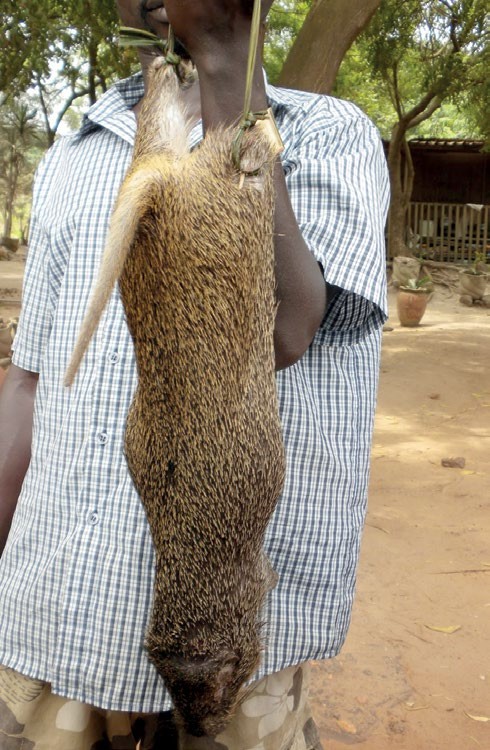
How long that infatuation with the leathery stuff will last is hard to say, considering the recent warning by the Ministry of Agriculture that consuming ponmo and bush meat might expose people to Anthrax infection. To avoid infection, the ministry, through the Permanent Secretary Dr. Ernest Umakhihe, has appealed to Nigerians “to stop consuming ponmo and smoked bush meat over the outbreak of Anthrax in some neighbouring countries.”
“The Federal Ministry of Agriculture and Rural Development,” Umakhihe wrote, “hereby alerts the general public on the outbreak of Anthrax in some neighbouring countries within the West African Sub-Region; specifically, Northern Ghana bordering Burkina Faso and Togo.”
Continuing, the PS let it be known that “the disease which has claimed some lives, is a bacterial disease that affects both animals and man, that is a zoonotic disease. Anthrax spores are naturally found in the soil and commonly affect domestic and wild animals. People can get infected with Anthrax spores if they come in contact with infected animals or contaminated animal products. However, Anthrax is not a contagious disease and so, one cannot get it by coming in close contact with an infected person.”
Not stopping there, Umakhihe went on to list symptoms of Anthrax which are flu-like “such as cough, fever, muscle aches and if not diagnosed and treated early, leads to pneumonia, severe lung problems, difficulty in breathing, shock and death.”
Anthrax, he stated further, can be treated with antibiotics and supportive therapy since it is a bacterial disease. Still, the “general public is strongly advised to desist from the consumption of hides (ponmo), smoked meat and bush meat as they pose serious risk until the situation is brought under control.”
Though no cases of Anthrax infections have been recorded, detected yet, it isn’t the first time Nigerians will be warned against the disease. In late December 2019, for instance, in a memo to the World Health Organisation for Animal Health (WOAH), the Ministry of Agriculture and Livestock alerted the world body to the outbreak of charcoal Anthrax in neighbouring Niger Republic.
In September of that year, 22 cows were killed while 100 were affected, prompting warnings from the Nigeria Customs Service to WOAH. NCS headquarters in Abuja wrote at the time that “given the supply of cattle and sheep from Niger to Nigeria the CGC has directed on the urgent need to place additional precautionary measures to prevent the spread of the disease into Nigeria through our land borders.”
There have been no reports of charcoal Anthrax infections in Nigeria since then, until the recent warning from the Ministry of Agriculture. Experts hope there may be none. And Nigerians are still besotted with the epidermis despite warnings of the health risk potentials.
A graduate of Accounting in his mid-thirties, James told THEWILL midweek he is aware of the ban but he still ate ponmo that afternoon. And just last weekend, at Imaobong’s outdoor eatery, the same customers visited, asking for the same chunky hide to go with their garri or semo. The caterer herself admitted she’d heard of the ban but there was nothing she could do about it since her customers asked for it. “Will I deny them what they want?”
If there was any ban, Imaobong told the newspaper, she didn’t see any sign of it in the market when she went to buy ingredients for soup on Friday morning. There was ponmo everywhere – from the roasted brown Ijebu type to the white ones boiled and scrapped with sharp objects.
The inference is that as long as it is available in markets and elsewhere, stopping outright consumption of ponmo will be difficult to enforce in public places like markets or private kitchens. For now, the battle line is drawn with Yakubu NILEST boss, Ministry of Agriculture on one side offering fancy footwear to millions of unyielding consumers of the leathery hide on the other who must have their ponmo whatever the cost.

Michael Jimoh is a Nigerian journalist with many years experience in print media. He is currently a Special Correspondent with THEWILL.
