
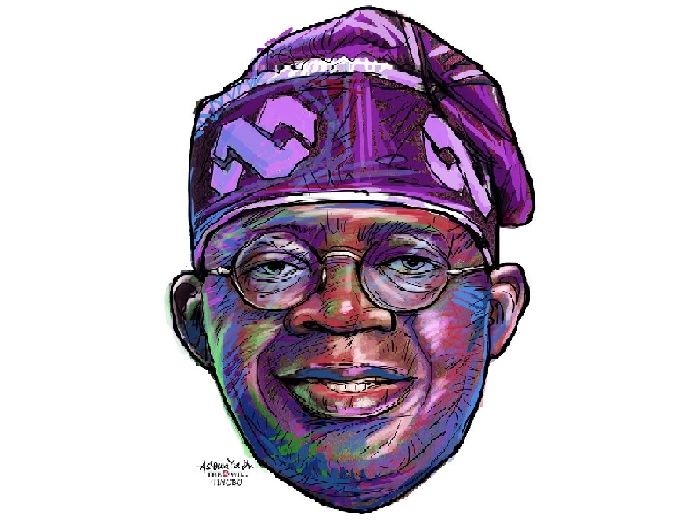
December 31, (THEWILL) – Permit THEWILL to borrow a phrase used to describe works of artists during exhibitions to evaluate the year 2023 as we saw it. In the main, retrospectives display the entire oeuvre of a painter’s, sculptor’s works – mostly in chronological progression and all of them at one show. Considering 2023 in that sense for Nigeria, there were good and awful shows, some surreal, some totally unexpected. For instance, the tax reforms begun by President Muhammadu Buhari and reinforced by his successor Bola Ahmed Tinubu is one positive aspect. Overall, most Nigerians expectations for 2023 were largely unmet, especially economically and politically. Michael Jimoh reports…
Never again was how one wag put it in a recent WhatsApp post. It quickly elicited similar responses to his summary of the year 2023. The last time Nigerians reached a consensus on that phrase was during the military dictatorships of the ‘90s. Never again, they chorused then about an uncaring military class looking out for themselves and their cronies. Nearly a quarter century after the military’s departure from government, it is as though nothing changed.
If anything, the cost of living got progressively worse. Inflation is at a record 28.20 percent; Unemployment is rising at a geometric rate – 33.3 percent. The ugly reality is that out of 70 million Nigerians that should be working, 23.2million of them are jobless. From economic indicators, the trend might not change anytime soon. It has not helped that all of that happened in a civilian democracy run by politicians who promised everything imaginable once elected.

Some Nigerians always knew better. Sneering cynics scoffed that things were not going to get any better for the lot of Nigerians in 2023 judging by the events of late 2022. Ostensibly hoping to right a floundering economy, the soon-to-depart Buhari Administration came up with a wonky policy to redesign Nigeria’s currency – the Naira. It boomeranged, sending the country out of kilter into unimagined economic distress: both the old and new notes were scarce; long queues formed in banking halls and extended in serpentine trails outside; small and medium scale entrepreneurs packed up; men and women in their dotage collapsed after waiting for hours to withdraw unavailable cash: epic fights broke out among bank customers who slugged it out in frustration; two or so pregnant women due in their term squatted and gave birth right there in bank premises; a man went in the buff to register his displeasure.
The absurdities continued on and on, leaving millions of Nigerians in desperation over a currency redesign and swap they couldn’t comprehend. Those behind the redesign were equally baffled, throwing up their hands in frustration.
If you were up in space watching the country from above, you would have seen another queue forming simultaneously with the serpentine lines in banks: at filling stations. Not for the first, second or third time, a country reputed to be one of the largest producers of crude oil could not fill the average-sized tank of a beetle car let alone tank up a diesel generator in a countryside factory. So, the never-ending lines formed – in the FCT and most state capitals and out of the way towns and villages – in the day time and nights with sleepovers becoming commonplace. Thus did the situation remain for much of January and afterwards.
With the general elections coming ever so close early in February, Nigerians only wish was to see the back of the Buhari Administration. After eight years in power from 2015, there was nothing much to reckon with his government despite the popular support he enjoyed initially. Beside the tax reforms Buhari initiated as president, his years in office seemed a waste of time to many Nigerians. But the elections promised a new dawn.
The major gladiators were old war horses, hard-fighting Atiku Abubakar of the Peoples’ Democratic Party, equally combative Bola Ahmed Tinubu of the All Progressives Congress and by no means a walkover Peter Obi of the Labour Party. They all promised something new, not only to their supporters but to Nigerians in general.
The LP candidate was something of a discovery to Nigerians of a certain generation – young people who saw in his candidature a third force to counter the expiring and thieving politicians in PDP and APC. The “Obidient” movement garnered force and numbers all around with just the big hope of Obi making it to Aso Villa.
The elections held amid an economy in tailspin and general discontent with the party in power. Money was still scarce. There was plenty of hate speech and the frightening spectre of electoral violence during the campaigns. No one gave APC much chances of success at the polls. The presidential candidate Tinubu himself became the butt of scabrous putdowns, most serially abused politician in recent Nigerian electoral history. He was infirm and senile, they charged, sometimes delighting his enemies by forgetting lines or mixing up whole sentences in public speeches and appearances. Against all permutations by pundits, he won hands down, defeating his closest opponent by more than 2million votes.
Almost as quickly as the results were announced, the opposition parties complained of electoral irregularities and violence perpetrated in support of the victorious APC candidate. The only recourse? The courts. So, it transpired that the executive arm of government now needed validation from the judiciary. By the time judgment came months later in favour of the elected president, the judiciary had given a new meaning to the commonly used term “the law is an ass.”
From the day of swearing in, President Tinubu did what his predecessors dared not. He removed the fuel subsidy thus provoking the labour unions (NLC and TUC) into a protracted face-off, leaving ordinary Nigerians the worse for it in the process. The Federal Government’s intransigent position on the fuel subsidy removal was something of a double standard, given that Mr. President himself had vehemently opposed its removal in 2012 when Goodluck Jonathan as president expressed his desire to do so.
What suddenly happened between then and now, critics wondered aloud.
Tinubu’s defence was the massive financial haemorrhage on the nation’s purse by a group of unnamed fuel subsidy cabal. The removal, he made his case severally, is for the good of the common people. Some thoroughgoing skeptics doubted his sincerity since he refused to name the cabal behind the fuel subsidy scam. If his removal of the fuel subsidy was for the wellbeing of Nigerians, the reasoning went, he was clearly not against those involved in the scam that has gone on for far too long because he refused to name them.
The subsequent NLC, TUC/ Federal Government face-off dragged for months, almost plunging the country into economic paralysis. As a result, Tinubu’s government has since put in place some palliative measures to cushion the effect of the fuel subsidy removal. Minimum wage has been pegged at N30, 000 by the Federal Government; there have been other similar incentives – student loans and financial assistance to small scale businesses. As recently as last Christmas and New Year, the Federal Government made arrangement to pay half the cost of transportation for many Nigerian hoping to reunite with kith and kin in their respective communities across Nigeria.
In the intervening period between January and now, there were routine kidnappings and terror strikes almost everywhere: a remote community in the Middle Belt, for instance; cult related atrocities in the South-south; ritual beheadings in the South-west; cattle rustling in the North-central or taking a village head and his immediate family hostage in the North-west and North-east. Reports in the Metro sections of national dailies confirmed most Nigerians worst fears about the surge in crime both by career criminals and opportunistic bandits. The inference is a general lack of security for Nigerians, making it seem like Tinubu’s Administration was not any better than the one it succeeded.
Either because of the unbearable economic situation and or overwhelming psychological pressures, some Nigerians began to jump off bridges into the lagoon. In one benumbing instance recorded on video, a sixty-something year old man hugged the iron railings of the Third Mainland Bridge in Lagos with the placid waters of the lagoon down below. From the tarmac where some agitated crowd begged him to come on up, they cajoled him, shamed him only for the distraught man to let himself go straight down like a bungee jumper without the restraining lasso. Two or so death wish candidates have ended up in the roiling waters of the sea while a female intent on killing herself because of heartbreak was rescued in good time.
There were heartbreaks of other sorts in 2023, especially politically. One of the most notable was PBAT’s appointment of a non-Muslim Christian southerner as Minister of the FCT in the person of Nyesom Wike. The appointment promptly riled Islamic cleric Dr. Sheik Ahmad Gumi who felt that his kith and kin’s God-given right to occupy certain positions in government had been unduly tampered with by Tinubu. Unable to contain his private grief, he vented his anger in a diatribe-filled video against Wike in a mosque.
Wike himself also suffered from what was clearly a political heartbreak. His handpicked man in Rivers state his political base had turned against him or so it seemed. One day last November Nigerians woke up to see the unseemly spectacle of Governor Siminialayi Fubara sacked from Government House in Port Harcourt and senior police officers taking shots at him and teargasing HE. Of course, there was nothing new in sitting governors facing opposition and threat of impeachment by House of Assembly members in their home state. Ask Chris Ngige and Obi of Anambra state who have stories to tell in that regard. But Siminialayi’s experience with the police and political thugs in Port Harocurt was sobering and in a class of its own in savagery and total disrespect for constituted authority. The man behind all that days of upheaval in Port Harcourt was none other than Wike himself, looking to securing a foothold in his political base which he feared was eroding bit by painful bit under his feet.
While there seems to be a semblance of normalcy in a political romance gone sour between Governor Godwin Obaseki and his deputy Philip Shaibu in Edo state, a similar struggle for supremacy only came to a dismal end in neighbouring Ondo state with the unfortunate demise of Governor Oluwarotimi Akeredolu and Lucky Aiyedatiwa his deputy. For months since Akeredolu proceeded on a medical leave in June, there has been no love lost between the erstwhile political bedmates. As the crisis degenerated between godfather and godson in Akure, Aiyedatiwa was all but impeached by majority of members of Ondo State House of Assembly. Even a presidential intervention by Tinubu did not seem enough in the worsening crisis of succession in the Sunshine State. But then, death came as a final arbiter when Akeredolu died on 27 Wednesday 2023.
Hope is the worst of all evils, Nietzsche once mused, because it prolongs the torments of man. The understanding is that if you have to hope for something for too long, the inexorable period of torment corresponds with the time spent waiting for that thing to happen. Except to the few cynics among them, Nigerians seem to have hoped for too much from politicians who have offered too little correspondingly.
So, back to Verdict 2023: Never again.

Michael Jimoh is a Nigerian journalist with many years experience in print media. He is currently a Special Correspondent with THEWILL.
