
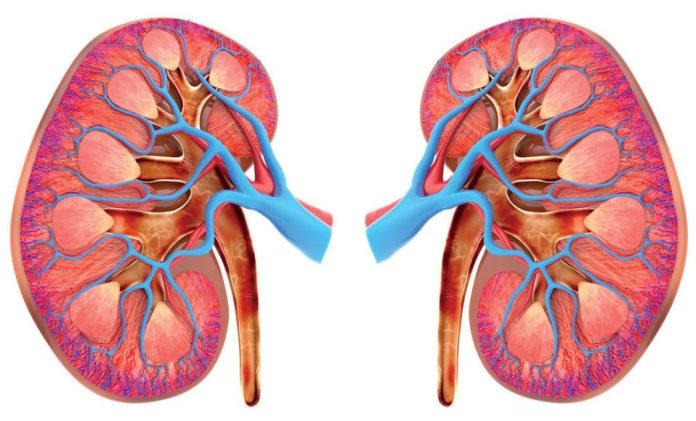
October 01, (THEWILL) – Under the general assumption that the doctor knows best, people readily surrender their bodies when they are ill. The submission is more complete when, sedated and supine during surgery, patients remain at the mercy of surgeons for the duration of the operation. From that moment on is a fifty-fifty chance of survival. For this reason, hospital management/ patient agreement sometimes precede major operations to excise that incipient tumour, for instance, suck and flush out a ballooning fibroid, remove a troublesome appendix or transplant a kidney in a patient from a donor.
The first time Mrs. Kehinde Kamaru, a homemaker in Rikkos Community Jos Plateau state, visited Murna Clinic and Hospital, she was not a patient. She’d gone to visit her mother-in-law on admission and recuperating in the health facility run by a man known to them and the entire community as Dr. Noah Kekere in Nasarawa Gwong Jos North Local Government Area. A dutiful daughter-in-law, Kehinde would have gone with home-cooked meals (hot pap with bean cake or moin moin, stewed or jollof rice or amala to ji no gan gan) and the much-needed companionship that go a long way in the healing process of convalescing patients.
The doctor in question is of the same ethnic stock as the Kamarus. There would have been that instant connection and bonding as it sometimes happens with people of the same tribe who find themselves in foreign lands. And, perhaps, in gratitude for his healing hands, mother-in-law would have asked her son’s spouse to thank the good doctor for taking care of her all through her stay in the hospital.

So, when Kehinde complained of ill-health to her businessman husband, Busari Kamaru, Murna was an obvious choice. And since the medic had successfully managed Kamaru’s mother before, he opted for the hospital within a respectable radius of the community where Kamaru, his wife, children, mother, a few relatives and a sprinkling of Yoruba have lived for years. Besides, who knows, Kekere might very well become a family doctor to the Kamarus.
As if willed by fate, Kehinde herself became sick with a severe stomach ache, in 2018. She was 40 with four children. Partly because he had successfully managed Kamaru’s mother, Kamaru and Kekere became friends.
“In the process of going to see my mum in the hospital,” Kamaru has said, “I got acquainted with the doctor.”
It was only natural that Kamaru looked no further than Kekere when the next health crisis came up in his household.
“When my wife fell sick in 2018, complaining of severe stomach pain,” Kamaru would later tell police authorities in Jos, “my mum encouraged us to take her there because my wife used to follow my mum to see the doctor when my mum was sick. As we got there, the doctor did a scan and said my wife had a ruptured appendix and must be operated upon immediately and he charged us N140, 000. When I called some people to ask about the high bill as I planned to take her to Jos University Teaching Hospital (JUTH) they advised we should just go ahead and save her life.”
And saving lives is the doctor’s primary duty to, going by the Hippocratic Oath, “prescribe only beneficial treatments according to his abilities and judgment and to refrain from causing harm.”
But from the onset, Kekere didn’t have any such salvific mission in mind. A graduate of economics with a Masters’ in the same discipline, Kekere was out for the money and to get his cash, he proved to be a hard bargainer to boot without any milk of human kindness whatsoever for the woman in pains.
“The doctor asked how much I had and I said N80, 000, apart from other charges for drugs but after the operation, my wife was still complaining about the pain and the man kept collecting money from me all these years,” a broken Kamaru said.
The distraught husband will go on to narrate how an operation that ought to have lasted no more than half an hour or so took more than eight hours. “The day the doctor conducted the operation, he started the operation from 12 pm till 8 in the night.” Despite that length of time to nip a finger-sized organ with no known biological function in humans, Kehinde’s medical condition worsened. “For the past five years,” Busari lamented, “my wife kept complaining of severe stomach pains, I continued to take her to the same hospital because I did not want to change the doctor that started the treatment. As she continued to have the pains, I decided to go to Jos University Teaching Hospital a few days ago where we discovered that one of my wife’s kidneys was removed.”
Madam, who did this to you? Why did you allow them to remove your kidney?
A nurse at Fertile Ground Hospital in Jos asked Kehinde that question after a second CT scan revealed that a kidney was, indeed, missing.
When people ask that question, it is not so much to know the identity of the offender as to how could a human being ever do this to another of his species, how could a person ever conceive of such evil and then carry it out without a smidgen of conscience?
The layman’s interpretation of evil, as any psychologist will tell you, is lack of empathy. On a general level, the Nazis demonstrated it in their Final solution to the Jewish question. On a personal level, Kekere can be said to have done the same thing to Mrs. Kamaru purely for his own financial benefit.
To say that Kekere’s action was premeditated isn’t far from the truth, which was why the supposed appendicitis operation took so long. He was, along with his yet-unnamed accomplices, harvesting Mrs. Kamaru’s kidney while the unfortunate woman was recumbent in the theatre.
Post-surgery patients feel better with time and then recover fully afterwards. It was not so with Kehinde. The first scan revealed that one of her kidneys had been removed. Kekere denied having anything to do with it at first, insisting that she may have been born with just a kidney. But the woman at Fertile Ground quickly put that to rest.
“This woman was never born with one kidney,” she countered Kekere. In retrospect, it was the defence of a sinking man intent on covering up his crime. It failed, as the rest of the world now knows.
What is also true is that after being found out, Kekere tried and failed to offer a bribe of N20m to Busari for settlement. According to Busari, Timothy the DPO of Nasarawa Gwon called to speak with him privately.
“He asked me what my position on the matter is because they calculated the time they removed my wife’s kidney, they said it was sold at 6 million naira then. But now, it is worth N20 million. They said if they want to pay the money for the kidney, it will be 20 million naira. I said “look officer, I am not the type of person anyone can buy with money. Let this man come out and own up to me that he removed my wife’s kidney. What do you want me to do?” But the man (Doctor Noah Kekere started begging me, saying that the deed had been done and that I should just temper Justice with mercy. He asked what I wanted him to do for me. I told him that I don’t need anything from him except to return my wife’s kidney from wherever he took it.”
Continuing, Busari insisted on justice. “I want justice. This man has been collecting money from me for the past five years now, every month. And I have been spending money on my wife. Now that I have discovered that this is a kidney problem, where will I get money to take care of my wife? Every day, I wake up with fears of losing my wife. I don’t know what to do. Where do I get money to take care of this woman? We are talking about huge sums of money for another kidney. Where do I get money to take her abroad for treatment? I don’t have such an amount of money. They were calling millions of naira. Where do I get it from? Did you know that last year when I called this man (so called doctor) and told him enough is enough; I will take my wife to another hospital, this same man discouraged me and told me that he was going to conduct another operation on my wife?”
The office of the Commissioner of Police Plateau state where the case file is at the moment also discovered “that the man had never been a doctor but he had been parading himself as a doctor for over 18 years treating people in the area.”
Just as news spread of the quack doctor harvesting a kidney from Kehinde in Jos, another surfaced in mainstream and online media about a 12-year-old boy Adebola Akin-Bright whose intestines got missing after an operation in a private hospital in Lagos. There were rumours of a quack doctor at Obitoks Hospital in Alimosho area of the state also involved.
The boy’s mother, Mrs. Abiodun Deborah, had taken her child to the health facility where he was initially treated for typhoid with no improvement. He was later operated on by the resident doctor for a ruptured appendix. Adebola’s condition got progressively worse after a first and second surgery by Dr. Abayomi Baiyewu. The doctor was to carry out a third when the boy’s mother refused instead opting for Lagos State University Teaching Hospital Ikeja where she hoped things would turn out better for her son. It never got to be because it was in the course of performing a third operation doctors at LASUTH discovered that young Adebola’s intestines had been removed. Moved by the boy’s condition, the Lagos State House of Assembly under the leadership of Mudashiru Obasa had urged the state government to offer medical assistance to save Adebola’s life. Alas, it also never got to be. Adebola died soon after leaving the anguished mother and many others speculating on what might have happened to his intestines.
Whether the boy’s innards were carelessly thrown away by an unconcerned assistant during surgery or sold like Kehinde’s kidney may never be known for now. But what is pretty much clear is that harvesting and selling organs is big business in many parts of the world including Nigeria.
In an article headlined “Legal aspects of organ trafficking” published in The Guardian of July 4 2022, the author, Sonnie Ekwuowusi, quoted a leading authority, Professor Phillip Njemanze, on organ trafficking in Nigeria.
“Nigeria is the hub of illegal organ harvesting and organ transplantation in the world. Many foreign organ traffickers lay siege to Nigeria in their bid to scout for cheap organs. So Nigeria is a cheap source of human organs for transplantation for the Western countries,” Njemanze wrote, insisting that “the gains of using ovarian eggs poached from Nigerian women to perfect the complicated tissue cloning procedure called somatic cell nuclear transfer (SCNT) promises economic revenue of thirty trillion USD, one-third of the World economy…”
Exaggerated or not, the celebrated case of onetime deputy senate president, Ike Ekweremadu, his wife, a doctor and a supposed boy donor flown to the UK from Nigeria in February 2022 lends credence to Njemanze’s assertions. For his pains, Ekweremadu, his spouse and the Nigerian doctor are serving time in a British jail.
From all indications and barring a private settlement with the Kamarus, Kekere may also go to the slammer if convicted. Already, two of his accomplices are now in custody for helping the economics graduate steal a patient’s organ without her consent.
Michael Jimoh is a Nigerian journalist with many years experience in print media. He is currently a Special Correspondent with THEWILL.
