
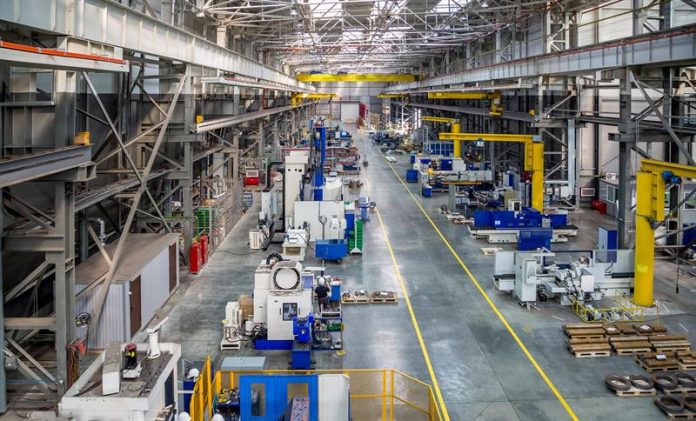
February 23, (THEWILL) — The Federal Government has unveiled an ambitious industrial reform agenda that will see five percent of Nigeria’s Gross Domestic Product committed annually to revitalise the manufacturing sector, as part of a broader strategy to accelerate economic diversification and reduce dependence on oil revenues.
Under the new framework, manufacturing is projected to increase its contribution to GDP to 15 percent by 2030 and further to 25 percent by 2035, marking a significant leap from its current single-digit share of national output. The mining sector is also expected to expand under the plan, with its contribution targeted to rise to 8 percent by 2030, and 10 percent by 2035.
A central pillar of the industrial push is aggressive long-term financing to address one of the sector’s most persistent constraints, access to affordable capital.

The government disclosed plans to recapitalise the Bank of Industry to ₦3 trillion by 2026, positioning it as a stronger development finance institution capable of providing long-tenor, low-cost funding to manufacturers and industrial players.
In addition, sector-specific intervention funds largely domiciled with the Central Bank of Nigeria will be expanded to channel increased long-term capital into priority sectors, including manufacturing and mining. The move is expected to unlock funding for equipment upgrades, plant expansion, local value addition, and industrial clusters.
The renewed focus on manufacturing comes amid concerns over the sector’s prolonged underperformance. Industry data show that manufacturing’s contribution to Nigeria’s economy has declined significantly over the decades, while growth has slowed to low single digits in recent years.
By committing five percent of GDP annually, the government aims to address structural bottlenecks such as high production costs, infrastructure deficits, energy constraints, and limited access to credit factors that have historically constrained industrial expansion.
Officials say the plan is designed not only to boost output, but also to stimulate employment, enhance export competitiveness, and deepen domestic value chains. A stronger manufacturing base is expected to reduce import dependence, improve foreign exchange earnings, and stabilise the broader economy.
The mining sector’s targeted expansion is also seen as critical to broadening Nigeria’s non-oil revenue base and strengthening industrial raw material supply chains.
Analysts note that while the commitment of five percent of GDP signals strong policy intent, the success of the strategy will depend on effective implementation, policy consistency, exchange rate stability, and improvements in infrastructure particularly power and logistics.
If successfully executed, the framework could mark one of the most significant industrial policy shifts in decades, repositioning manufacturing as a central pillar of Nigeria’s long-term economic transformation.

Ogochukwu Onwaeze is a writer specializing in business and economic journalism. At THEWILL News Media, she translates market trends, financial developments, and policy shifts into clear and engaging stories.
