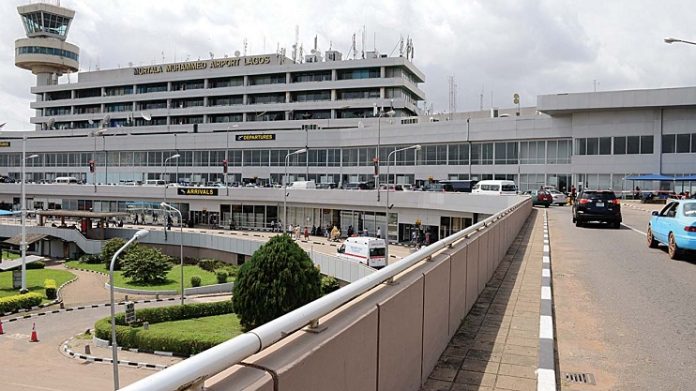
May 11, (THEWILL) – The Federal Government plans to demolish the old terminal of the Murtala Muhammed International Airport (MMIA) in Lagos and replace it with a modern facility, 46 years after it first opened to the public.
The Minister of Aviation and Aerospace Development, Festus Keyamo, announced the development over the weekend through his official X handle, stating that Nigerian airports still lag behind global standards.
He noted that although citizens have managed to make the best of the outdated infrastructure, a complete overhaul is long overdue.

“When the MMIA was built in 1977, it was designed to handle about 200,000 passengers annually. Today, it processes over 3 million passengers a year — and about 15 million nationwide,” Keyamo noted.
He continued, “The difference is staggering. Over the years, the infrastructure almost collapsed under pressure. Thanks to President Bola Tinubu, we are set to embark on a complete reconstruction of the old terminal in Lagos to meet modern standards, with a projected annual capacity of 20 million passengers. Full details will be unveiled in the coming weeks.”
Deal Sealed With CCECC
Investigations by THEWILL reveal that the Federal Government has entered into an agreement with the China Civil Engineering Construction Corporation (CCECC) to handle the demolition and reconstruction of the terminal. According to an industry source, funding for the project has already been secured and work is expected to begin soon.
The source added that the primary motivation behind the project is the overuse of the facility, which was originally intended to handle slightly over 200,000 passengers but now sees between 9 and 10 million annually, making passenger facilitation increasingly difficult.
Keyamo’s Infrastructure Drive
Past administrations in the country had at different times proposed renovating the terminal, but such plans were never carried out. However, with the completion of a new international terminal — which has somewhat eased the burden on the old one — aviation stakeholders believe the Bola Tinubu administration is well-positioned to finally execute the project estimated at over N14 billion.
Keyamo has made infrastructural development a pillar of his five-point agenda, which includes investment in and expansion of aviation infrastructure nationwide. Stakeholders credit him for aggressively pursuing these goals since taking office.
Mixed Reactions from Stakeholders
There have been mixed reactions from industry stakeholders. Group Captain John Ojikutu (retd.), a security expert and CEO of Centurion Security and Safety Consult, questioned why successive administrations have neglected plans to develop other terminals.
Ojikutu argued that the Nigerian Civil Aviation Authority (NCAA) must approve the reconstruction plan and cautioned against concentrating all airport operations on one side of the facility — a move he described as a major security risk.
“What happened to the plan to move West Coast regional traffic to MM2? Why not relocate the General Aviation Terminal (GAT) and cargo terminals to the opposite side of the two runways to create room for expansion and reduce congestion?” he asked.
Other stakeholders welcomed the plan, but they urged the government to engage a competent technical team, including aviation architects and engineers, to develop a comprehensive reconstruction plan. They also called for a complete overhaul of the terminal, including clear timelines and strategic planning, to ensure a successful rebuild.
Previous Expansions
Over the years, the MMIA has seen several expansions to accommodate rising passenger traffic. A major upgrade came in 2008 with the completion of the new international terminal, Terminal M, which improved capacity and passenger experience.
FAAN has since undertaken several other initiatives to modernise the airport, including the expansion of Terminal 1, construction of multi-storey car parks, upgrades to aircraft taxiways and runways, and the adoption of modern technologies to enhance operational efficiency.
Today, MMIA stands as Nigeria’s premier aviation hub, linking the country to global destinations and playing a key role in facilitating trade, tourism and cultural exchange.
With Terminal 2 already operational and equipped with state-of-the-art facilities, stakeholders say the airport is well on its way to achieving world-class status. The upcoming demolition and rebuilding of the old terminal is expected to further cement Lagos’ position as a major aviation hub in Africa.
A Symbol of Nigeria’s Aviation Growth
Named after late military Head of State, General Murtala Ramat Mohammed, the MMIA is a symbol of Nigeria’s strides in aviation. The construction of the airport began in 1974 as part of the country’s push to establish world-class aviation infrastructure.
The terminal opened to passengers in early 1979 and its strategic location in Lagos — Nigeria’s commercial capital — quickly made it a central gateway for both domestic and international travel.
The planned reconstruction aligns with Keyamo’s vision of transforming the sector and it underscores Nigeria’s commitment to becoming a regional aviation powerhouse. With the government’s renewed focus and commitment, stakeholders are optimistic that MMIA is poised for even greater progress and relevance on the global aviation sector.

Anthony Awunor, is a business correspondent who holds a Bachelor of Arts Degree in Linguistics (UNILAG). He is also an alumnus of the Nigerian College of Aviation Technology (NCAT), Zaria Kaduna State. He lives in Lagos.