BEVERLY HILLS, June 01, (THEWILL) – Low capacity and shortage of aircraft in the fleet of some domestic airlines have triggered a gale of multiple delays and cancellations, THEWILL investigation reveals.
It was gathered that the decreasing number of domestic airlines and their limited fleet size was giving both operators and air travellers cause for concern, with the cost of air tickets, number of flight delays and flight cancellations on the rise.
For example, a domestic airline scheduled to fly Los-Kan by 20:25pm last Sunday cancelled the flight in the afternoon of the day of the said flight.

When THEWILL made an enquiry on when the next available flight would be ready on the next day, Monday morning, it was gathered that no flight was available as at the time of filing this report, thereby, putting passengers in a state of dilemma for over 24 hours
Although, the airline attributed the cancellation to operational reasons and was ready to make refunds to passengers willing to cancel their flights, THEWILL gathered that the cancellation might not be unconnected with low capacity, on the part of the airline.
A passenger who simply identified as James was completely frustrated as the flight cancellation left him confused.
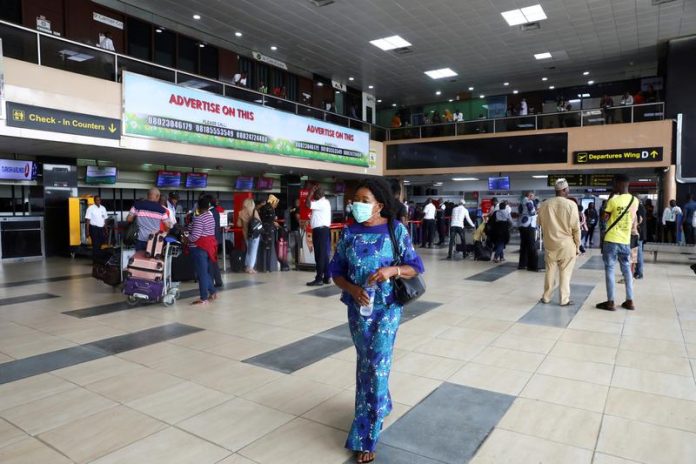
James told THEWILL at the Murtala Mohammed Airport two (MMA2) on Monday, that he was to leave Lagos on Sunday night to attend a very important meeting in Kano for Monday morning but could not make it any longer.
“You can see the disappointment now. I had a very important meeting in Kano but that has been defeated. The worst part is that the airline has no flight going to Kano at all today. It is very disappointing,” James said.
The story is not different for other domestic airlines that are also facing the same issues of delays and cancellations, arising from shortage of aircraft.
Offering solutions to the situation, aviation and tourism expert, Mr. Ikechi Uko, advised the local airlines, particularly, to build capacity and also embrace interlining.
Uko made it clear that the main reason for the current delays and flight cancellations was that Nigerian airlines did not admit that they had capacity issues.
He said: “Most of the airlines are using smaller aircraft, those that have large fleets, most of them are not operational so you have an increased number of passengers. I like to believe that, but you have a limited supply of equipment so when you have such a mismatch, there are going to be a lot of problems. And because there is a limited number of equipment, when there is an issue with one aircraft there is a problem of flight delay, of flight cancellation.”
On interline, Uko, who is also Publisher African Travellers Quarterly, said interline and partnership could save the airlines from the challenges.
According to him, “I have seen how Star Alliance has connected the whole world; there are places you cannot fly to but I can fly to, there are places you have greater capacity so we Codeshare.”
Emphasising further, Ukoh said that codeshare and alliances worked very well when airlines had capacity issues as it helped to distribute flight schedules in a more beneficial manner.
For instance, he said, “Instead of all the 10 aircraft trying to go to Abuja in the morning and you have 50-50 passengers, you rather have five go with all of them full; and you can now say, Okay, I will fly at 9am, you fly at 10am, and we will distribute it and everybody gets passengers.”
Uko attributed reasons why airlines were afraid to enter into such partnerships, to issues of trust, standards of operation and quality services.
“If you are going to be a member of Star Alliance for instance, there are particular commonalities even in aircraft types, seat type,” he said.

Anthony Awunor, is a business correspondent who holds a Bachelor of Arts Degree in Linguistics (UNILAG). He is also an alumnus of the Nigerian College of Aviation Technology (NCAT), Zaria Kaduna State. He lives in Lagos.