
-
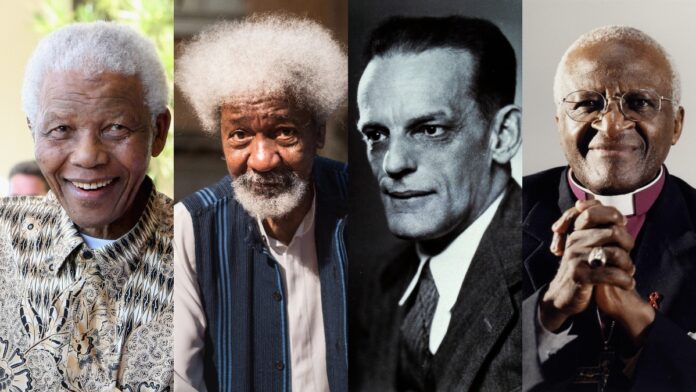
– Africa has produced Nobel Prize winners across four categories: Peace, Literature, Chemistry, and Physiology or Medicine.
-
The continent’s laureates include presidents, scientists, writers, activists, physicians and human rights champions whose work has shaped the world.
-
From Max Theiler’s life-saving vaccine research to Abdulrazak Gurnah’s powerful storytelling, these Nobel Prize winners represent some of Africa’s greatest contributions to humanity.
July 15, (THEWILL) — Meet the 20 African Nobel Prize Laureates Who Changed Science, Literature, Politics and Humanity Forever
The first Nobel Prizes were awarded in 1901.
More than a century later, the award remains one of the world’s most prestigious honours, recognising individuals and organisations whose work has advanced humanity in science, literature, peace and economic thought.
Africa’s Nobel laureates represent some of the continent’s most remarkable minds and courageous leaders. They include scientists who developed life-saving discoveries, writers who brought African stories to global audiences, and activists who challenged injustice in pursuit of freedom and equality.

From South Africa to Egypt, Ghana to Tanzania, these trailblazers have shaped history in ways that continue to influence the world today. In this article, THEWILL NEWS presents all African and African-born Nobel laureates, honoured over the decades for their contributions in peace, chemistry, literature, physiology or medicine and physics.
(1) Max Theiler — Physiology or Medicine | 1951
Born in Pretoria, South Africa, Max Theiler became the first Nobel laureate born on the African continent.. He was a virologist whose work transformed the fight against yellow fever, one of the deadliest diseases of the twentieth century.
Before Theiler’s breakthrough, yellow fever claimed thousands of lives across Africa and other tropical regions. Working at the Rockefeller Foundation in the United States, he spent years studying the virus and searching for a safer way to prevent infection.
His development of the highly effective yellow fever vaccine earned him the 1951 Nobel Prize in Physiology or Medicine. The vaccine became one of the most successful vaccines in medical history and has saved countless lives around the world.
(2) Albert Luthuli — Peace | 1960
Albert John Luthuli was a South African teacher, community leader and anti-apartheid activist. He served as President-General of the African National Congress (ANC) during one of the most turbulent periods in South Africa’s history.
Luthuli became internationally recognised for his nonviolent resistance against apartheid, the system of racial segregation that denied Black South Africans basic rights and freedoms.
In 1960, he became the first Black African to receive the Nobel Peace Prize. The Nobel Committee honoured his commitment to justice, equality and peaceful political change. His legacy helped lay the foundation for the eventual dismantling of apartheid.
(3) Anwar Sadat — Peace | 1978
Anwar Sadat served as President of Egypt from 1970 until his assassination in 1981. He is remembered for taking one of the boldest diplomatic steps in modern Middle Eastern history.
For decades, Egypt and Israel had been locked in conflict. Sadat shocked the world by travelling to Jerusalem in 1977 and initiating direct peace negotiations with Israel.
His efforts led to the Camp David Accords and the Egypt-Israel Peace Treaty. For this historic achievement, Sadat shared the 1978 Nobel Peace Prize with Israeli Prime Minister Menachem Begin. The agreement remains one of the most significant peace settlements in the region.
(4) Allan M. Cormack — Physiology or Medicine | 1979
Allan MacLeod Cormack was born in Johannesburg, South Africa. Although trained as a physicist, his work would revolutionise medical diagnosis.
Cormack developed the mathematical principles that made computed tomography, commonly known as the CT scan, possible. The technology allows doctors to view detailed images inside the human body without surgery.
His pioneering research dramatically improved the detection and treatment of diseases. In 1979, he shared the Nobel Prize in Physiology or Medicine for helping create one of modern medicine’s most important diagnostic tools.
(5) Desmond Tutu — Peace | 1984
Archbishop Desmond Tutu was one of South Africa’s most influential moral voices. A cleric, activist and outspoken critic of apartheid, he used his position to challenge racial injustice.
Unlike many political leaders, Tutu fought oppression primarily through advocacy, public engagement and nonviolent resistance. His courage made him a global symbol of human rights.
The Nobel Committee awarded him the Peace Prize in 1984 for his role in the struggle against apartheid. Following South Africa’s democratic transition, Tutu later chaired the Truth and Reconciliation Commission, helping the nation confront its painful past.
(6) Wole Soyinka — Literature | 1986
Nigeria’s Wole Soyinka made history as the first African recipient of the Nobel Prize in Literature. A playwright, poet, essayist and political commentator, Soyinka is widely regarded as one of Africa’s greatest literary figures.
His works explore themes such as power, identity, corruption, culture and freedom. Through plays like Death and the King’s Horseman and The Lion and the Jewel, he brought African stories to global audiences.
Awarded the Nobel Prize in 1986, Soyinka was recognised for literature that combines rich cultural traditions with profound insights into the human condition. His influence continues to shape writers across the continent.
(7) Naguib Mahfouz — Literature | 1988
Naguib Mahfouz remains one of the most celebrated authors in the Arab world. Born in Cairo, Egypt, he produced more than thirty novels and hundreds of short stories during his career.
His writings captured the social, political and cultural changes taking place in Egypt throughout the twentieth century. The famous Cairo Trilogy remains one of his most important works.
In 1988, Mahfouz became the first Arabic-language writer to receive the Nobel Prize in Literature. His storytelling introduced millions of readers worldwide to Egyptian society and culture.
(8) Nadine Gordimer — Literature | 1991
South African novelist Nadine Gordimer dedicated much of her writing to examining life under apartheid. Her fiction explored race, privilege, inequality and social change.
Many of her books were controversial because they openly criticised South Africa’s racial policies. Nevertheless, her work earned international acclaim.
The Nobel Committee awarded her the Literature Prize in 1991, recognising her ability to portray the complexities of a deeply divided society. Her writing remains an important record of South Africa’s history.
(9) Nelson Mandela — Peace | 1993
Nelson Mandela spent 27 years in prison for opposing apartheid. Yet upon his release, he chose reconciliation over revenge, helping guide South Africa toward democracy.
As leader of the ANC and later South Africa’s first democratically elected president, Mandela became one of the world’s most admired statesmen.
He shared the 1993 Nobel Peace Prize with F. W. de Klerk for their joint efforts to peacefully end apartheid and establish democratic governance. Mandela’s story remains one of the most powerful examples of resilience and forgiveness in modern history.
(10) F. W. de Klerk — Peace | 1993
Frederik Willem de Klerk served as South Africa’s last apartheid-era president. Recognising that the system was unsustainable, he initiated major political reforms.
His government lifted bans on liberation movements, released political prisoners and opened negotiations with anti-apartheid leaders.
These actions paved the way for South Africa’s democratic transition. His partnership with Mandela earned both men the Nobel Peace Prize in 1993. While his legacy remains the subject of debate because of his association with the apartheid system, his role in negotiating South Africa’s democratic transition remains a significant part of the country’s history.
(11) Ahmed Zewail — Chemistry | 1999
Egyptian scientist Ahmed Zewail transformed the field of chemistry through his groundbreaking work in ultrafast laser technology.
He developed a technique known as femtochemistry, allowing scientists to observe chemical reactions occurring in femtoseconds — a millionth of a billionth of a second.
This breakthrough gave researchers a new understanding of how atoms move during chemical reactions. For this achievement, Zewail received the 1999 Nobel Prize in Chemistry and became one of Africa’s most celebrated scientists.
(12) Kofi Annan — Peace | 2001
Kofi Annan, born in Ghana, became the seventh Secretary-General of the United Nations. Throughout his career, he championed diplomacy, human rights and international cooperation.
He played a key role in addressing global challenges ranging from poverty and conflict to public health crises.
In 2001, Annan and the United Nations jointly received the Nobel Peace Prize for their efforts to create a more peaceful and organised international community.
(13) J. M. Coetzee — Literature | 2003
John Maxwell Coetzee is one of South Africa’s most acclaimed novelists. His works often explore power, morality, colonialism and human suffering.
Books such as Disgrace and Waiting for the Barbarians earned widespread critical acclaim for their depth and literary excellence.
The Nobel Committee awarded him the Literature Prize in 2003, praising the psychological insight and moral complexity found throughout his writing.
(14) Wangari Maathai — Peace | 2004
Kenya’s Wangari Maathai changed how the world viewed environmental activism. A biologist and social activist, she founded the Green Belt Movement in 1977.
The movement encouraged communities, especially women, to plant trees to combat deforestation, poverty and environmental degradation.
In 2004, Maathai became the first African woman to receive the Nobel Peace Prize. The Nobel Committee recognised her work linking environmental sustainability, democracy and peace.
(15) Mohamed ElBaradei — Peace | 2005
Egyptian diplomat Mohamed ElBaradei served as Director General of the International Atomic Energy Agency (IAEA).
Throughout his tenure, he worked to prevent the spread of nuclear weapons while promoting the peaceful use of nuclear energy.
ElBaradei and the IAEA shared the 2005 Nobel Peace Prize for strengthening international efforts aimed at reducing nuclear threats and promoting global security.
(16) Ellen Johnson Sirleaf — Peace | 2011
Ellen Johnson Sirleaf made history as Africa’s first elected female head of state when she became President of Liberia.
She played a critical role in rebuilding Liberia after years of devastating civil war, promoting democratic governance and women’s participation in politics.
In 2011, she shared the Nobel Peace Prize for her nonviolent efforts to advance women’s rights and strengthen peacebuilding initiatives.
(17) Leymah Gbowee — Peace | 2011
Liberian peace activist Leymah Gbowee mobilised thousands of women during Liberia’s civil conflict.
Through peaceful protests and grassroots organising, she united Christian and Muslim women in demanding an end to violence and a return to peace.
Her leadership helped influence the peace process that eventually ended the war. For this work, she shared the 2011 Nobel Peace Prize.
(18) Denis Mukwege — Peace | 2018
Dr. Denis Mukwege of the Democratic Republic of Congo is a renowned gynaecologist and human rights advocate.
For decades, he has treated survivors of sexual violence in conflict zones through his work at Panzi Hospital. Beyond providing medical care, he has consistently spoken out against the use of rape as a weapon of war.
The Nobel Committee awarded him the 2018 Nobel Peace Prize for his efforts to end conflict-related sexual violence and support survivors.
(19) Abiy Ahmed Ali — Peace | 2019
Abiy Ahmed became Prime Minister of Ethiopia in 2018 and quickly introduced major political reforms.
His most notable achievement was helping to end two decades of hostility between Ethiopia and neighbouring Eritrea through a landmark peace agreement.
In 2019, he received the Nobel Peace Prize for his efforts to achieve peace and international cooperation, particularly through the rapprochement between Ethiopia and Eritrea. While later events in Ethiopia sparked international debate and criticism, the Nobel Committee’s recognition was based on his role in ending years of conflict between the two neighbouring nations.
(20) Abdulrazak Gurnah — Literature | 2021
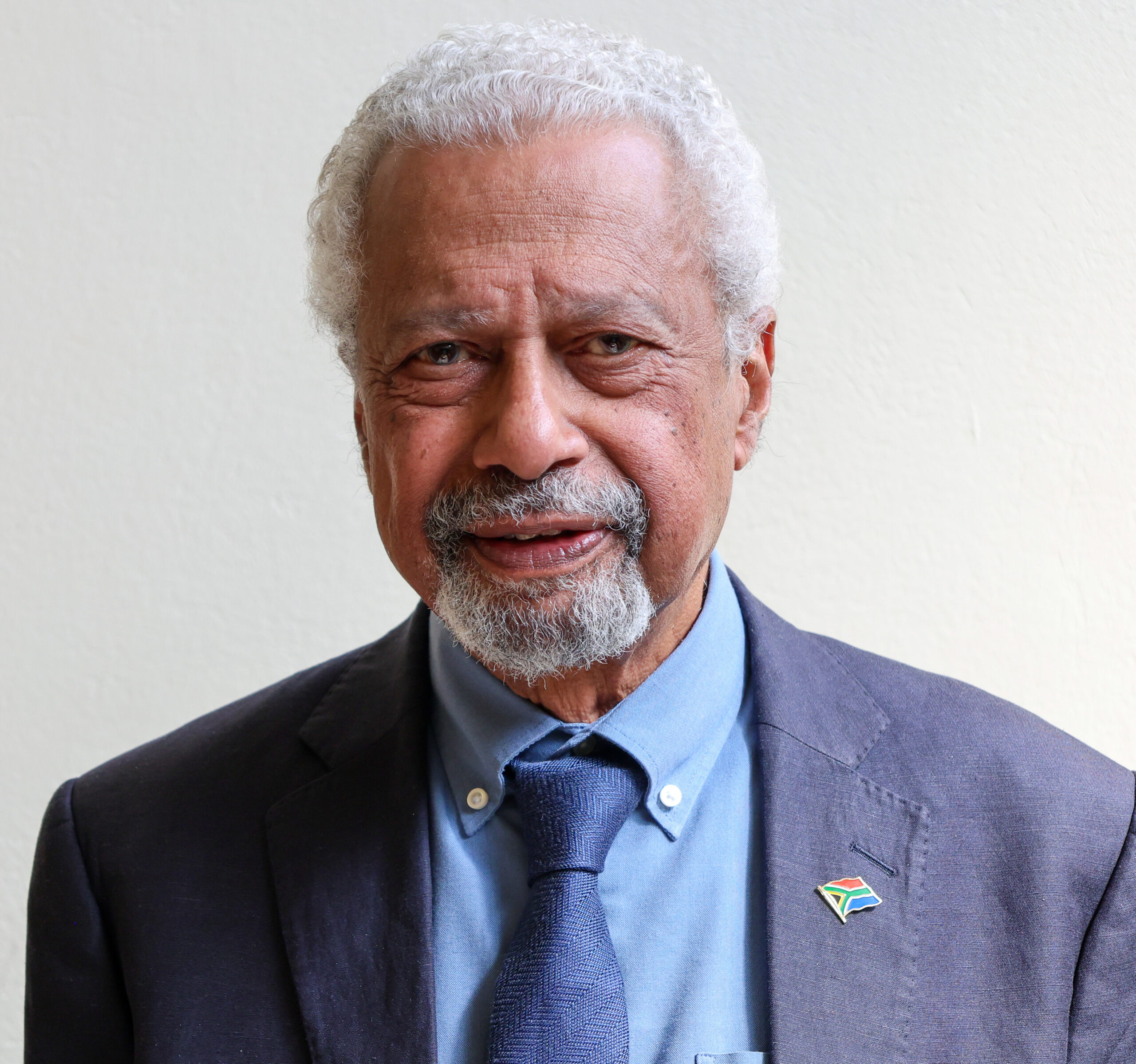
Born in Zanzibar, Tanzania, Abdulrazak Gurnah is known for novels that explore migration, displacement, colonialism and identity.
His work often focuses on the experiences of East Africans affected by imperialism and forced migration. Books such as Paradise, Afterlives and By the Sea have earned international acclaim.
In 2021, Gurnah received the Nobel Prize in Literature for his compassionate and insightful examination of the effects of colonialism and the refugee experience.

Funmilayo Akintoye
