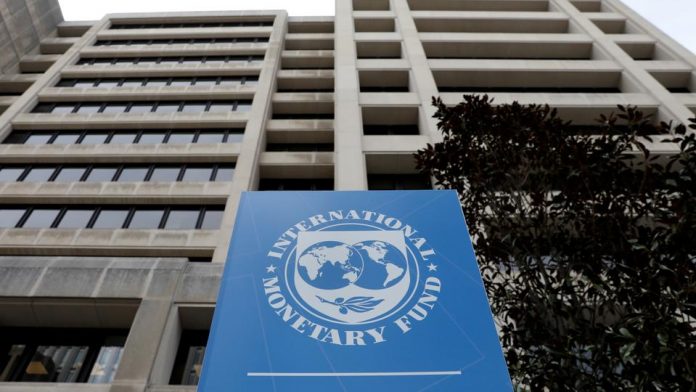
August 19, (THEWILL) – The International Monetary Fund (IMF) has suspended Afghanistan’s access to its resources due to what it called a “lack of clarity” surrounding the recognition of the country’s government after the Taliban took control of the capital city of Kabul.
Independent money transfer giant Western Union has also suspended money transfer services to Afghanistan “until further notice.”
A spokesperson for the IMF said in a statement: “As is always the case, the IMF is guided by the views of the international community.

“There is currently a lack of clarity within the international community regarding recognition of a government in Afghanistan, as a consequence of which the country cannot access SDRs or other IMF resources.”
Resources of over $370 million (£268 million) from the IMF had been set to arrive on 23rd August.
These funds were part of a global IMF response to the economic crisis.
The new rulers’ access to the IMF’s reserves in Special Drawing Rights (SDR) assets, which can be converted to government-backed money, have also been blocked.
SDRs are the IMF’s unit of exchange based on sterling, dollars, euros, yen and yuan.
This move by the IMF comes after the administration of President Joe Biden reportedly froze Afghan government reserves held in US banks, blocking the Taliban from accessing billions in funds.
“Any Central Bank assets the Afghan government have in the United States will not be made available to the Taliban,” a White House official told newsmen.
Earlier, the head of Afghanistan’s central bank said, the US had cut off access to its assets – around $7 billion of which are held at the U.S. Federal Reserve.
Ajmal Ahmady, who fled the country at the weekend, said Afghanistan Bank’s total reserves were approximately $9 billion as of last week.
But he said as per international standards, most of this was held in safe, liquid assets such as US Treasury bonds and gold offshore: “Given that the Taliban are still on international sanction lists, it is expected (confirmed?) that such assets will be frozen and not accessible to Taliban.
“We can say the accessible funds to the Taliban are perhaps 0.1-0.2% of Afghanistan’s total international reserves. Not much.”
Mr. Ahmady added that Washington’s suspended shipments of physical dollars were causing Afghanistan’s currency to depreciate. The Afghan currency, the Afghani, has fallen to record lows.
Ahmady said: “I believe local banks have told customers that they cannot return their dollars — because (Da Afghanistan Bank) has not supplied banks with dollars.
“This is true. Not because funds have been stolen or being held in vault, but because all dollars are in international accounts that have been frozen.”
In June, the IMF gave Afghanistan its latest loan instalment which was approved in November. In the same month, the UN published a report which stated that the “primary sources of Taliban financing remain criminal activities,” including “drug trafficking and opium poppy production, extortion, kidnapping for ransom, mineral exploitation and revenues from tax collection in areas under Taliban control or influence.”
The World Bank also funds many development projects in the country and has provided Afghanistan with $5.3 billion since 2002. It has not yet responded to the BBC’s request for comment on the current status of this funding.
The IMF has taken similar steps against other regimes not recognised by a majority of its members. This happened in April 2019 when SDR access was blocked after more than 50 member countries refused to recognise President Nicolas Maduro as the legitimate leader of Venezuela. The IMF also halted payments to Myanmar after the military junta seized control.
It is currently unclear whether the Taliban will be recognized by the international community, though China has indicated that it is open to establishing formal relations, being one of the few countries that did not evacuate its embassy when the Afghan government fell.