
“He who builds a canoe without a paddle will blame the river for running too fast.” – African proverb
February 01, (THEWILL) — Nigeria’s business environment is rich with innovation. From payments to logistics, real estate to digital services, we have shown an impressive ability to generate new ideas and get products to market faster. Yet many promising initiatives struggle to scale sustainably because innovation often moves faster than the infrastructure needed to support it.
Our thoughts move.

Our systems work.
And in the space between the two, value quietly escapes.
A few years ago, a major player in the digital payments sector launched a widely publicised platform with great anticipation. The technology worked, the brand was strong and early adoption seemed promising. But the regional infrastructure needed to sustain use lagged behind. Customer support capacity was inadequate, availability of agents was uneven across regions and dispute resolution took longer than customers expected.
Users liked the product concept but were no longer loyal when everyday reliability fell short. The innovation was solid; The supporting systems were not yet mature enough to stabilise it.
Around the same period, a fast-moving fintech newcomer entered the same market with a strong belief in a contagious sector. Its agents promoted the service on footpaths, markets and street kiosks. Product knowledge reached people not only through campaigns.
Customers adopted the service not just because the technology worked, but because the infrastructure for adoption – presence, education, feedback – was visible and accessible. Innovation attracted attention, but regional infrastructure shifted attention to confidence.
The real estate sector offers another example of the difference between foresight and delivery. Off-plan projects are often oversubscribed, reflecting the strength of investor appetite and architectural ambition. But once the units are handed over, residents expect systems that preserve value: stable power supply, clean water, functional property management, disciplined maintenance and transparent service charge structures. When these expectations are not met, the innovation loses its luster and frustration increases. A building is a product, but its long-term livability depends on the infrastructure of management and care.
Digital commerce has its own version of this paradox. Technology platforms have enabled rapid customer acquisition, but fulfilment infrastructure – warehousing, delivery reliability, customer dispute resolution and returns management – has sometimes lagged behind product rollout. Customers may praise the platform’s interface, but they remain loyal to a platform that consistently delivers what they paid for, where they need it, and when they need it. Innovation attracts customers; The infrastructure determines whether they will stay or not.
The lesson from all these examples is that innovation can open doors, but the infrastructure that comes through them carries a load of expectations. Infrastructure includes not only physical assets such as power, logistics and data networks, but also organizational elements: dispute resolution discipline, customer empathy, governance maturity, financial transparency, depth of succession and operational flexibility.
These elements are less flashy than product launches and rebranding campaigns, yet they quietly decide whether a business will become permanent or episodic.
Innovation is often driven by speed, while infrastructure requires patience. Innovation thrives on ideas, while infrastructure requires maintenance. Innovation may be announced, but the infrastructure must be demonstrated repeatedly and quietly. It’s the difference between a memorable launch and a trusted institution.
For business leaders, the challenge is not a choice between innovation and infrastructure. This is the ability to make them move together. Those that grow too quickly without an operational backbone risk reputational blowback, customer churn, and employee burnout.
Those who over-engineer infrastructure without innovation risk stagnation and irrelevance. Sustainable enterprises master both, recognizing that innovation attracts customers but infrastructure retains them.
The proverb reminds us: He who builds a canoe without a paddle will blame the river for running too fast. In business, innovation may be the canoe, but infrastructure is the oar. Without it, even the best designed ship would drift, capsize, or capsize.
Nigeria has never lacked innovation. Our next frontier is to combine creativity with operational discipline, ambition with credibility, and ideas with systems. Leaders who achieve that balance will not only scale; They will endure.
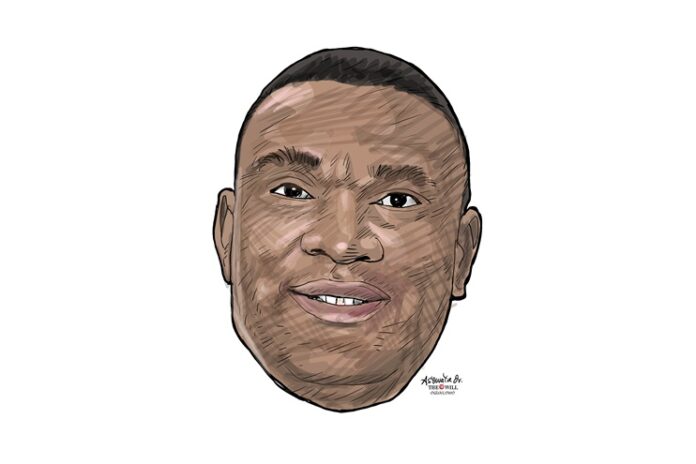
***Written by Olufemi Ogunlowo, CEO of Strategic Outsourcing Limited.

