Next week, the curtain will fall on the Ninth National Assembly, which was inaugurated on June 11, 2019. The legislators have already started packing their bags. They are ready to return to their homes, except for a few ones that have returned for another stint of four years and will join the other newly elected legislators for inauguration.
It was gathered however that only 30 percent of the members of the Ninth Assembly will return. A few weeks ago, the President of the Senate, Senator Ahmad Lawan, described the dwindling number of returning lawmakers as disturbing and worrisome.
Lawan said the situation where only about 30 percent of members of the Ninth National Assembly would be going to the 10th Assembly amounted to a loss in capacity, experience, skills and enterprise, among others.

Meanwhile, ahead of the inauguration of the 10th National Assembly, Lawan has set an agenda, saying that capacity building for members of the incoming Assembly should be a priority for efficient and effective service delivery.
According to him, what should be of major concern for the next National Assembly is capacity building for the incoming lawmakers to achieve the set goals and targets.
As we expect the inauguration of the new members, the question we need to ask is how the outgoing Assembly fared in the last four years?
It is no news that the 9th National Assembly has been facing several criticisms because of its relationship with the executive, with many political analysts and critics describing it as a rubber stamp.
To this school of thought, the Ninth Assembly failed to carry out the expected check on the executive. One of the examples cited is what has been described as the improper scrutiny of former President Muhammadu Buhari’s appointees, including members of his cabinet, by the assembly.
The Director, Centre for Democracy and Development (CDD), Idayat Hassan said that in Buhari’s firm grip, the outgoing National Assembly became a rubber stamp doing the bidding of the Executive to the detriment of Nigerians.
She said the National Assembly did little oversight on Ministries, Departments and Agencies (MDAs), pointing out that, for example, till date Nigerians are yet to receive a feedback on the inquiry into the affairs of the Niger Delta Development Commission (NDDC) since the exercise ended a few years ago.
But Lawan has, however, debunked the public perception of the Ninth National Assembly as a rubber stamp of the executive. He said that for the peace and development of the nation, the three arms of government had to work together as the failure and success of one arm of government would be attributed to all.
He explained that the three arms of government had a responsibility to each other and an obligation to Nigerians and they have a cordial relationship based on mutual respect for constitutional rights and mandate to succeed.
An analysis of this relationship shows that the Ninth Assembly achieved some milestones since it was inaugurated on June 11, 2019.
It would be recalled that after his emergence as the President of the Senate, Lawan had made his direction known, that is, to have a good working relationship with the executive.
Unlike the previous National Assemblies, the relationship between the Ninth Assembly and the executive can be described as cordial and devoid of rancour for sustainable development.
Lawan, in his speech titled: ‘The Senate that works for Nigerians’ had said, “we are going to work collaboratively with the executive arm of government to strengthen our planning and budget linkage that ensures effective service delivery and fulfillment of essential government obligations to the citizens, while taking care of the perennial delays in our annual appropriation bill passage and implementation.
“I want to seize this opportunity to tell the entire nation, particularly those that are in doubt, that the Senate and indeed the legislature is going to operate independently in accordance with its own rules, procedures and time honoured norms and best practices. While working closely with the executive arm to deliver the dividends of democracy to the Nigerian people.
“Our legislative agenda will focus on enacting laws and strengthening existing laws to facilitate the reforms required to truly take our nation, our people and our economy to the next level.
“Within us as a Senate, our leadership will commit to partnership rather than partisanship and between us and the executive arm of Government, we will choose unity of purpose over conflict and discord while also working towards further strengthening and guaranteeing our independence and that of the judiciary.”
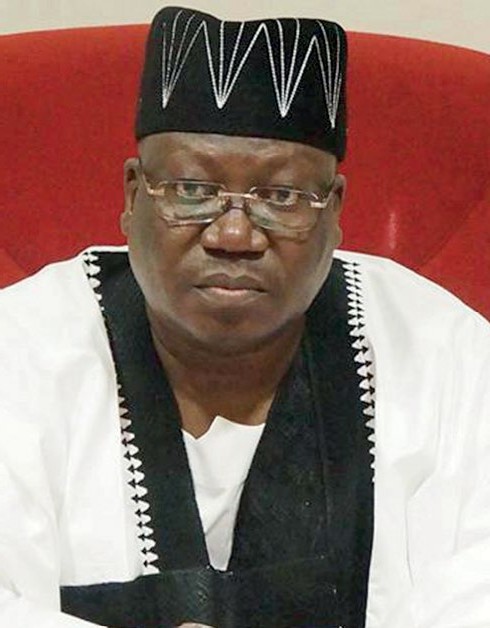
Lawan had in the past four years steered the 9th Senate through this part and this has helped to stall any confrontation between the National Assembly and the executive.
First, the Lawan-led 9th Senate had broken the jinx of the budget circle and it also listed several achievements that eluded the 8th National Assembly, because of the frosty relationship with the executive arm of government from June 2015 to June 2019.
In one of his remarks, the Senate president emphasised the achievements of the Senate and by extension, the 9th National Assembly and how the harmonious working relationship with the executive enhanced stability in governance.
He said: “The Ninth Assembly has been the breaker of many legislative jinxes in this Fourth Republic, having recorded breakthroughs in many areas of our national legislative environment that had defied the interventions of previous Assemblies.
“First and foremost, we have enhanced stability in governance through productive cross-party collaboration with the other arms of government, particularly the Executive. This has yielded fruits in the unprecedented number of quality bills passed by the National Assembly and duly signed into law by the President.
“Some of the most critical of such bills that have been signed into law include the Deep Offshore and inland Basin Production Sharing Contract (amendment) Act, 2019, Companies and Allied Matters Act 2020, Nigeria Police Reform Act, 2020, Petroleum Industry Act, 2021, and Electoral Act, 2022, just to mention a few. These are critical legislative interventions relevant to the promotion of good governance in our dear nation.
“For instance, the Electoral Act (amendment) Bill 2022 has rekindled interest in political participation in our country and raised confidence in our electoral process. We passed this Bill early enough and with some innovations to guarantee better conduct of our elections especially beginning from the 2023 elections.
“We were also able to reset our financial years to make our budget cycle stable and predictable. This change has helped immensely in the implementation of projects and programmes, as well as in general performance of the national budgets. This is one legacy of the Ninth National Assembly that we have sustained since 2019, as reflected again, in the passage of the 2023 Appropriation Bill on Wednesday, 28th December, 2022.
Evaluating the implementation of the Senate agenda, Lawan said that “the Ninth National Assembly has been a very active participant in this process of nation building.
“At our inception in 2019, we set out a robust Legislative Agenda to advance our collective aspirations as a nation and make positive impacts in the lives of our people. As a Senate that works for Nigerians. We have remained unwavering in our commitment to the Agenda.”

AYO ESAN, has been actively reporting and analyzing political events for different newspapers for over 18 years. He has also successfully covered national and state elections in Nigeria since the inception of this democracy in 1999.