The Nigerian Airspace Management Agency (NAMA) recently carried out a test-run of the Satellite Based Augmentation System (SBAS) in Abuja, which was aimed at enhancing safety in the country’s airspace and cutting cost for airline operators.
In preparation for the implementation of the new technology, NAMA, in collaboration with the Nigeria Communications Satellite (NIGCOMSAT), deployed its calibration aircraft Beechcraft King Air 350i for the demonstration flight, which was successful.
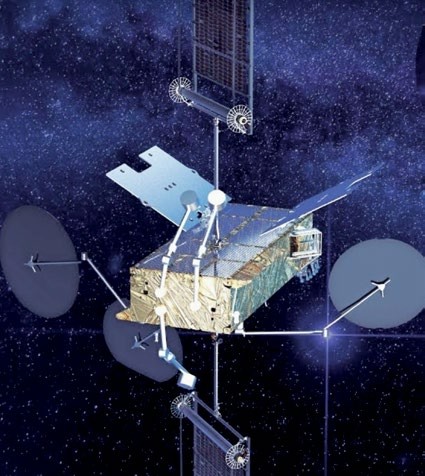
SBAS is a correction service for standalone Global Navigation Satellite System (GNSS) observations and it has been implemented in several regions around the world, including the United States, India, Europe, and Japan and others.

An operational SBAS provides a service for improving the accuracy, integrity, and availability of standalone GNSS, or what is traditionally known as Global Positioning System (GPS).

The facility achieves increased accuracy through correction signals, which are derived from data collected from a ground reference station network.
Speaking at the occasion, the Minister of Communication and Digital Economy, Prof Isa Pantami, emphasised that the successful demonstration of SBAS using the NIGCOMSAT had shown clearly the country’s capacity to support, not just Nigeria, but the rest of Africa.
Pantami, further emphasised that NIGCOMSAT covers the whole 30.37million square kilometres of Africa and also covers some areas of the Atlantic Ocean, the Indian Ocean, Asia and Europe. According to him, the country’s satellite has the capacity to cover the SBAS in not only Nigeria, but Africa as a whole.
He pointed out that the facility could also be used for communication, marine, rail, road as well as agriculture.
Pantami stressed that the world is in the age of digital technology and this was a key enabler of major economies and that other African countries could employ its services for things such as cartography, topography as well as hydrographic survey.
Also speaking at the demonstration flight,the Ag. Managing Director, NAMA, Mr. Matthew Pwajok, said that data received from SBAS could reduce the positioning error from standalone GNSS signals between five and 10 metres to decimetre accuracies, which is transmitted through satellite, as opposed to a terrestrial communications channel, thereby enabling it to cover a wider geographical area.
Pwajok noted that an operational SBAS comprises reference stations, master stations, communication satellites and the broadcast SBAS signals.
On the requirements for the implementation of SBAS in Nigeria, Pwajok said that Part 14 of the Nigerian Civil Aviation Regulations (Nig CARs Part 14), recommends the implementation of SBAS in Nigeria in accordance with the International Civil Aviation Organisation (ICAO) Regional Air Navigation Plan.
He also added that the Nigerian Performance Based Navigation (PBN) Roadmap supports the implementation of SBAS in the medium and long term, while the Nigerian National Air Navigation Plan further supports its implementation, among others.
Pwajok explained that when fully implemented the new system would encourage single airspace for Africa.
He maintained that for the Single Africa Air Transport Market (SAATM) to work effectively, it requires the support of single African sky, which he said would be a strategy for sustaining or supporting its implementation.
He said, “Definitely, if you want to remove barriers in terms of immigration and others, then, you must also remove barrier in the airspace, otherwise you have not achieved anything. If there are restrictions and I have to have a clearance before I go to Cotonou in Benin Republic, then, you have not done anything.
“So, that is one of the strategies for achieving SAATM. You must have a single African sky so that flights can flow. The more restrictions in the airspace, the more restrictions you will have on ground. We need to remove the bureaucracy in the system.”
Besides, Capt. Musa Nuhu, the Director-General, Civil Aviation (DGCA), in his paper reiterated that SBAS’ adoption in Africa aligned with the SAATM agenda of the African Union (AU). It is a flagship project of the AU Agenda 2063 to advance the liberalisation of civil aviation in Africa through a unified sky and acting as an impetus to the continent’s economic integration agenda.
He noted that exponential development of SBAS services was ongoing worldwide, stressing that Africa as a continent should not be left out.
Nuhu declared that the NCAA would assist NAMA in ensuring that SBAS met the criteria as specified in Part 14 of the Nigeria Civil Aviation Regulations, adding that it was necessary for the intending service providers to be conversant with the relevant regulations necessary for its deployment.
He added that it was imperative for African Civil Aviation Commission (AFCAC), African Airlines Association (AFRAA) and the International Air Transport Association (IATA) to continue to raise the awareness among users especially the airlines, while the ICAO regional offices should step up their engagement with states on developments related to GNSS Standardisation.
Nuhu assured that NCAA would fast track the required regulatory approval for SBAB’s implementation for use in Nigeria.
Besides, Farouk Ahmed Umar, Director, Engineering Services, NAMA, stated that the SBAS was seen to provide a cost-effective solution for navigation within the country and beyond where the deployment of ground-based equipment was not cost-effective, especially at smaller airports and private aerodromes.
The availability of the SBAS services, according to him, would be everywhere within the region unlike the ground base that had defined service volumes outside, where there was no coverage.
He said “Error-corrected signals was then transmitted to users as augmentation signals to improve the accuracies of the raw satellite signals being received by users.
“If the error-corrected signals are transmitted at each localised area from the ground directly to users it is called GBAS, and if the error-corrected signals are relayed and transmitted to users through geostationary satellites to the users, it is called SBAS.”
He pointed out that unlike some of its equipment that were ground based, the SBAS is a satellite based, adding that any aircraft with the onboard equipment and certified pilot by NCAA could use the facility to navigate, thereby improving its efficiency and reducing redundancy.
Besides, he explained that the implementation of SBAS would not lead to the decommissioning of the PBN, another satellite based system, maintaining that in aviation, every critical equipment must have a redundancy, which SBAS had come to serve.
Minister of Aviation, Sen. Hadi Sirika who was represented by Dr. Emmanuel Merbode, the Permanent Secretary, Ministry of Aviation reiterated that the planned implementation of SBAS was not intended to eliminate or replace ground based navigational systems such as Instrument Landing Systems (ILS), Microwave Landing System (MLS), Very High Frequency Omni-Directional Range (VOR) and others, but intended to provide alternative means of navigation for operators, as well as cost effective options for air navigation service providers.
He appealed to airspace users not to be apprehensive of the new system, but to trust that it is in place to make the system a lot more efficient and safe and act as a backup.
He said: “Airlines or airspace users should not be apprehensive, but receptive to the concept as a backup system or primary means of navigation in areas where ground based navigational facilities are not available.
“Distinguished Ladies and Gentlemen, Nigeria in the last seven years has invested significantly in the procurement of ground based navigational facilities with over 15 new Doppler VORs, over 15 new ILSs Category II and five new ILSs Category III.
“In addition, Nigeria has invested heavily in the deployment of ground communication facilities for Extended Range VHF Voice Communication system, as well as Total Radar Coverage of Nigerian airspace with ground surveillance.”

Anthony Awunor, is a business correspondent who holds a Bachelor of Arts Degree in Linguistics (UNILAG). He is also an alumnus of the Nigerian College of Aviation Technology (NCAT), Zaria Kaduna State. He lives in Lagos.