
Like a pre-match show off between prize fighters, two combatants are squaring up for an epic battle over a river in Ilorin Emirate. Last week, some Muslim clerics quick marched to a river bank at Yemoja community where they prevented Olokun devotees from carrying out their religious obligations despite Constitutional guarantees of freedom of worship for all Nigerians. On their part, the traditional worshippers did not take the Muslim threat lightly. They responded in kind, both of them chest-thumping about deploying every available arsenal at their disposal for a fight to the finish. THEWILL examines the feud for the soul of a city’s loyalty to its traditional past and pressure to maintain the status quo as one with a solid Islamic foundation. Michael Jimoh reports…
One rainy day last week, scores of heavily turbaned men massed around a popular river of the same name in Yemoja community about sixty-one kilometres from Ilorin capital of Kwara state. They had responded to a video making the rounds that devotees of Olokun goddess of the river were presently at that location performing sacrifices as part of their devotional.
To the last man, the Islamic invaders had come to stop what they considered pagan and idol worship, although they ought to have known better not to interfere with the religious proclivities of others as stipulated in the Nigerian Constitution.

They were undeterred and had come prepared for the occasion even though it took them three long days to find the exact location where the traditionalists were performing their rites.
And such was their preparation that some of them had come with charms “tirah” to use on the offending traditional worshippers but for the downpour that day. (It is assumed the talisman loses its potency once water touches it.) According to a report by Kunle Akinrinade head of investigation of The Nation newspaper, led by Imam Baba Olokuta Agidi the Muslim horde came fuming and then threatened to “deal with the traditionalists if they did not desist from carrying out the rites at the river.”
“We are at the Iyemoja River,” boasted a statement credited to Olokuta Agidi, “because we saw a footage posted on the social media wherein it was claimed that some people parading themselves as traditionalists came to this river to offer sacrifices and that they would be seriously dealt with.”
What was even more galling to the Muslim converts was that the traditionalists retained the original pagan name Yemoja instead of the preferred Zem Zem after a river in Mecca. “What amazes us is the fact that this river is called Yemoja River and not Zem Zem River (in Mecca, Saudi Arabia).”
The Zam Zam well, river in Mecca is believed to have been miraculously generated. So, naming Yemoja in Kwara after the well in Mecca is very much in line with the reasoning of converts to foreign religions, how those converted to Islam have become colonised peoples, in the words of the inimitable Trinidad-born, Oxford-educated Nobel laureate VS Naipaul.
“Islam, in its origin, is an Arab religion,” Naipaul said in one interview. “And the people who are non-Arab Muslims are, in effect, converts, converts who have had to turn their backs on their cultures, on their own early faiths, on their own civilisations, on their sacred lands. Their sacred sites have become the sacred sites in Arabia. Their sacred language is Arabic.”
Not only did Olokuta Agidi and his Muslim companions take umbrage at the unchanged name of Yemoja River, they also threatened to poison it. But the traditional worshippers were unfazed.
“As far as we are concerned the people behind the threat to poison the river with charms if we traditionalists come to carry out sacrifices here are just blabbing,” a source from them declared. “They (Muslim clerics) should desist from issuing threats to us. Won’t passersby that drink from this Yemoja River die if the clerics make good their threat to poison this river just because we traditionalists come here to make appeasement?
“Do the Muslims intend to kill other people that drink from this Yemoja River? And what do Muslims want to do with this river by asking us not to come here and threatening to poison it? The Muslims are calling us idol worshippers, but we want to let them know that we are genuine indigenes of Ilorin. We are traditionalists and we can never be ashamed of our religion. Therefore, this Yemoja River we are standing beside, should any Muslim cleric come here to do evil to the water, such person would face calamity before he gets home.”
The Olokun worshippers did not stop there. They continued with curses on whoever had evil plans for the river. “May water kill anyone that comes to this river to do evil. Anyone that attempts to poison this river because of us will be swept away alongside his children by the river. We traditional worshippers are peace loving people. Hence it is absurd to hear that some people have been threatening to kill those who come to carry out sacrifices here.
“We are warning you (Muslim clerics) to stop threatening us, because we also have charms that we inherited from our forebears and we might be forced to bring them out to liberate ourselves. As you can see, the water the Muslims said is laced with poisonous substance is what we are drinking now and nothing has happened to us.”
According to Akinrinade, “the traditionalists had barely finished their comments when a group of Muslim clerics stormed the scene and an altercation ensued. In the middle of the confrontation, the Muslim leaders led by Imam Baba Olokuta Agidi again warned the traditionalists never to set their foot on the river again.”
“We have come back to confront those idol worshippers at the Odo (River) Oko Olowo. This river is not where you idol worshippers can make sacrifices or appeasement at all. We will not tolerate that. We don’t want Osun river worshipping in Ilorin.”
The riverside exchange between Muslims and traditionalists in Ilorin is only one of such recent confrontations in the city founded by the Yoruba in the 15th century but overrun by Fulani Islamic Jihadists 400 years later. Ever since, the predominant Muslim population has had overwhelming control of and influence over the town and have become, in the process, mostly intolerant of other religious. The biggest and most conspicuous religious institution in the city remains the gold-domed, four-spired Central Mosque smack in the centre of Ilorin.
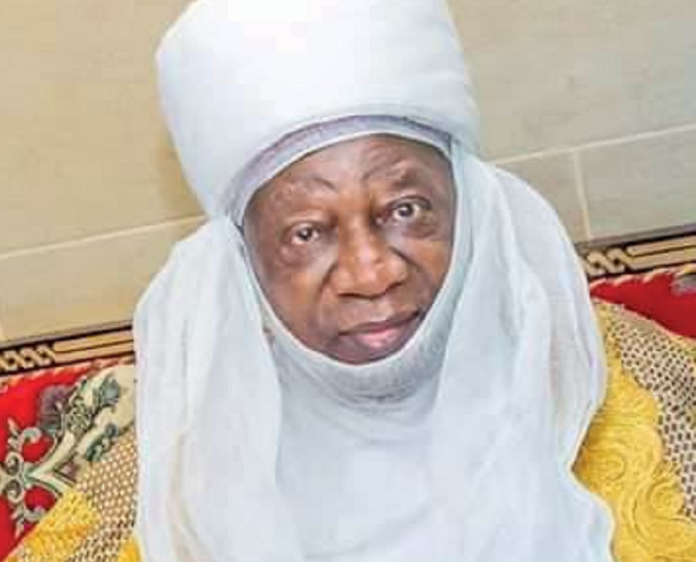
Last June, for instance, following an advertisement on social media by Priestess Yeye Adesikemi Olokun Omolara Olatunji to hold a three-day festival honouring some Yoruba deities, the Majlisu Shabab li Ulamahu Society in Ilorin bee-lined it to her residence with the backing of Emir of Ilorin Alhaji Sulu Ibrahim Gambari. Playing host to what the Emir and his Islamic brothers called a pagan festival or idol worship would desecrate a city built on solid Islamic foundation.
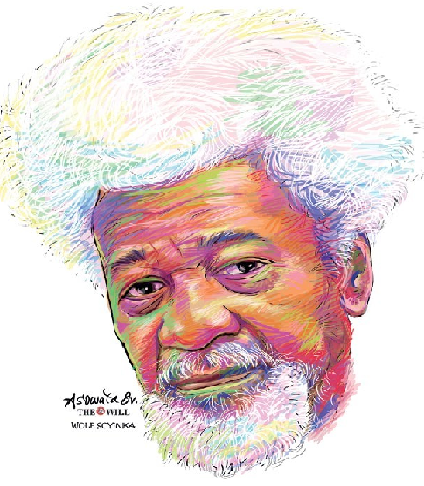
But some other people thought otherwise. Professor Wole Soyinka was one of them and he made this known pretty quickly in a sharp response to the Muslims in Ilorin in a letter addressed to the Emir himself.
“It is sad to see the ancient city of Ilorin, a confluence of faiths and ethnic varieties, reduced to this level of bigotry and intolerance, manifested in the role of a presiding monarch,” Soyinka wrote about a month or so ago. “Your Royal Highness, it is conduct like this that has bred Boko Haram, ISIS, ISWAP and other religious malformations that currently plague this nation, spreading grief and outrage across a once peaceful landscape, degrading my and your existence with their virulent brand of Islam”.
“It is conduct like this that has turned, before our very eyes, a once ecumenical city like Kaduna into a blood-stained mockery of cohabitation. It is conduct like this that makes it possible for a young student, Deborah, to be lynched in the very presence of armed police, on mere allegation of having belittled the image of a revered prophet.
“It is action of this nature, perpetrated in obscure as well as prominent outlets of the nation, that turns a young generation into mindless monsters, ever ready to swarm out and kill, kill, kill. Simply kill for the thrill of it, but under presumption of religious immunity. It is conduct like this that then nerves one extremist to wake up one day in a Scandinavian country, publicly announce his intention, and proceed to make a bonfire of copies of the Qur’an. Reprisals followed, equally mindless, trapping humanity in an ever-ascending spiral of costly but gleeful violence.”
Soyinka concluded his epistle to Alhaji Gambari to “rein in those agents of division, of triumphalist intolerance, such as the Majlisu Shabab Ulamahu Society. There is a thin line between power and piety.”
With the recent face-off between Muslims and traditionalists in Ilorin, it is not quite clear in whose favour the confrontation would swing. But what is pretty much certain is that both of them have dug in their foot in their respective positions waiting for who will blink first.

Michael Jimoh is a Nigerian journalist with many years experience in print media. He is currently a Special Correspondent with THEWILL.
