
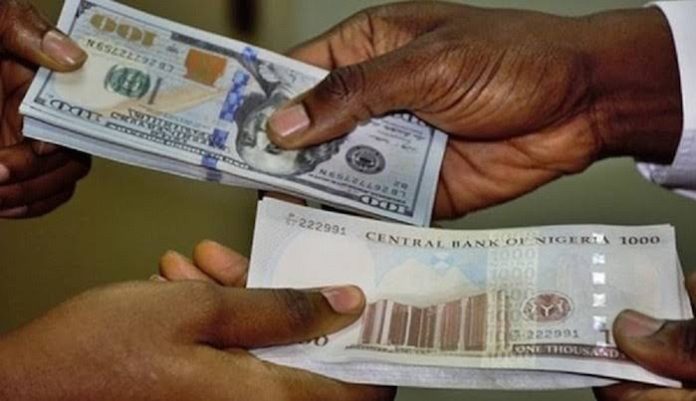
May 06, (THEWILL) — Nigeria’s currency, the naira, strengthened to ₦1,362 per dollar on Tuesday, extending its recent appreciation against the United States dollar and signaling improved stability in the foreign exchange market.
Figures released by the Central Bank of Nigeria (CBN) showed the currency gained from ₦1,367.5/$ recorded on Monday. The upward movement reflects better demand and supply dynamics in the official market, alongside a modest easing in global dollar strength.
Intraday trading on Tuesday ranged between ₦1,362/$ and ₦1,370.5/$, with an average rate of ₦1,366.27/$. This compares with Monday’s range of ₦1,362/$ to ₦1,374.5/$ and an average of ₦1,365.89/$.

On a week-on-week basis, the naira also showed improvement, rising from ₦1,383/$ recorded last Tuesday.
Despite the positive trend, external reserves declined to $48.36 billion as of April 30, 2026, highlighting underlying pressures in the economy. Analysts note that while the naira’s appreciation offers short-term relief, sustained gains will depend on stronger reserve buffers and consistent foreign inflows.
Global currency markets were mixed, with the dollar weakening amid easing geopolitical tensions, particularly in the Middle East. The dollar index slipped to 98.299, while the euro, British pound, Australian dollar, and New Zealand dollar all recorded gains. Meanwhile, the Japanese yen remained relatively weak.
The softer dollar followed signals from U.S. officials suggesting progress toward a potential agreement with Iran, which also contributed to a drop in oil prices. U.S. crude fell by over $2, with West Texas Intermediate trading near $100 per barrel.
Meanwhile, Nigeria’s external reserves dropped by about $731 million in the first three weeks of April. The CBN remains optimistic, projecting reserves could reach $51 billion by year-end, supported by ongoing monetary reforms and improved investor confidence.

Ogochukwu Onwaeze is a writer specializing in business and economic journalism. At THEWILL News Media, she translates market trends, financial developments, and policy shifts into clear and engaging stories.
