
-
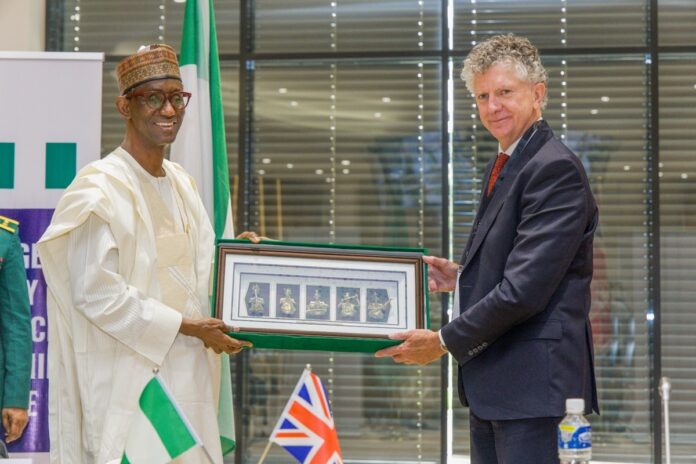
Nigeria and the United Kingdom have officially expanded their defence and security partnership following the Fourth UK–Nigeria Security and Defence Partnership Dialogue in Abuja.
-
The two nations agreed on fresh measures to tackle counter-terrorism, foreign information manipulation, cyber-attacks, human trafficking, and illicit financial flows.
-
The UK pledged enhanced technical support for the Nigerian Armed Forces, including assistance with drone technology, counter-IED capabilities, and maritime security in the Gulf of Guinea.
-
Both countries reaffirmed their commitment to human rights, election security, non-kinetic counter-terrorism strategies, and regional stability across West Africa and the Sahel.
July 23, (THEWILL) — Nigeria and the United Kingdom have agreed to significantly expand their security and defence partnership, unveiling fresh measures to combat terrorism, cyber threats, fraud, illicit finance, and maritime insecurity. Simultaneously, both nations reinforced their cooperation on human rights, civilian protection, and regional stability across West Africa.
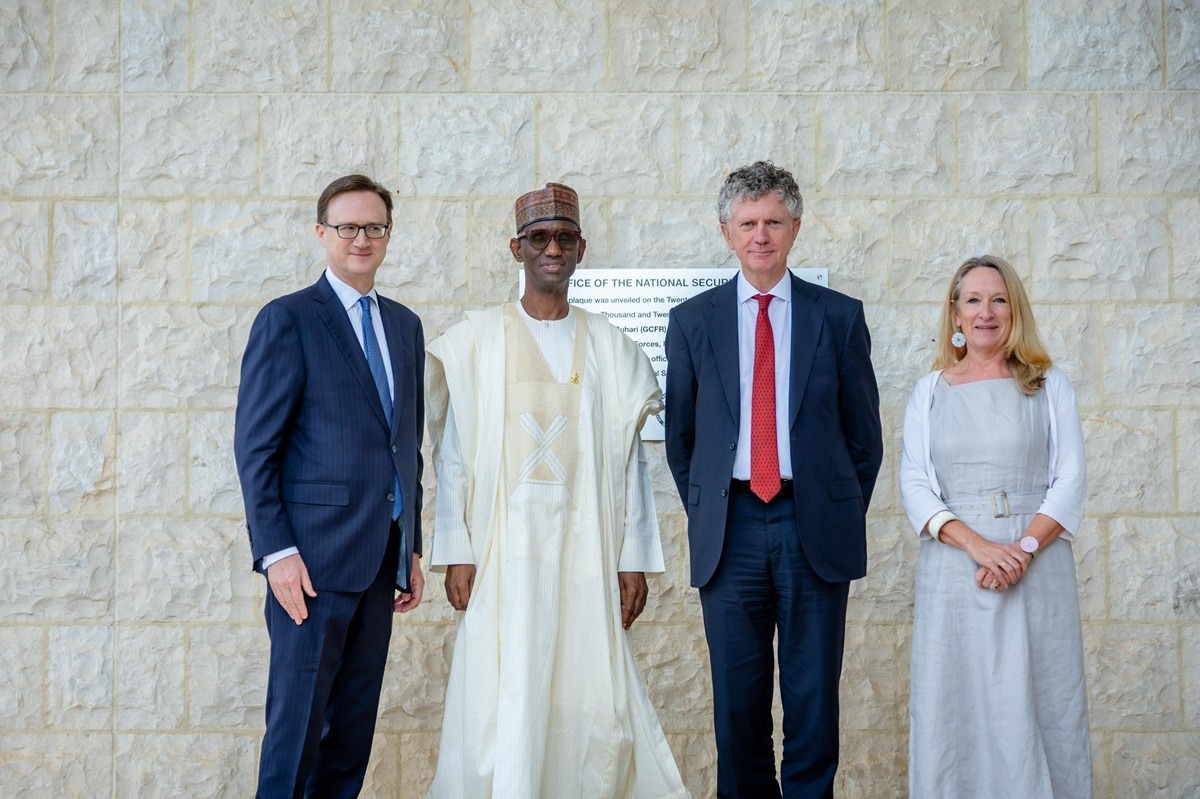
The commitments were finalised in a joint communiqué issued at the conclusion of the Fourth United Kingdom–Nigeria Security and Defence Partnership (SDP) Dialogue, hosted at the Office of the National Security Adviser (ONSA) in Abuja on June 23 and 24, 2026.
Nigeria’s National Security Adviser, Nuhu Ribadu, and his UK counterpart, Jonathan Powell, jointly opened the dialogue. The summit brought together senior government officials from both nations to review progress made since the 2025 London meeting and chart new avenues for strategic collaboration.

According to the communiqué, both nations reaffirmed their commitment to strengthening bilateral defence cooperation. This will be achieved through joint military training, doctrine development, and technical support for the Armed Forces of Nigeria—with a specific focus on countering improvised explosive devices (IEDs), uncrewed aerial systems (UAS), and other emerging combat threats.
The UK pledged continued support for Nigeria’s Joint Doctrine and Warfare Centre, maritime domain awareness capabilities, and the National Hydrographic Agency. Furthermore, both governments agreed to deepen operational cooperation to suppress piracy and curb illicit maritime activities within the Gulf of Guinea.
The high-level talks also established a new operational framework to address hybrid threats, including cyber-attacks, foreign information manipulation and interference (FIMI), misinformation campaigns, and transnational organised crime.
To counter evolving digital threats while upholding international human rights standards, both countries agreed to expand intelligence sharing, enhance cyber resilience, build joint operational capabilities, and align their national defence strategies.
Counter-terrorism remained a central pillar of the discussions. Both delegations resolved to enhance real-time intelligence exchanges, streamline multi-agency coordination, boost crisis preparedness, and upgrade aviation security cooperation, including ongoing capacity-building programs at the international airports in Lagos and Abuja.
The UK reaffirmed its backing for Nigeria’s National Counter Terrorism Centre (NCTC), forensic investigation frameworks, and strategic communications initiatives. Additionally, both sides agreed to accelerate the rollout of the Multi-Agency Anti-Kidnap Fusion Cell across various states.
Recognising the need for non-kinetic approaches, both nations renewed their commitment to preventing violent extremism through disarmament, demobilisation, and reintegration (DDR) programs. In line with this, the UK pledged support for the implementation of Nigeria’s emerging national DDR framework.
The communiqué highlighted the UK’s praise for Nigeria’s efforts to accelerate terrorism-related prosecutions through remote court proceedings and ongoing mass trials at the Federal High Court, commending the initiative as a major step toward strengthening legal accountability while respecting fundamental human rights.
Human rights safeguards and civilian protection protocols formed a key part of the bilateral talks.
Both governments agreed to strengthen accountability mechanisms for investigating human rights violations by both state and non-state actors. In this context, they welcomed the active involvement of Nigeria’s National Human Rights Commission in ongoing investigations regarding recent military airstrikes.
The UK offered additional technical assistance to boost the commission’s capacity to investigate abuses committed by armed groups. Furthermore, the British government reaffirmed its support for Nigeria’s Women, Peace, and Security agenda, conflict prevention initiatives, and early warning infrastructure.
In light of preparations for Nigeria’s upcoming elections, both delegations emphasised the critical importance of maintaining professional election security, safeguarding voters and public institutions, and managing public order in strict accordance with international standards.
Addressing financial crimes, Nigeria and the UK resolved to intensify their joint efforts against fraud, illicit financial flows, and cryptocurrency-related offences through heightened intelligence sharing, improved asset recovery mechanisms, public-private partnerships, and coordinated prosecutions.
Regional security issues featured heavily in the discussions, with both nations expressing grave concern over the deteriorating security landscape in the Sahel and its broader destabilising impact on West Africa.
They reaffirmed Nigeria’s vital leadership role within the Economic Community of West African States (ECOWAS), welcomed ongoing diplomatic engagements with the Alliance of Sahel States (AES), and backed the transition of Nigeria’s National Counter Terrorism Centre into a regional centre of excellence.
The UK also welcomed Nigeria’s decision to join the International Counter Terrorism Academy in Côte d’Ivoire, a move aimed at fortifying cross-border counter-terrorism operations across the sub-region.
To guarantee the execution of these agreements, officials from both governments were directed to monitor compliance and track progress ahead of the fifth Security and Defence Partnership Dialogue, which will be hosted by the United Kingdom in 2027.
The communiqué was jointly signed by Nuhu Ribadu and Jonathan Powell, who reasserted their shared commitment to advancing the broader UK–Nigeria Strategic Partnership through sustained, long-term cooperation on mutual defence priorities.

Janefrances Ebere Chibuzor is a Tourism Writer at THEWILL
