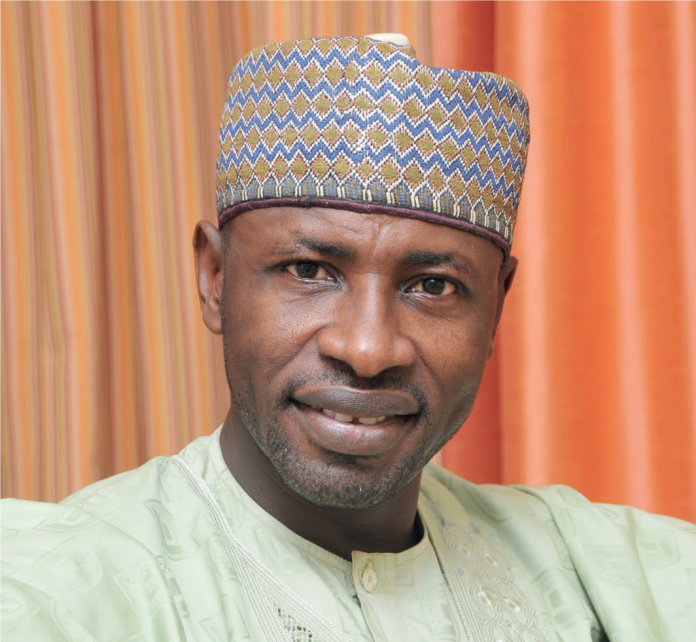
November 28, (THEWILL) – The National Chairman of the National Conscience Party (NCP), Dr Yunusa Tanko, speaks with AYO ESAN about direct primary and other issues affecting the country. Excerpts:
The National Assembly recently adopted the direct primary as the mode for political parties to choose their candidates for elections. What is your position on this?
Basically, the amendment of the Electoral Act is long overdue. You will remember that in 2019, just before the general election, President Muhammadu Buhari said it was too close to the election and he refused to sign the amendment.

As regards the issue of direct primaries, let us look at what indirect and direct primaries are. An indirect primary is when members of political parties vote for those who will represent them at the delegate’s conference where candidates for an election will be selected. A direct primary, on the other hand, is the system in which the members of a political party directly choose those who will represent the party in elections. This is done without an intermediary and it gives power to the people at the grassroots to decide who becomes their representative. A direct primary is an election before the election, depending on the database of political parties.
The challenges here are the following: Does the Independent National Electoral Commission have the capacity to monitor direct primaries in over 120,000 polling units or wards, as the case may be? Does INEC have the human resources to do that? That is one issue.
Do the political parties have data that shows the number of members they have in each ward? That is a big problem.
Combined, it means there will be a need for serious planning to ensure that direct primaries yield the desired results. One advantage of the direct primary is that it is an inclusive system that allows people to select their representatives or leaders from the ward level to the presidential level. At the same time, it eliminates god- fatherism and checks the dominance of state governors, who hitherto decide who becomes what at the expense of the electorate.
That is probably why state governors are kicking against direct primaries because it will whittle down the power which they exercise in choosing candidates for elections. Another question we need to ask is this: Are the members of the National Assembly really interested in the Nigerian electorate? No. Absolutely not. They are merely protecting their interests because they have been crying that most state governors have taken charge of who becomes what at the expense of their own interests. So they have returned the power to the people so that they can monitor and control the electorate in their own wards or constituencies. However, whether they have done it in the interest of the people or in their own interests, it does not even really matter at the moment. What matters most is that democracy has gained more because the power to elect candidates has returned to the people.
But some people are of the opinion that political parties, not the Electoral Act, should decide what method to use in choosing candidates for elections. They believe the National Assembly has usurped the expected duty of political parties in a democracy. How do you see their position?
That is true because the option to choose has been eliminated. The parties should have been the ones to choose either the direct primary or indirect primary. But the same problem is that the majority of those who control the apparatus of the parties are mostly state governors and members of the National Assembly or the presidency because they contribute money to political parties. So, if we say we should allow direct or indirect primaries, it will be in the parties’ interest to control who becomes what or who contests an election. So the power will no longer be in the hands of the people. Rather, it will be in the hands of political parties. To avoid this, the option was narrowed down to the direct primary, which is the mode that favours the generality of the membership of political parties.
Do you think most parties have enough resources to conduct direct primaries across the country?
No. Even the ruling party, the All Progressives Congress and the Peoples Democratic Party will have challenges with funding. However, the direct primary will encourage every member to contribute money. It must have been clearly stated in all political parties’ constitution that any member who wants to vote or be voted for must be a financial member. What this means is that there must be a certain amount of money that each party member is supposed to contribute. The party will have to generate money that will be spent on each of its programmes. Any member who wants to be voted for must be a card-carrying and financial member of that party. Otherwise, it will bounce back on each member who wants to be voted for to raise money. For instance, if you want to be a councillor, you must ensure that all the members that will vote during the direct primary have paid their membership dues. So you either pay for them or they pay themselves. So, it may now turn out to be that he who pays the piper dictates the tune.
Another amendment to the Electoral Act is the introduction of electronic voting and electronic transmission of election results. What is your take on this?
The electronic transmission of results is a fantastic idea. It will bring an end to the manipulation usually experienced at collation centres, where you see the results from polling units overturned. INEC has demonstrated that it can transmit the election results electronically, which, more or less, is like pronouncing results. This is because INEC officials actually announce the results at each polling station, take a picture of that particular result and send it to the INEC server. That way, the issue of manipulation on the way to the collation centre is aborted. Nobody has the opportunity to manipulate the results at any point in time because the same results announced and which you saw at polling units have been sent electronically to the INEC server to be collated. So everybody can monitor the collation through the INEC website.
It is a good development. With regards to electronic voting, we may still have some challenges here and there, like network issues. But if INEC can successfully get it operational, it will increase the number of voters. It will also eliminate violence at polling stations and curtail ballot box snatching. Anybody can vote from their house, but the challenge here is on the technique of voting. The system must be clearly monitored with a cyber security code that nobody can hack. That way, we can be assured that anybody can vote at any time they wish to do so. If we put this into practice and see how it goes, it will be a good development for our nation.
The Anambra governorship election was held recently. How do you assess INEC’s performance in that election?
I think INEC did its best, in spite of the security challenges. I think INEC did pretty well. I want to commend the people for being courageous enough to çome out and vote, despite the threat of insecurity. Kudos to them. Another thing is that the Indigenous People Of Biafra (IPOB) decided to shelve the sit-at-home order issued to residents, even though it was almost too late. They encouraged everybody to come out and elect whoever they wanted. So every stakeholder in the election in Anambra did well and contributed to the development of democracy. I hope this will translate to all parts of the federation in the coming elections so that we can eliminate those trying to bring the country down.
Many names are being touted as interested in succeeding President Muhammadu Buhari. However, some people have expressed the opinion that anybody above 70 years may not perform effectively if voted into office. Do you agree with them?
I am an apostle of the younger generation and I want them to take leadership positions in the country. But I went into our history and saw that General Yakubu Gowon was 29 years-old when he took over the leadership of this country. There have been people in leadership positions at a younger age, but whether they added value at that time remains a question.
Those who are old and expected to be wise have failed us. It has, therefore, become an issue of merit and capability to lead, rather than age. An old man can come and perform exceedingly well. A young man can come, be docile and mess up the country. They can also come and do extremely well. What we need to do is to select people who have impeccable character and those who are in good enough health condition to function effectively.
We should also vote people who have the interest of the people at heart. Not those who want to scatter the country in whatever way they can. I think we have credible Nigerians who can lead us well. If we have a credible over 70-year-old man, we should not deny him the chance because of his age. Let us vote a credible person if what we want is an egalitarian society.
What is your advice to Nigerians as we move towards 2023?
The advice is that they should come out en masse on Election Day. Those who have not registered should go out to register. They should also try to identify those who are ready to move this country forward from those who are determined to draw it backward. Nigerians should by now have the experience to know the parties that mean well for them. The Nigerian people have the choice in their hands to make. They should not be disturbed by the distractions we are having. They should vote for good water, education, good security, opportunity to get employment, good roads and healthcare delivery. These are the basic things we need and they should be our target. So when anybody comes to seek our votes, we should have basic things in our minds. Can such a person provide us with the basic things? We need to know before voting for him.
What is the current state of the National Conscience Party?
As far as we are concerned, we are in court. There is a case at the Supreme Court involving about 22 to 24 political parties. If the judgement is in favour of these parties, we too can leverage it. The NCP is also in court and we are finding it difficult to understand why the judge, who was supposed to have passed judgement, has deferred the case. We have even written a letter to the Judicial Council and the Ministry of Justice that a judgement should be made on our case. We are still waiting. But if the need be, we may need to demonstrate based on the case we have in court. As far as we are concerned, we are in court and at the same time, collaborating with other parties. That is what we are doing at the moment.
If you get favourable judgement in court, will you contest in the 2023 presidential election?
No. I don’t think so. There are other important things we need to do. Now, we need to collaborate with other political parties because the challenges are enormous and the time is too short for us to do anything like that. I would advise that we join our strength with others who want to contest the elections.
AYO ESAN, has been actively reporting and analyzing political events for different newspapers for over 18 years. He has also successfully covered national and state elections in Nigeria since the inception of this democracy in 1999.