
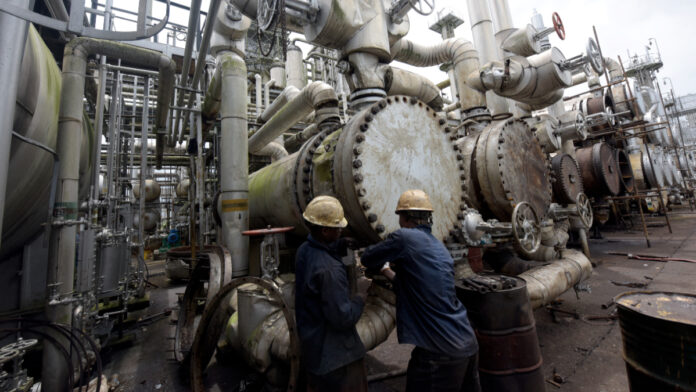
- Nigeria’s crude oil production rose to 1.56 million barrels per day, its highest level since April 2020.
- The country exceeded its OPEC quota for the second consecutive month, achieving 104 percent compliance.
- The milestone has reignited questions about whether higher oil output is translating into economic relief for Nigerians.
- Nigeria’s combined crude oil and condensate production rose to 1,735,398 barrels per day in June 2026, extending a four-month growth streak.
July 13, (THEWILL) — Nigeria’s crude oil production climbed to an average of 1.56 million barrels per day (mbpd) in June 2026, the country’s highest monthly crude oil output since April 2020, marking another milestone in the gradual recovery of Africa’s largest oil producer.
Data released by the Nigerian Upstream Petroleum Regulatory Commission (NUPRC) showed Nigeria exceeded its 1.5 million bpd production quota set by the Organization of Petroleum Exporting Countries (OPEC), achieving 104 percent compliance.
Combined crude oil and condensate production also increased to 1.735 million bpd, extending a four-month streak of production growth driven by improved pipeline security, fewer operational disruptions, and increased production uptime.

The figures represent a sharp turnaround from the production setbacks of recent years, when crude oil theft, pipeline vandalism and underinvestment repeatedly pushed Nigeria below its OPEC quota and eroded government revenues.
Ordinarily, stronger production would be expected to strengthen public finances and improve foreign exchange earnings.
Yet the latest announcement has also revived a familiar question among many Nigerians: If the country is producing more oil, why has economic hardship remained widespread?
The question featured prominently in reactions to a post by presidential spokesperson Bayo Onanuga announcing the production milestone on X.
One user wrote: “Production increase. More money coming in. No subsidy. Yet, more borrowing, more increase in tax… What are they using the money for?”
Another commented: “The more the crude oil production increases, the more the poverty rate of Nigerians increases with it.”
While such comments reflect public sentiment rather than economic evidence, they underscore growing expectations that improvements in Nigeria’s oil sector should translate into tangible benefits for households.
Why higher oil production does not automatically translate into economic relief

It also improves the country’s ability to meet fiscal projections and enhances investor confidence in the upstream petroleum sector.
However, production is only one driver of economic performance.
The extent to which Nigerians benefit depends on a combination of factors, including global crude oil prices, exchange rate movements, inflation, debt servicing obligations, fiscal management, and how additional oil revenues are invested in infrastructure, healthcare, education, and other productive sectors.
The production milestone also comes as Nigeria continues to battle elevated inflation and high food prices, factors that continue to erode household purchasing power despite improvements in oil sector performance.
Recent investments, including ExxonMobil’s $1 billion commitment to the Usan Infill Project and ongoing government efforts to curb crude theft, are expected to support further production growth in the coming years.
For policymakers, June’s figures signal that reforms aimed at restoring crude oil production are beginning to yield measurable results.
For households, however, the more important test may not be how many barrels Nigeria produces each day, but whether stronger production ultimately translates into lower inflation, improved public finances, sustained economic growth, and a noticeable improvement in living standards.

Ogochukwu Onwaeze is a writer specializing in business and economic journalism. At THEWILL News Media, she translates market trends, financial developments, and policy shifts into clear and engaging stories.
