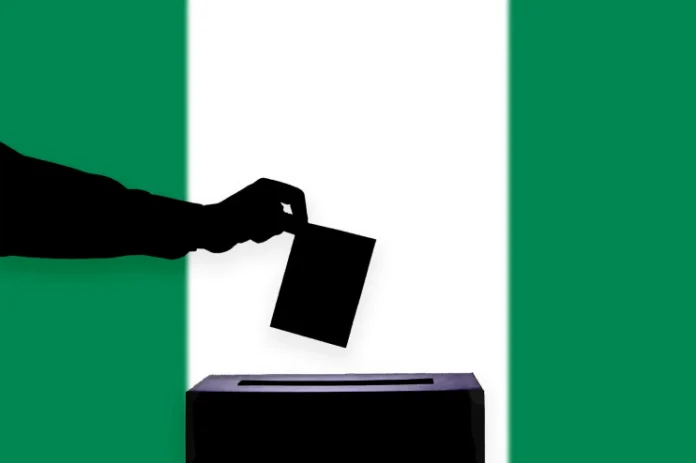
April 04, (THEWILL) – It is no gainsaying that the 2023 Elections were a memorable one in Nigeria’s political trajectory. It has been established that the desperation of some of the aspirants particularly the president, who has been longing for the post to achieve their life-long dreams, was like no other in the history of Nigerian politics. There was the four-time candidate factor who would either win the election that time or not contest for presidency any longer after the likely eight years regime of the won candidate because he would be too old by then.
The longtime nurtured ambition of a former governor whose activities in the Lagos, All Progressive Congress (APC), and Nigeria’s politics at large have been tagged an ‘afobaje’—kingmakers is another factor that can be termed a ‘win or nothing else.’ Yet there was the unimagined threat of new racer(s); LP and NNPP candidates, former Governors Peter Obi and Kwakwanso respectively, among others. It was a real-life dream!
Being two first-timers (although the former had contested the vice presidential seat in 2019), the two other popular presidential aspirants who were former members of the opposition party, PDP suddenly pulled out to the surprise of the other party members and Nigeria’s spectators on May 24 and March 29 respectively, a few months to the elections. As expected, it was conceived as child’s play which would not yield anything. As a complete surprise, these two first-timers would garner millions of supporters at home and abroad such that the probability of a winner became intensive.

The 2023 Elections also stand out among other elections that Nigerians have ever had. It was the first election during which several phenomena are birthed as candidates’ names were used to refer to the members of parties instead of party names as they used to be in the previous elections. Hence, there was the BATified phenomenon used to refer to the supporters of the president-elect and former presidential aspirant of APC, Asiwaju Bola Ahmed Tinubu. Supporters of the PDP were tagged the ATIKUlate, an inflected form of the former Vice president and presidential candidate of PDP’s name, Alhaji Atiku Abubakar. The third and somewhat most popular of them was the OBIdient people of the Labour Party, coined from the name of the former Governor of Anambra and presidential candidate of the party, Peter Obi.
The rate at which the diasporic communities were involved in the home elections also had not been realized in the history of Nigeria’s electioneering. Candidates travelled abroad to campaign for the Nigerians in the diaspora. Town Hall meetings abroad were held protractedly in order to canvass the Nigerians overseas. Whether a person copied another is not the argument; It was a political strategy. Tangential to this is the role of the media in the just concluded elections.
While opinions, interpretations, and debates between members of political parties dominated the national media, social media are not devoid of argle-bargle. However, the media as usual have been a pedagogue for the masses towards discerning which candidate is better.
It is not obnubilate that the elections were different from the usual party interest; it was more of candidacy. As always but quite differently, social media are abused with vents to candidates aspiring one post or the other. Several video graphics were used to replicate party candidates. Pictures of a three-man at the start of a 100-metre race were countless, and many other obnoxious representations.
The rate at which the media were engaged in the 2023 elections was ludicrous. Innumerable pedagogues and politickers emerged. Biases were palpable. While it was not very unimaginable the role of national media and social media have played in the just concluded elections, especially as the world keeps advancing and becoming technologically dependent, it is no obfuscation to the blind that social media has played a greater role than it used to.
The significance of the 2023 general elections reflects in the varieties of means used by aspirants to achieve their ends. While manifestos, campaigns, rallies and town hall meetings as well as door-to-door canvassings, are conventional strategies used since the day of old, several other supposed strategies are noteworthy. For instance, It was established that the ‘disparaging speech’ made against the President, Muhammadu Buhari (rtd), by the president-elect, Asiwaju Bola Ahmed Tinubu, during his campaign in Abeokuta in June 2022 was a successful ‘strategy’ which helped him survive the primaries plot by his parties.
For clarity purposes, the president-elect had made the disparaging speech in order to counter the move by his party members to hold a consensus rather than an indirect primary, on the claim that ‘he was the right person and it was his turn, after several instrumental activities he had been performing towards the advancement of the party, and more especially in the succession of the incumbent president, Muhammadu Buhari. (the president-elect argues). Hence, the ‘O Lulle’ and the ‘Emi L’okan’ phenomena. Maybe not the factor of his victory, his cynicism has been argued to be the saviour of his success in the primaries ‘which would have been sabotaged.’
Propinquent to this was the implementation and effectiveness of the cashless policy of the Central Bank of Nigeria, CBN on Monday, January 9, 2023, to redesign the old N200, N500 and N1000 denominations which had earlier been stated in November of the previous year, with the aim to reduce the circulation of fake currency, eradicate money laundering and stockpiling, prevent vote buying, discourage corruption, obstruct ransom kidnapping and stabilise the foreign exchange rate. It was the first time such a nice but transmogrified draconic policy would be effected during the electioneering period. Thus, analysts were quick to tag it as a targeted policy directed at some politicians.’ The policy which would result in obnoxious exploitation, mass suffering and impoverishment had been unusual in the political history of Nigeria. What was usual to the Nigerians was that the government usually their intent when the election period approaches. People were appalled by the change in the situations of Nigeria’s political atmosphere at a close time to elections; by the fuel scarcity; inflation; and the cashless policy, which aggravated the whole trepidation. It was a time when the Nigerians would no longer be fooled. (the youths had chanted). The consequences of the cash crunch are another day’s topic.
Also critical was the technological advancement in the electioneering process. More committed to the development, the INEC incorporated the Bimodal Voter Accreditation System BVAS, which allows for authentication of eligibility of Voter cards and owners, and the uploading of polling units results to the INEC Result Viewing Portal, IReV. This was also devised to contain manipulation of election results which was a dominant feature of Nigeria’s democracy. An attempt to challenge or criticise the relevance of the BVAS would amount to garrulity, especially as its deficiencies in the gubernatorial elections held in some states in Nigeria—Ekiti and Osun— prior to and after the presidential elections are apparent. The system has however achieved and attracted an appreciable garland for its effect, as the comparison between the elections and its antecedent is unimaginable.
Then, the most historic part of the elections saga is the defeat of some candidates in their respective domains which though have been witnessed was far compared to the ratio we had this time. Lagos for example had used to be the capital of APC votes but was surprisingly won by another party’s presidential candidate. Some ‘non-indigenes have also won federal seats at the expense of some indigenous Lagosians. Lagos was especially befitting as an example for its significance as the economic, most populated and popular State of Nigeria. The kind was witnessed in some other states where the People’s Democratic Party had been dominated but lost to their APC or Labour Party counterparts. Most historic was that the President too lost his state, Katsina, to another party. Apparently, there was no such record for the Labour Party because of its small structure. Thus, the turn-ups of the Labour Party in the general elections are what can be tagged a ‘young party threat’ different from the previous elections which were often almost ‘bipolarize.’
In general, the 2023 general elections are distinguished from other previous elections held in Nigeria for its social media engagement, strategies, and technological advancement of the electoral body, INEC in conducting a free, fair and credible election. It has also conferred some reputation on the President upon his promised and relatively free election. It was an election to be studied by generations.
*** Written by Abdulkabir Muhammed, from the Lagos State University. abdulkabirm87@gmail.com/ 08142957061