May 28, (THEWILL) – On May 29, 2025, shareholders of the African Development Bank (AfDB) will elect a new President. Such transitions are not uncommon, but there are pivotal moments in the life of an institution when leadership selection carries particularly profound implications. This is one such moment. The decision will significantly influence not only Africa’s development trajectory but also the broader global community’s capacity to forge effective multilateral partnerships. Will the continent emerge as a stronger, more prosperous partner—or slide further into marginalization? Will narrow national interests prevail, or can a reinvigorated multilateralism chart a course toward shared prosperity and collective security?
Despite its relatively low public profile, the African Development Bank remains one of the most consequential institutions on the continent. Its operations span infrastructure development, policy reform, climate finance, agriculture, digital transformation, and regional integration—each essential for Africa’s economic vitality and political stability. As Africa’s foremost development finance institution, the AfDB is uniquely placed to bridge the gap between aspiration and achievement.
More fundamentally, the Bank plays a central role in addressing the underlying conditions that drive instability and outward migration. By fostering inclusive growth, creating opportunities for Africa’s burgeoning youth population, and helping to stem the root causes of forced migration and human trafficking, the AfDB offers a long-term antidote to crises that too often prompt short-sighted and reactive measures from the international community.

In this context, the leadership of the AfDB assumes strategic significance. The President sets the tone for the Bank’s priorities, capacity to respond to emerging challenges, and credibility among its African and non-African shareholders. Five distinguished candidates are vying for the role—each bringing a compelling vision and relevant experience to address the Bank’s expansive portfolio, which ranges from energy access to food security and green industrialization.
Yet the 2025 leadership contest has been unexpectedly reshaped by geopolitics. On 2 May, President Donald Trump announced a decision to terminate the United States’ $555 million annual contribution to the AfDB and the African Development Fund, citing misalignment with his administration’s strategic priorities. Though underreported, this move represents a serious threat to the Bank’s financial stability and some of its most effective initiatives. The withdrawal of such a substantial commitment by a non-regional shareholder poses not merely a fiscal challenge but a test of the Bank’s institutional resilience and relevance.
In light of this disruption, the central question for shareholders is no longer simply who can manage the Bank well under normal conditions. The real imperative is to select a leader capable of navigating a complex political landscape, re-establishing trust with global stakeholders, and securing new alignments that safeguard the Bank’s mission and amplify its impact.
This is a rare opportunity—a crisis that may well catalyze meaningful renewal. It calls for an individual able to depart from complacent traditions and forge a new consensus for multilateral action. Shareholders must resist the temptation to revert to the transactional politics of “vote- trading”—a regrettable hallmark of international bureaucracies where support for one candidate is exchanged for concessions elsewhere. The stakes are too high for business as usual. What is required is a leader with the credibility, technical competence, and strategic agility to reposition the Bank for the future.
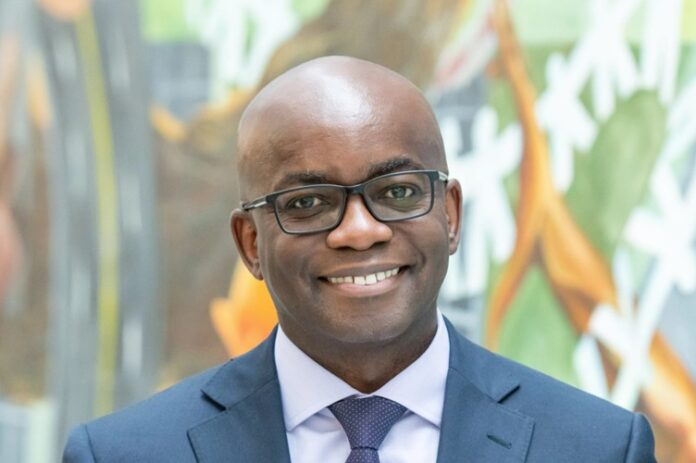
Among the candidates, Dr. Sam Maimbo stands out as uniquely qualified to meet this moment. A seasoned technocrat and global public servant, Maimbo combines deep knowledge of African development realities with a track record of leadership in complex institutional settings. His professional journey—from managing economic reform in landlocked Zambia to serving at the highest levels of the World Bank—exemplifies the kind of pragmatic, principled leadership needed to steer the AfDB through uncertain waters.
Africa has endured decades of extractive relationships. The next chapter must be one of equitable partnership, and Dr. Maimbo has consistently championed transparency, fairness, and value for money in development financing. His capacity to work collaboratively with the Bank’s staff in Abidjan and to engage constructively with a diverse array of shareholders— African and non-African alike—positions him well to restore institutional confidence and redefine the Bank’s multilateral compact.
The United States’ withdrawal has raised important questions about the Bank’s institutional credibility and strategic direction. The upcoming presidential selection process is an opportunity to respond decisively— through a merit-based, transparent, and future-oriented appointment. The leadership choice is not a mere internal matter. It is a consequential decision with direct implications for millions of Africans and indirect effects on the global development architecture.
Indeed, the AfDB’s direction will serve as a bellwether for international cooperation more broadly. It reflects not only the continent’s economic ambitions but also the global community’s capacity to deliver on the promise of collective action and a rules-based order. Shareholders must therefore rise above parochial considerations and act in the broader interest of institutional renewal and development impact.
To this end, the evidence is clear: Dr. Sam Maimbo is the candidate best equipped to lead the African Development Bank at this defining juncture. His leadership offers the prospect of continuity where necessary, change where overdue, and excellence throughout. Shareholders have before them a transformative choice—one that can reinvigorate Africa’s principal development institution and restore faith in the multilateral system itself.
Adefemi Adesanya writes from Lagos, Nigeria.