President Muhammadu Buhari recently in Abuja pledged that the Federal Government will sustain the deployment of Geographic Information Services (GIS) and other similar technologies to help farmers achieve increased production. The President made this known when he received a delegation of the Surveyors Council of Nigeria (SURCON) led by the President of the International Federation of Surveyors, Prof Rudolf Staiger. He expressed delight that many States in Nigeria are adopting GIS for both urban and rural development, noting that the Federal Government was also on track in using similar technologies to support farmers to increase their yields. President Buhari said his administration will continue to work with members of the survey and geo-informatics profession to provide quality infrastructure that will bring prosperity to Nigerians. ”Our Government, in the past 5 years, has embarked on critical infrastructure development and rehabilitation projects across the country. We are designing and building roads, bridges, rail tracks, airports and affordable housing all over the country. ”Our goal is simple, we will develop quality infrastructure that will bring prosperity to millions of Nigerians in both our urban and rural areas. ”To achieve this, we are working with surveyors, engineers and town planners. I am, therefore, confident that the 344 new surveyors inducted into the register of the Surveyors Council of Nigeria will be very busy in the coming years,” he said.
The President also used the occasion to recognise the roles and numerous contributions of members of the profession to national development, pointing to the design and development of the Federal Capital Territory. ”Indeed this beautiful city of Abuja, which was conceived in 1976, is an excellent example of the good work delivered by your profession. ”As you are aware, the city we are seeing today was designed and built through the collaboration of many local and international surveyors, engineers and geospatial experts,” he said. In his remarks, Prof Staiger, told the President he was in the country to witness the induction of 344 new surveyors into the register of SURCON, and the investiture of the maiden edition of the Distinguished Senator Ahmed Ibrahim Lawan Award for the Development of Survey and Geoinformatics in Nigeria. ”For me, it is a great opportunity to personally interact with President Buhari whose international reputation of honesty, integrity and selfless services stand him out as one of the greatest sons of Africa,” he said. The President of the International Federation of Surveyors added that the association was proud to be associated with the Nigerian leader and his administration’s determination to revive Nigeria.
In a related development and to further drive its support for micro, small and medium enterprises (MSMEs), the federal government has facilitated a $20 million technology fund for young innovators through Bank of Industry (BoI), while the Central Bank of Nigeria (CBN) is offering a N90 billion soft loan facility for small scale agriculture enterprises. This came out of a meeting to review progress on the government’s efforts to support the Micro, Small and Medium Enterprises, MSMEs.

It is very important to note that, the policy thrust and objectives of the present administration on agriculture include,
- Agriculture as a business–focusing the policy instruments on a government-enabled, private sector-led engagement as the main growth driver of the sector. This essential principle was established in the ATA and will remain a cardinal design principle of Nigeria’s agriculture policies going forward.
- Agriculture as key to long-term economic growth and security—focusing policy instruments to ensure that the commercialization of agriculture includes technologies, financial services, inputs supply chains, and market linkages that directly engage rural poor farmers because rural economic growth will play a critical role in the country’s successful job creation, economic diversity, improved security and sustainable economic growth.
- Food as a human right –focusing the policy instruments for agricultural development on the social responsibility of government with respect to food security, social security and equity in the Nigerian society; and compelling the government to recognize, protect and fulfil the irreducible minimum degree of freedom of the people from hunger and malnutrition.
- Value chain approach –focusing the policy instruments for enterprise development across successive stages of the commodity value chains for the development of crop, livestock and fisheries sub-sectors, namely input supply, production, storage, processing/utilization, marketing and consumption. Building complex linkages between value chain stages will be an important part of the ecosystem that will drive sustained prosperity for all Nigerians.
- Prioritizing crops- focusing policy on achieving improved domestic food security and boosting export earnings requires a measure of prioritization. Therefore, for domestic crops, the initial focus in 2016 –2018 will be expanding the production of rice, wheat, maize, soya beans and tomatoes. For export crops, the initial focus will be on cocoa, cassava, oil palm, sesame and gum Arabic. In 2018 onwards, the export focus will add on bananas, avocado, mango, fish and cashew nuts. Investments in closing infrastructure gaps to accelerate productivity and investment in these crops will also be sequenced to reflect capital availability and management attention.
- Market orientation–focusing policy instruments on stimulating agricultural production on a sustainable basis, and stimulating supply and demand for agricultural produce by facilitating linkages between producers and off-takers, while stabilizing prices or reducing price volatility for agricultural produce through market-led price stabilization mechanisms (commodity exchanges, negotiated off-take agreements, extended farm-gate price undervalues chains coordination mechanisms, agricultural insurance, etc.)
- Factoring Climate change and Environmental sustainability –focusing policy instruments on the sustainability of the use of natural resources (land and soil, water and ecosystems) with the future generation in mind while increasing agricultural production, marketing and other human activities in the agricultural sector.
- Participation and inclusiveness–focusing instruments on measures to maximize the full participation of stakeholders including farmer’s associations, cooperatives and other groups, as well as NGOs, CBOs, CSOs, development partners and the private sector. This places a premium on the role of these organizations or groups as agents of economic change in general and agricultural economy in particular, thereby drawing benefits from their policy advocacy roles as partners to and watchdog of government.
- Policy integrity–focusing policy instruments on measures for sanitizing the business environment for agriculture, in terms of accountability, transparency and due process of law, ensuring efficient allocation and use of public funding and fighting corruption on all programmes involving public resources. This also applies to compliance with international commitments, protocols and conventions that Nigeria is a signatory to.
- Nutrition sensitive agriculture–focusing policy instruments on addressing the issues of stunting, wasting, underweight and other manifestations of hunger and malnutrition with particular reference to the vulnerable groups, which include children under 5, nursing mothers and persons with chronic illness and disabilities. Agriculture’s Linkages with Other Sectors–focusing policy instruments on the connected relationship between agriculture and other sectors at federal and state levels, particularly industry, environment, power, energy, works and water sectors.
It has been said that,
- With a projected population of 160 million, Nigeria has the greatest number of people to feed in Africa. In terms of employment, agriculture is by far the most important sector of the economy, engaging about 70% of the labour force.
- Agricultural sector has the highest potential to diversify food supply and expand foreign exchange earnings.
III. Agricultural growth has remained steady at 6% in the last five years despite the growth of the overall economy.
- Currently, agriculture’s contribution to total exports has been relatively low, between 0.5% and 2.0% over the last four years.
- Agricultural produce yields per hectare are 20% – 50% lower than those obtained in similar developing countries.
- Despite enormous agricultural production potentials, Nigeria is currently a net importer of food, with N1.30 trillion in wheat, rice, fish and sugar imports.
VII. Fertilizer and other Agric-inputs use is very low. Fertilizer per capita consumption is 6.1 kg/ha as against 18.9kg/ha for Senegal.
It is also imperative to underscore the fact that,
- Fertilizer, agricultural production and food security are mutually related.
- Fertilizer along with improved seed use is the key driver to agricultural production which in turn drives the attainment of food security.
- Fertilizers are critical in improving agricultural production and food security through nutrient loss replenishment on farmers’ fields.
- Food security exists when all people at all times have access to sufficient, safe and nutritious food to maintain an active healthy life. UN/FAO refers to food security to the availability of food and accessibility to it. A household is considered food secured when its occupants do not live in hunger or fear of starvation.
- Agricultural yields have remained the same or declined in the past two decades. Rise in agricultural productivity is derived more from expanded planting areas for staple crops than from yield increases.
- Studies have also identified poor agricultural policies, low fertilizer use, low access to agricultural credit, land tenure insecurity, land degradation, poverty and gender issues, l o w investment in agricultural research, poor market access and marketing efficiency as the constraints for agricultural productivity.
- Though Nigeria has proven 159 billion cubic feet of natural gas reserve (7th in the World) and a large quantity of phosphate rock deposits, local fertilizer production and supply is still a major constraint to fertilizer use.
To shore up and attain food security level in Nigeria, therefore, there must be an improvement in the agricultural production system.
- One key to the food security pathway is providing farmers with access to quality inputs, particularly fertilizers and the knowledge to apply them efficiently and effectively.
- There is also the need for a concerted effort, a coordinated public-private partnership to achieve the scale of reform necessary for sustainable agricultural growth.
- Fertilizers, along with other inputs are important contributors to raising agricultural output by increasing yields and thus securing food security.
- Excess output allows farmers to feed their families’ better, increase their income and develop commercial activities.
- Farmers need access to inputs especially fertilizers and improved seeds at the right time and affordable prices.
- One of the best remedies is the development of a virile network of private agro-dealers, who in addition to supplying agricultural inputs can also relay information on good farming practices complementing agricultural extension services.
Hence, there is no doubt that the Buhari led government is committed to food sufficiency as well as massive boost in agricultural production in the country. And, there is no doubt whatsoever that agriculture is indeed the future of Nigeria, which can provide gainful employment to a cross-section of the economy, especially the teeming youths of the Nigerian population, and also assist in no small measure to galvanize the economy of the country to greater heights.
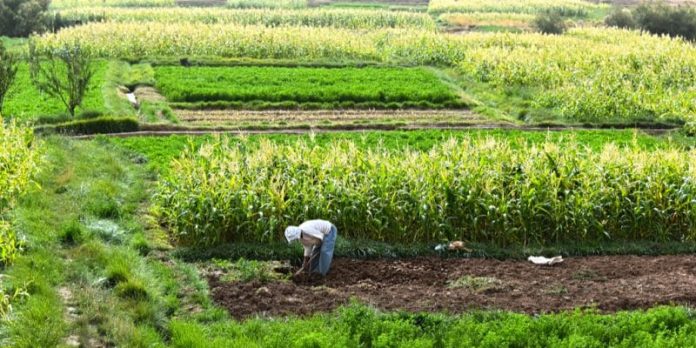
Nigeria is one of the leaders in the production and export of agric commodities in West Africa. Its agribusiness sector includes some of the largest multinational corporations. To the sector’s advantage, the Federal Government has identified agriculture as one of the top-priorities in national development. The implementation of an ambitious plan in terms of production and food processing to help the nation become the region’s key food production centre is on course. In line with this, stakeholders are queuing behind the government’s quest to position the country as a food hub. They reasoned that it was necessary for the country to reposition itself for future growth and greater prosperity. However, to achieve this aim, they want the government to promote research and development.
Director-General, Feed Nigeria Summitry, Richard Mbaram, observed that under-performing agriculture is stifling the effective functioning of the industrial sector; consequently, this has resulted in weak linkage between the agricultural and industrial sectors, in the face of a myriad of opportunities. He said Nigeria has a huge potential for agro-allied transformation. This includes hosting a large spectrum of suitable agro-climatic conditions that allow a broad range of agricultural production. He is upbeat on the potential of the government achieving agricultural turnaround. Mbaram said the key to accomplishing agricultural transformation is hinged on making modern technologies available and supporting investment in agricultural research and development (R&D).
He said the industry will grow where research knowledge is transferred to farmers, so that they can use technologies to grow more food. In line with this, he said the National agricultural research system has to be funded to develop technologies suitable for local farming conditions. He praised the Minister of Agriculture and Rural Development, Muhammad Sabo Nanono for the partnership with African Development Bank (AfDB) to promote agro-allied industrialisation.
According to him, the Minister has demonstrated the readiness to work with AfDB to use agro-allied industrialisation as an effective strategy to achieve productive employment and reduction in poverty. He said the Minister is preparing conditions for industrialisation through modernisation of agriculture that will raise incomes and productivity of poor farmers, lowering food prices, and improving nutrition. He urged Nigerians to support the Federal Government towards achieving the agro-allied industrialisation agenda. He wants the development of value-added agro-industries to increase competitiveness in the world market.
Mbaram said AfDB Group President Akinwumi Adesina had identified Staple Crop Processing Zones (SCPZ), as potential joint venture opportunity for Nigeria’s agricultural investment. Through the initiative, he said the bank seek to transform rural areas from zones of economic misery to zones of economic prosperity. According to him, using agriculture to power industrialisation calls for a strong public-private sector partnership that increases small farm holders’ productivity and enhances their contribution to national and regional value chains.
The Director of the Development and Delivery Office of the International Institute of Tropical Agriculture (IITA), Dr. Alfred Dixon, called for multiple linkages and collaborations for the dissemination of agricultural research outcomes. Dixon who is known as the “Father of Cassava” by his peers stressed that the churning out of innovations to boost agricultural productivity must be supported by strategic partnerships and collaborations in order for the farmers and the target population to feel the impact. He explained that while “scaling out” entails linking with the private sector, the farmers and the markets, “scaling up” involves working with the governments and policy makers. He maintained that government would help create the right policy environment for the adoption of the new technologies by farmers and other stakeholders.
According to Dixon, who is the project leader of the Cassava Weed Management Project (CWMP), which operates under the African Cassava Agronomy Initiative (ACAI), IITA cassava projects have been able to reach millions of farmers because of the linkages made with several stakeholders including government agencies. He cited former President Olusegun Obasanjo for the role he is playing in the cassava advocacy. He also cited how ACAI is disseminating its research outcomes using strategic partnerships in addition to technologies, such as the Akilimo application, the Six Steps to Cassava Management Videos, radio programmes, Viamo’s 321-service, Cassava Matters website and more. He said: “Just having agricultural productivity or increase in agricultural production will not necessarily lead to increase in income for farmers unless it is linked to the markets. When you have all that you require, you still need the policy environment. You need the private sector that is, the processors, the agro-dealers, the famers. And you also need the government to give you the right policies and the powerful backing.” He added that Africa’s increasing population growth rate poses a huge challenge as agricultural productivity remains far behind. He stressed that with Nigeria’s population expected to hit 400 million by 2050, there is need to double up on agricultural productivity figures.
It is important to note that, the former minister of agriculture and now the President of African Development Bank (ADB), Dr. Akinwumi Adesina lamented that, Nigeria used to spend over N356 billion yearly on the importation of rice, similarly, Nigeria spends over N100 billion annually to import fish. And, the country spends N1.6 trillion on the importation of wheat, sugar, rice and fish on a yearly basis. The former minister also regretted that, Nigeria has the third absolute number of stunted children in the world with 41 per cent of children under age of five stunted, 23 per cent under-weight and 14 per cent wasted. Also, he said, Nigeria’s import and export ratio has remained at 92 per cent import and 8 per dent export. It for this reason that President Buhari said an economic retreat, as it relates to agriculture that, it has been neglected over the years, and veritable government intervention is required in the crucial sector, that if carefully managed, can lead to self-sufficiency in food production, solve the problem of mass unemployment, increase the country’s foreign earnings, and grow our per capita income. In his words, he stated that, “for too long government policies on agriculture have been half-hearted, suffering from inconsistencies. Yet our real wealth is in farming, livestock, hatcheries, fishery, horticulture and forestry”. He further explained the some of the challenges in the sector, such as rising cost of food, lack of agricultural inputs at affordable prices, high cost of fertilizers, pesticides and labour compound the problem of extension services, import of food items that can be easily produced locally, wastages because of the absence of adequate storage facilities as well as lack of feeder rods to transport foods produced in rural areas to urban centres, just to mention but a few of the difficulties encountered in the sector. He also said that, in solving the problem the public must be carried along and educated about the plans of government so that, they can key into it and benefit maximally from it, in addition, he reasoned that, there must be close working relationship between the federal government and the state governments, to really boost agriculture and solve some of the problems in the sector, for example, the massive availability of feeder roads to make transportation of food from the country-sides to the city centers less cumbersome, there should also be the availability of soft loans to farmers with the CBN bearing some of the risk as well as the exigent need intermittent stakeholders meeting on how to move the sector forward. There is no doubting the fact that the narrative has changed for the better under the present administration.
Agriculture in Nigeria is one area that can turn the fortunes, destiny, direction and dynamics of this great country around for the very best with the shortest space of time. It is also important to note that, President Buhari has said that the Federal Government is making efforts to ensure that Agriculture becomes more attractive to foreign investors. He made this assurance while speaking on the theme of the 8th annual Bola Tinubu Colloquium “Agriculture, work and revolution” at the International Conference Centre, ICC, Abuja. The President, who chaired the event stated that there were many opportunities in the agricultural sector and expressed his disappointment at the fact that food is imported into the country rather than being exported. According to the president, “Nearly all our crop-based farming activities are dependent on rain-fed agriculture, and this makes our agricultural productivity entirely vulnerable to the effects of climate change. In the past few years, on the average, we have spent in excess of $11bn annually importing wheat, rice, sugar and fish. We need not, and indeed we cannot afford to continue on this trajectory”. He added, “Agriculture is the key to our economic growth and social investment policies. Our administration’s key strategy is to ensure that Nigeria becomes self- sufficient in the foods that we consume the most. Maize, rice, corn, millets, fruits, poultry products and their derivatives can all be produced at home if we put our hearts into it. Our policy is simple: We will produce what we eat! It is not only logical, it is necessary.” He then implored everyone to work together thus: “I am declaring that we need a new approach that challenges more states and local governments, more organizations, companies and non-governmental organizations and individuals, some of the younger people, who are here to step up and play a role because government cannot and should not do it alone. All hands should be on deck.” Also, the federal government approved the implementation of the “Green Alternative”, a road map towards diversifying Nigeria’s economy. And, government has gone ahead to really develop the agriculture and meeting up with the set objectives.
*** Written by Jide Ayobolu.