July 31, (THEWILL) – The aftermath of fuel subsidy removal is still a subject of discourse in Nigeria’s economic projections, especially as citizens continue to lament the harsh impact under the present administration.
Unfortunately, the economic environment is in bad shape, with so much to contend with, from soaring transport fares to unbearable costs of food, goods and services, not to talk of logistic chain disruption, as well as uncertainties in financial flow, such as income stability.
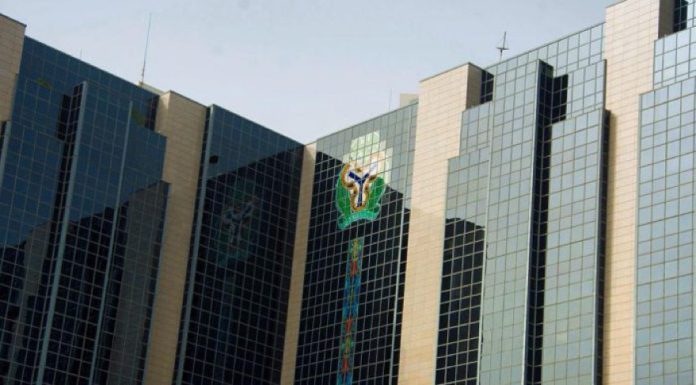
However, the big blow from all this is the decision of the Central Bank of Nigeria (CBN), led by its acting Governor, Folashodun Adebisi Shonubi and the Monetary Policy Committee (MPC), in tightening monetary measures on cash flow in the hope of keeping inflation at bay, with controllable fiat of hiking the interest rate to 18.75%.

Regrettably, inflation is making a mess of our currency, by weakening purchasing power and eroding its value.
In the same vein, the rise in the price of staple foods like bread, cereals, potatoes, yam, meat, fish, oil, rice, and sugar, is worrisome to many Nigerians across board.
So, what can an interest rate hike do as a monetary instrument, to grow the economy of Nigeria?
The first shot at an interest hike under Folashodun Adebisi Shonubi as acting Governor of the Apex bank, at 18.75% with an asymmetric corridor of +100/-300 basis points around the MPR from the previous corridor of +100/-700 basis points around the MPR (18.50%), according to the apex bank is moderate but for us it is critical.
The reserve bank maintained a Cash Reserve Ratio (CRR) at 32.5% and retained the Liquidity Ratio (LR) at 30%.
However, for the record, since the middle of the last year 2022, the CBN in its usual characteristic after its ritual Monetary Policy Committee (MPC) meeting that takes place every quarter, had considered hiking interest rate.
For instance, between January to July 2023, the apex bank has consistently raised the rate to 16.50%,17.50% 18.50% and 18.75% respectively.
The Central Bank of Nigeria (CBN) had before then, raised interest rates to 15% 14 %,13% and 11.5%, respectively in the past.
Interestingly, analysts have termed the significance of this latest 18.75% rate as “a shift to a hawkish monetary policy stance.”
But this calls to question how far previous rates have helped to fight consistent inflation that presently stares us in the face at 22.79% double digits from the initial 21% and 22.44% respectively.
For us, we don’t want to make a mockery of early decisions that seem not to have worked because Nigeria’s economy prides itself as a rentier of crude oil earnings.
The common man on the streets of Nigeria wants to feel the impact of these policies and see a reduction in the price of transport, bread, medication, rice, garri, beans, sugar, spaghetti and milk, just to name a few.
For us to start with, we need to demystify what constitutes Monetary Policy Rate (MPR) because a lot of Nigerians are yet to understand how the economy works from that angle.
Simply put, MPR is the interest rate at which CBN lends to commercial banks. The MPR serves as the benchmark against which other lending rates in the economy are pegged. Moreso, it is usually used as an instrument to moderate inflation in the economy.
The aspect that sounds confusing to Nigerians is the benchmark of which banks can lend money to Nigerians and most economists and financial experts find that as the intriguing part of monetary policy direction.
Conversely, it is also the part the apex bank should tread cautiously.
But we acknowledge the fact that there are diverse interests and issues putting pressure on the MPC to increase the benchmark rate, despite the inflationary tendencies in the economy; especially amid the high cost of production, insecurity, dwindling government revenues, import dependency, foreign exchange volatility and the uncertainty in the global oil market.
Paradoxically also, what can a monetary policy rate that focuses so much on hiking interest rate offer? Just as we asked earlier in this piece, should interest rates be raised by the CBN at this injury time, which is full of huge expectations and anxiety, as well as mounting pressure on the federal government over fuel subsidy removal?
Is jerking up the interest rate, not another bumpy trap for an already tense ecosystem?
Although economists and financial experts did argue that there is no universal rule when it comes to raising or lowering the interest rate, nevertheless, what the central bank should be interested in, is minimal stability.
And this comes with its own issues, especially for developing economies like ours with its own peculiar challenges, poorly managed and hugely suffering from fiscal Imbalance, government debt, corruption, and poor revenues.
Instructively, the CBN’s Acting Governor, Folashodun Adebisi Shonubi, said the hike in interest rate would help address Nigeria’s rising inflation. This is quite bold, going by the latest Nigerian inflation rate, standing at 22.79 percent.
Unfortunately, Nigerians are not comfortable with the rationale behind the CBN interest rate hike, with the clear understanding that raising interest rates is not a solution to the inflation problem.
Sadly, inflationary pressure in Nigeria is fueled by rising prices of fuel, leading to a cost-push in the manufacturing sector, and a high cost of transportation in the supply of goods and essential commodities.
Succinctly, a critical look at the CBN’s decisions in hiking interest rates is for us to think through, with the anticipation that retooling interest rate to grow the economy is desirable.
As a measure to move away from a mechanism of anti-crisis monetary economic policy, that may not work well just like the previous regime of the apex bank, which aimed to attract an increase in stock and bond sales on the stock markets and maintain liquidity in the financial systems.
Even though it is currently done in developed nations, to mop up excess cash in the system, hiking interest rates in our clime could further exacerbate the country’s economic woes, such as adding to the 33 percent unemployment rate, failed manufacturing sector, dwindling investment environment, weakening citizens’ purchasing power and income, amongst others.
We believe that the CBN means well for Nigerians, but its policy on the other hand, is contradictory to better the welfare of the people, particularly in closing the gap in Nigeria’s micro and macroeconomic situation, either to further boost employment, alleviate poverty and re-engineer investment.
What needs to be done? We acknowledge the current predicament is not just peculiar to us, but we are not shy in telling ourselves the truth.
First, Nigerians are interested in a stable economy that should be far away from the already torturing economic situation. And this requires strong pro-people monetary and fiscal policies that have an effect on the real economy.
Secondly, our interest rate should be adaptable to our macroeconomic development needs, tackling the energy, manufacturing and agricultural sector.
Thirdly, we emphasised the need for the nation’s reserved bank to see reasons to retool its monetary policy as a measure to improve fiscal and trade policy, which would give an opportunity for sound credit not to hinder growth through credit facilities.
Lastly, we are a nation with a democratic governance system, so the Nigerian state must factor in the issues of palliative programmes beyond throwing money at the problem. It’s time the government took these issues into account when making decisions, especially as social unrest and the possibility of political risks are highly associated with the high cost of living, with the labour union calling for protest; something the economy cannot take.
Given the aforementioned, what is paramount is not just hiking interest rates, but an impactful monetary policy favourable to Nigeria’s economic development.
So, CBN, it’s time we retooled interest rates to better citizens’ well-being.
*** Written by Adefolarin A. Olamilekan, Political Economist
adefolarin77 @gmail.com [1] Tel: 08107407870