The civic space in Nigeria is facing a difficult moment, the present APC led government continuous clampdown on protesters and those with dissenting views portends grave danger to democracy.
From south to north, west to east, the story is the same. A government, which has normalized the culture of intolerance to opposing views and activated various measures to shrink the civic space cannot be said to be promoting democracy.
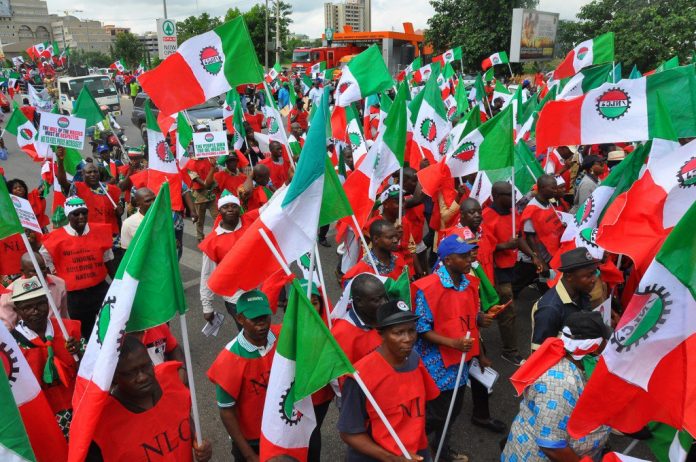
Today Nigerians live in morbid fear and uncertainty. The recent decision of the court barring Nigeria Labour Congress (NLC), Trade Union Congress (TUC) and other Civil Societies from organizing a protest to register their displeasure over the hike in electricity tariff and pump price of petrol bears all the trappings and tapestries of fascism and authoritarian government.

The opposition party which ought to provide the elixir for other Civil societies engagements in organized mass actions, appears to have been blow-beaten into comatose. The cleverly woven orchestration by the present government of APC to suppress those who hold differing opinions is fast turning the country to a mockery when democracy and democratic principles are being discussed amongst comity of nations.
The last minute calling off of the proposed protest by NLC after a nocturnal meeting held in the presidential Villa on the behest of President Buhari left much to be desired. It is akin to “wolf crying in the night and a child dying the next day.” Pray what is left of democracy if the people who are to be the central force are being emasculated, intimidated, silenced and in some instances arrested over trumped up charges.
Much as the government has the rights to regulate the activities of the people to ensure compliance with the extant laws, but such regulations must fall within the ambit of the constitution.
It is therefore curious that the government is using the state apparatuses to deny the people their constitutionally guaranteed rights. Sections 39 and 40 of the Nigerian constitution 1999 inter alia, specifically provide the citizens with the rights to “peaceful Assemble, peaceful processions, rallies and demonstrations,” these provisions are sacrosanct and should not be denied under whatever guise and nomenclature.
No one can hide under the over-flogged Public Order Act which stipulates that intending protesting groups ought to obtain police permits before embarking on peaceful protests to bar citizens from engaging in protests. In 2007 the court of Appeal in a celebrated case between the then All Nigeria Peoples Party (ANPP) v Inspector General of Police held that peaceful protests and assembly is deeply entrenched in democracy everywhere in the world. “Nigerians have the fundamental rights to stage rallies and protests without police permits.” The court settled.
Now arising from the recent court order restraining Labour and other civil groups from protesting, a pertinent question to ask is, why is the government afraid of protests? Why Buhari and APC government usually activate the panic mode each time the word protest is mentioned? Your guess is good as mine. Any performing government will always welcome gleefully dissenting views and opposing opinions as that would create an avenue to showcase their achievements and put to shame the so called “disgruntled elements” or “The Wailers” as the Media Aide to the president, Femi Adesina would sarcastically refers to critics of the President.
In 2019, #RevolutionNow protest convened by the publisher of Sahara Reporters, Omoyele Sowore met stiff and violent resistance by the security agents acting on the orders of the President. Sowore was arrested and incarcerated for months even when the court granted him bail.
Nigerians were livid and rightly so over comments credited to the Presidential spokesman, Femi Adesina while appearing on Channels TV Sunrise programme. Adesina in his usual manner of gloating over the predicaments of fellow Nigerians, has justified the inhuman treatments meted on Sowore and his followers, saying the protest was a ‘mere child’s play and an irritation’.
He also stated that if the clampdown on protesters is considered the best to maintain orderliness in Nigeria, “the government will do whatever is right, whatever is required to maintain peace.”
After the suspension of the planned protest by Labour, same Adesina has mockingly dismissed fellow countrymen who are registering their displeasure over the abrupt backtracking of Labour leaders after having a meeting with the Presidency. Mr Femi Adesina in his inelegant trade of using unpalatable words to describe those who do not share the same views he was appointed to promote, described the people as the enemies of the state and those trying to destabilize the country.
World over protest has remained one of the most potent tools to drive change, and force the government to take actions to enforce rules when there is violation on the rights of citizens. The recent #BlackLivesMatters protests in the US aided the speedy arrest and prosecution of the police officer involved in the killing of a black American George Floyd after a disturbing footage of an officer kneeling of his neck while he was shouting, ‘I can’t breathe, I can’t breathe!’ went viral. In Sudan, it took a protest led by a lady Alaa Salah against the President Omar al-Bashir, after she was seen in a viral clip leading a demonstration in front of the military headquarters in the capital Khartoum on April 10, 2019. The President was forced to relinquish power as that protest ignited a much wider and powerful protests across the country.
Nigerians should therefore demand from the APC government for explanations on where we borrowed the brand of democracy they are propagating which restrain citizens from carrying out their constitutionally guaranteed rights to freedom of speech, peaceful assembly and protest.
If the country continues on this retrogressive trajectory, there is no doubt that the country is headed to the precipice as no country has ever thrived when the people are being shut out from the democratic space for too long. The signs that the fabrics binding the country’s divergence are being weakened by the day are quite glaring – the incessant agitations for restructuring, self determination and regional autonomy are some of the telling indication that the people are fed up with the old system and if nothing is done and fast too, the situation may spiral out of control. “A stitch in time, they say saves nine.”
*** Article by Kingsley Mba.