
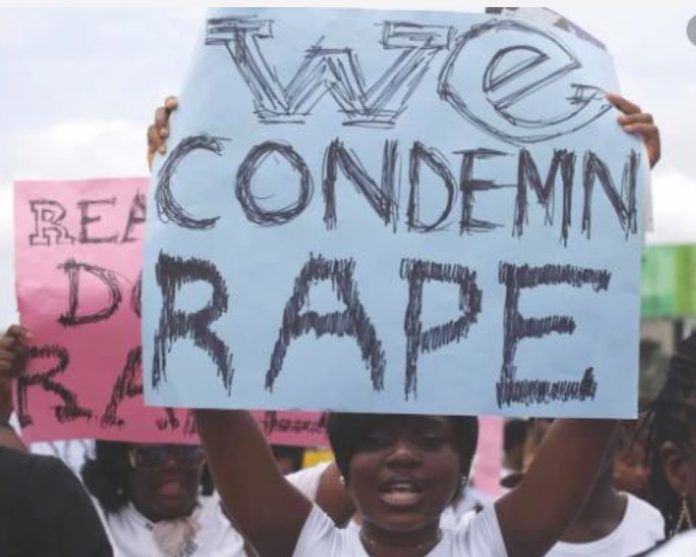
In an age dominated by likes, shares, and virality, social media has become both a megaphone for justice and a minefield of misinformation. The recent Mirabel incident, where a woman’s public allegation of rape went viral, only for her to retract it days later, highlights a troubling trend: when the quest for attention overrides truth, real people suffer real consequences.
Mirabel’s case is far from unique.
Consider a 2025 case drawn from patterns seen globally: a cheating wife in the cause to get her husband out of the way fully, even after sharing two daughters, made a public allegation that her husband had sexually assaulted their two young daughters. The claim spread rapidly on social media, drawing anger, calls for his arrest, and intense scrutiny from neighbours.

The police, acting on the accusation, detained the husband. Suddenly, a father who insisted on his innocence was thrust into detention, his reputation shattered in the court of public opinion even before any formal investigation.
The family became a spectacle online, derogatory comments pouring in from people who had never met him.
Days later, a medical examination of the children found no evidence of assault. There was no physical harm, and crucially, no corroboration of the allegations. In that moment, the community began to see what fate had spared: a man wrongly accused, facing what could easily have become decades of stigma, lost income, fractured family bonds, and psychological trauma.
Imagine the toll such an experience takes.
In 2015, a Delhi woman, Jasleen Kaur, posted a viral allegation of sexual harassment against Sarvjeet Singh on Facebook. The post sparked a national uproar, political endorsements, and Singh’s arrest, only for him to be later acquitted, his reputation tarnished.
In the United States, the Carlee Russell disappearance hoax saw a young woman falsely claim she’d been kidnapped, sparking widespread emergency responses and viral speculation before her own admission of fabrication.
Across the UK, the Hampstead hoax saw baseless claims of a Satanic paedophile ring spread online, leading to prolonged harassment of innocent parents and community members with no evidence to support it.
False claims aren’t limited to criminal matters. In France, dozens were convicted of cyberbullying over repeated false conspiracies about First Lady Brigitte Macron’s identity — a sobering indicator of how defamatory narratives can spiral unchecked online.
Even beyond accusations of crime, defamatory videos and posts like a viral YouTube smear that cost employees their jobs and damaged a company’s brand, reveal how a single post can dismantle lives and livelihoods.
These cases converge on one dangerous pattern: social media’s incentive structure rewards sensationalism, not accuracy. Falsehoods spread faster than truth, leaving little room for correction once the digital mob converges. The emotional, psychological, and economic toll on those wrongly accused is profound and often permanent.
In these cases above, to an extent, luck played a role. For the accused father, what if the allegation involved something less immediately testable? What if subtle emotional abuse was claimed but unprovable? What if timing or access delays evidence gathering? Social media outrage moves faster than forensic science, and once a name is viral, retracting that spread is almost impossible.
The truth is, how many people haven’t been so fortunate? How many have faced the full weight of accusation without the mechanisms of justice catching up in time to prevent irreversible harm? History has documented numerous cases — in different societies — where false allegations led to wrongful convictions, shattered families, and lives that could never be restored.
This is not to diminish the reality and prevalence of genuine abuse that exists and must be taken seriously. But the weaponisation of accusation as a tool for personal agendas, amplified by social media’s incentive to react before verifying, poses a parallel danger, where falsehood becomes as destructive as the cruelty it purports to condemn.
What must change? I suggest that platforms enforce stronger norms around verification before amplification. But the law also has a role: false accusers should face the full weight of the law when lies are proven. If people know there are real consequences for weaponising virality, others will think twice before forsaking truth for attention.
Only then can social media’s promise as a force for good outweigh its power to destroy based on deception.
God no go shame us!
*** Kenneth Emodi writes from Lagos, Nigeria.

