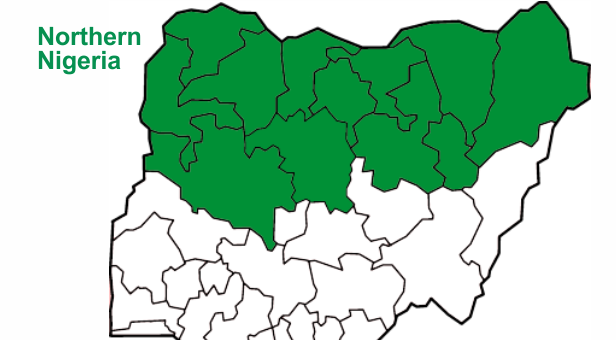
With a landmass of about 20,131 km2 and population density of 104,458,581 (NBS, 2028), the region has witnessed serious episodes of violence in the past three decades which are associated with ethno-religious conflict and characterized by the high level of violent confrontations among ethnic and religious groups often under the influence of “settler-indigene dichotomy” and “Christian-Muslim” fiasco respectively.
Thousands of people lost their lives, villages deserted, families lost contact, and a great part of the region has lost its age-long culture of peace and harmony with social and economic activities seriously affected.
Wars are not fought in isolation; they are the products of disagreeing interests with the thinking that the best way to achieve their demand is to engage in physical confrontations. Many crisis that emanated from the religious and ethnic groups in the north are as a result of unsettled territorial claims, alleged oppression, domination, discrimination, marginalization, religious intolerance, etc. These crisis persist due to the lack of early warnings/early response mechanisms, political infiltration, poor implementation of the commission of enquiry reports, and as well as the weakness of the National and Subnational level of institutions.

Consequently, the religious and ethnic crisis in northern Nigeria has affected the social and economic activities of the region. Socially, there is a mass displacement of the people, which are the victims of the crisis. According to the Human Rights Watch (2017), approximately 2.1 million people have been displaced by the conflict while 7 million need humanitarian assistance. United States Office for the Coordination of Humanitarian Affairs (OCHA) had earlier reported in 2015 that about 1.5 million people were displaced in northern Nigeria in 2014 due to the eruption of violence that rocked the region, with over 500,000 from Borno State. By implication, the able-bodied men and women left their homeland with no certainty for survival.
Thus, with villages being ransacked daily and people being slaughtered without cause, there is uncertainty and fear within the residence, still no one knows when the next conflict will strike. This uncertainty creates an avenue for further migration down the south.
Religious and ethnic crisis create mutual suspicion among the varying groups, the Christian leaders often panic given the Muslim concentration in the north and their relation with the Islamic States in the Middle East, and they also believe that the Muslim leaders may declare the country an Islamic state. The Islamic group on the other hand are also sensitive to the fact that the Christians are coming into their land and possibly converting their wards to Christians. These decades of distrust and suspicion have been affecting the social relations, cooperation, and unity of the region.
The ethno-religious crisis in the northern part of Nigeria has caused many to lose their sense of belonging, identity and has forced them into a new way of life, striving to protect themselves and families, associate effectively or to get promoted in their place of work. This is a wound that has punctured the lives of many northern minorities.
As such, the nation-building process is also affected. Nation-building which entails the process of recreating the good identity and promoting the socio-economic and political development of the country has not been able to resolve ethno-religious crisis. Instead of building Nigeria as a nation, each religion and tribal group builds sub-nations. This is done through the influx of their kith and kin at local, state and national levels on sensitive positions, fighting for the domination of their groups, and using sabotage as a tool to advance their agenda. The media is saturated with fake information and articles, sponsored to discredit one another. The implication of this on the emerging generation cannot be overemphasized.
More so, it is not uncommon in Nigeria that when there is an ethno-religious crisis, there is evidence of: looting, destruction of property, arson and vandalism. Apart from creating a setback for the owners of the property, the government is forced to change or amend its policy priority by redistributing taxpayer money to re-fix public utilities damaged in the process. The impact is that many budget lines in the already prepared Appropriation Laws are affected and more funds are needed to meet government various policy commitments.
Economically, many fields lie uncultivated for years and resources are under-exploited especially in the conflict-prone areas. There is no doubt, abandoning the farmland has created a long-standing issue in food security. People who depend on the regions food face difficulty in getting them thereby leading to the soaring of the price of the various goods and services produced from the region.
The prolonged conflict also discourages potential investors coming into the region. It is not unlikely to see American and European countries issuing red alerts for their citizens in Nigeria. In 2019, the US government asked its citizens to reconsider travelling to Nigeria due to crime, terrorism, civil unrest, kidnapping, etc. The embassy also listed states the citizens should avoid and the reasons why. According to the embassy, “Do Not Travel to Borno and Yobe state also, Northern Adamawa State due to terrorism. Adamawa, Bauchi, Borno, Gombe, Kaduna, Kano, and Yobe states due to kidnapping.” Thus, investors that found solace in the conflict zones are either the benefactors of the conflict – people who profit from the conflict either by selling small arms and ammunition or by providing intelligent services to the conflicting parties.
When the state is at war in whatever form, be it directly or indirectly, it reduces its revenue-generating power. The priority of the government during this period is always to maintain peace and order and this is not cheap. A lot of investment goes into erupted religious and ethnic wars. These include: increased allocation of all security agents, the cost of life and redistribution of the limited resources to the war course as well as time and effort. Whereas there is no simultaneous increase in the revenue of the conflict zones. For instance, the state revenue projection for southern Kaduna is stalled whenever the state declares curfew in the region due to the crisis. Also, Lake Chad Basin is an economic hotspot for the government of Borno State and Nigeria at large, but the insurgency has weakened its potential. Thousands of soldiers have lost their lives while trying to protect the territorial integrity of Nigeria. The government of Nigeria has established the North East Development Commission with billions of naira redistributed to the agency for the reconstruction of the region. The fund would have gone for other development projects such as: health care, education, development of roads and more suppose there was no conflict in the region.
However, when the economy of the nation is affected by any crisis, it weakens job opportunities among the growing population. With people closing their businesses in the conflict-prone areas in northern Nigeria, youth unemployment ensued. As this increases further, street criminality will definitely multiply. This continuous unemployment among the youths is a risk not only for the northern security but the country at large, because they are potential and alternative recruits for organized groups such as terrorists and bandits.
Rebuilding the social and economic activities damaged by the ethnic and religious crisis in northern Nigeria needs a concerted effort of everyone both young and old, man and woman, the masses and the elites, the governed and the government, the national and the supranational level of government, as well as the traditional and religious leaders. Grateful for the establishment of the North East Development Commission, the Commission with the support from private sectors must draw out a realistic social and economic recovery plan and also set up “Northern Region Social and Economic Recovery Fund”. This will be a basket fund for donations/supports from individuals and groups within and outside the country to be managed not by politicians but dedicated council and financial institution and disbursement must be strictly in line with a cost implementation plan of the recovery road map. This may also apply to other regional groups whose social and economic activities are being threatened.
There cannot be recovery if the disunity and intolerance among the ethnic and religious groups persist. Both must accept one another as one entity. Also, reports of the enquiry commission on various issues (marginalization, domination, nepotism, territorial claims, etc.) must be examined and implemented in such a way that various interest is entertained without compromise.
Both national and subnational state and local government areas must stand up to their responsibilities by not only investing in human capital development to eradicate poverty (through youth and women empowerment), adequate investment on the security sector, creation of early warning/early response mechanisms for these crisis, but ensure that whatever policies they are putting in play must not be the usual top-bottom approach, but instead, should be a bottom-top approach where the key parties and stakeholders are involved in the peacebuilding and recovery/reconstruction process.
A continuous politicization of religious and ethnic issues is dangerous and must be avoided by all stakeholders. The government must ensure strict sanctioning against religious and ethnic manipulators. Also, the community youth groups must avoid ‘politicians’, traditional or religious leaders ploy and from being instigated to attain political, religious or ethnic relevance. To do this they must be sensitive to issues and interests and ensure that interest of the community outweigh individuals’ interest. This will go a long way not only to maintain peace but also to ensure quick recovery.
*** Kareem Abdulrasaq, a Peace Fellow, writes from Ilorin. Kareem21r@gmail.com