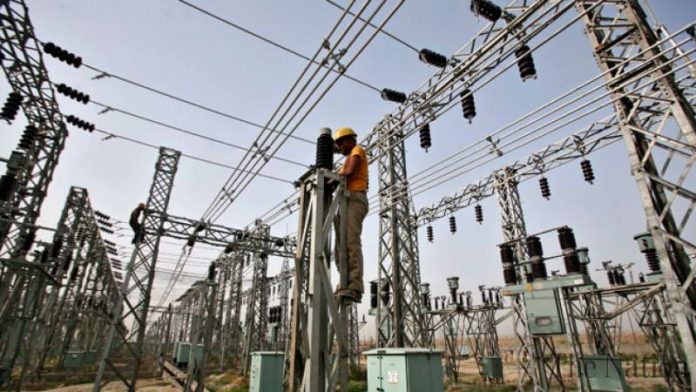
Accounts of the Electricity Distribution Companies (DisCos) are to be subjected to a forensic audit by the Federal Government. Besides, governors have invited Minister of Power Sale Mamman to provide details of the ongoing work at the $5.8 billion Mambilla Hydro Electrical Power Project which will supply 3,050 megawatts on completion.
The National Economic Council (NEC), has said the recommendation by the Nasir El-Rufai committee on the review of the ownership status of the DisCos on forensic audit was adopted. Edo State Deputy Governor Philip Shaibu told reporters after the meeting, that the forensic audit of all DisCos’ accounts would ascertain the level of investment into the assets they acquired. According to him, the El-Rufai committee requested for another two months so, it could tidy up issues surrounding the task given it, one of which is getting state governments to come up with their expenditure on the power companies. “NEC received an update on the review of the status of the ownership structure of the electric power distribution companies. The Kaduna State Governor, Mallam Nasir El-Rufai, briefed NEC on the progress so far made and responses so far received from the general public. “He also told NEC that forensic audits will be carried out on all the bank accounts of all DisCos and also that the state governments are to provide details of their investments in the electricity distribution companies.
ALSO READ: Minister Of Power Suspends Rural Electrification Agency Boss
The Nigerian Governors Forum (NGF) meeting recently, decided to seek more information on the Mabilla Power Project according to the communiqué read by its chairman, Ekiti State Governor Kayode Fayemi. He said: “The forum received a presentation from Hypertech Nigeria Ltd on the 3050MW Mambila Hydro Electric Power Project (MHEPP). The team highlighted that the project was executed between the Federal Government of Nigeria and China Gezhouba Group Corporation (CGGC). “The team gave an overview of the huge potential that is lying fallow in the Mambilla region which governors appreciated, but insisted that a presentation by the Ministers of Power and Water Resources would provide more granular pathway to what needs to be done.”

The Power minister said he had submitted a report to the Federal Executive Council (FEC) that the DisCos are the weak link in the power chain. According to the minister, while about 13,000 megawatts are generated, about 7,000mw are transmitted but the DisCos are only able to take about 3,000mw. But the DisCos rejected the minister’s claim, saying the Transmission Company of Nigeria (TCN) cannot wheel 7000mw.
A 2015 report of the Good Governance Initiative (GGI), a non-governmental organization advocating uninterrupted power supply in the country, says Nigerians spend N3.5 trillion on fuelling their generators annually. Its President, Mr. Festus Mbisiogu, said intensive research conducted by the body to ascertain the negative multiplier effects of unsteady power supply last year showed that the manufacturing sector spends over N800billion yearly on generators. He added that this is apart from about N2 trillion spent on running generators by over 17 million Small and Medium Scale Enterprises (SMEs), banks, other corporate entities and traders across the country. He explained: “In the banking sector, each branch spends over N4million on diesel in a month. When you multiply that figure by the number of bank branches in Nigeria, it could be colossal. An average family man spends between 60,000 and N100, 000 in a month on fuel, apart from the maintenance. “With over 6,133 bank branches and each expending N4million on diesel a month, N48million will go down the drain in a year, and this will amount to N294.4billion per annum across all the branches. This means that not less than N1.5 trillion must have gone into diesel purchase in the past five years. This is outside the amount spent on powering ATM points located outside banking premises and maintaining the generators, among other critical banking infrastructure”, he stated.
Financial experts say the amount spent on fuel and generators by manufacturers and SMEs will increase remarkably this year as 2016 is clearly the harshest since the 2008 global economic meltdown. The rough business climate has forced many companies to close shops, while the surviving ones are retrenching workers daily. Recently, the Organized Labour raised an alarm that the food, beverage and tobacco sector of the nation was on the verge of shutting down and that over three million jobs were at risk due to the inability of companies to meet the crippling cost of production.
The National Bureau of Statistics put the total number of SMEs in the country at over 17 million, many of which rely on generators to run their businesses as the country continues to grapple with abysmal power generation. Looking at his own sector, the Chairman of Toiletries and Cosmetics Manufacturers Group, Mr. Ikpong Umoh, said ‘ hopes were dashed following the inability of the power generation companies (Gencos) and Distribution Companies (Discos) to provide the power supply needs of the citizens two years after the privatization exercise. He observed that the role of manufacturing in a developing country like Nigeria cannot be trivialized. He called on President Muhammadu Buhari led the government to urgently save the manufacturing sector from total collapse by providing constant power supply.
At the time of the inauguration of President Muhammadu Buhari on May 29, the available electrical power in Nigeria was about 2,500 MW. But in less than six months it has almost doubled. The Nigerian Ministry of Power attributes this to the enhanced supply of gas to the nation’s newly constructed gas power plants. Many Nigerians, however, believe that’s only part of the explanation. The new owners of the electricity generation and distribution entities that were part of the government monopoly before the liberalization of the electricity industry had to sit up in view of the well-known no-nonsense disposition of the new president.
Nigeria’s National Population Commission reports there are 178.5 million people in the country. Electricity supply of 5,000 MW is grossly inadequate for that many Nigerians. Even though access to electricity is available to only to about 55 per cent of the people, load-shedding for rationing electricity is widely practised all over the country — despite the big jump in the supply figure noted above. Much more than 5,000 MW of electricity is required for the socio-economic growth of the nation. Energy planning experts using modern energy modelling tools estimate that for the Nigerian economy to grow at a rate of 10 per cent the country’s electricity requirement by 2020 will be of the order of 30,000 MW, and by 2030 it will be 78,000 MW. A greatly expanded electricity supply regime for Nigeria will require a detailed assessment of the recent privatization of the nation’s electricity generation and distribution infrastructure. The energy mix for electricity supply will need to be broadened from the current two of hydro and gas sources to seven sources: hydro, gas, solar, wind, biomass/biofuels, coal and nuclear. Additionally, there will be a requirement for the strengthening and expansion of the national grid along with improvement of distribution systems as well as promoting the development of fuels for gas, coal and nuclear power plants. There is also the need to update both the National Energy Policy and the National Energy Masterplan and pass them into law.
For enhanced security of electricity supply, there is the urgent need for expanding energy sources, from gas and large hydro to gas, hydro, solar energy, wind energy, biomass/biofuels, coal and nuclear. The new power plants can be built on the basis of public-private partnerships. The Government would then divest its involvement after some years in line with the current policy of getting the private sector to handle generation and distribution systems. Many advanced countries, along with the International Renewable Energy Agency and the Energy Commission of Nigeria, will guide the development of the large-scale renewable energy-based power plants. The Ministry of Mines and Steel Development would guide the development of clean coal power plants, while the International Atomic Energy Agency and the Nigeria Atomic Energy Agency would guide the development of the nuclear power plants.
Projects of the embedded generator type should be vigorously promoted at distribution networks to close the gap in local demand and supply of electricity. One way of doing this is to invite investors to be part of pre-packaged pilot projects in all the distribution companies. State governments should take interest in embedded generation, as is already the case in Lagos State. It is observed that despite the government’s proclaimed desire to deploy renewable energy sources (RES) in the nation’s energy mix, there is no supporting legislation to support the stated position. Government, rather, advocates “some limited involvement” in financing renewable energy technologies, mainly in the form of differential wholesale tariffs rather than direct capital injections. Government should as a matter of urgency embrace the current trend where many developing and emerging economies are vigorously promoting renewable energy efforts through direct policy initiatives and incentives.
Solar power generation which seemed neglected is now receiving huge attention, forming the centre of many power generation-focused conversations in Nigeria. Power problems in the country mirror that of many energy markets in Africa. Nigeria’s power ministry estimates that about 40,000 MW of electric power is required to satisfy the country’s industrial demand but Nigeria only has about 12,000 MW of installed generation capacity, of which around 3,500 MW is supplied by gas-fired plants and hydropower systems. The majority of the gas-fired power plants are now burdened by problematic gas supplies, arising from pipeline vandalism by militant groups operating in the gas-producing region of the Niger Delta. The Renewable energy program of the Nigerian government says “about 600,000 MW of electricity can be generated from just one per cent of Nigeria’s landmass.” This implies that Nigeria can procure 100 per cent of its power from a renewable source such as solar. Nigeria has the potential to lead in utility-scale solar power in Africa, given its well-structured regulatory frameworks, the standard of which is mostly absent in many other African countries.
Nigeria has often been heralded for overcoming numerous systemic obstacles but there remains one obstacle which many believe holds the country back: a chronic shortage of power supply. With about 90 million Nigerians living without power, citizens are forced to live on expensively maintained generator sets. The effect of the lack of electricity is significant as it continues to hamper economic growth and hurts investor confidence. However, a partnership between the World Bank, International Financial Corporation as well as local banks and energy firms in Nigeria could help assuage the pressing issue. The Lighting Africa Project, as it has been tagged, will focus on helping to develop a private sector that will provide electricity, using solar power, to up to a million households in Nigeria. The project will target households without access to the national grid in rural communities over the next five years.
To make this happen, the World Bank will play a key role as it will provide low-interest financing for investors and energy firms involved in the partnership. One of the major goals of the project is to reduce the heavy dependence on kerosene lamps and gasoline-powered generators which pose various health and environmental risks. Exploring solar energy could be a more realistic option to fix some of Nigeria’s power issues since building new national grids could cost billions of dollars. In the long-term, alternative clean energy will also help the country meet its ambitious plan to down emissions by as much as 45% by 2030 as part of the landmark climate change deal reached in Paris. In line with this, Nigeria recently announced a ban on low-cost generators citing health risks caused by emissions and fire hazards.
*** Written by Jide Ayobolu.