May 13, (THEWILL) – One of the most frustrating and embarrassing revelations currently circulating in the media emerged from the Defence Headquarters yesterday. The military’s admission that foreign herders are responsible for deadly attacks in Benue, Plateau, and other parts of Nigeria—due to porous and unguarded borders—underscores the urgent need for a fundamental overhaul of the country’s security architecture.
The Director of Defence Media Operations, Major General Markus Kangye, stated that intelligence reports and arrest records indicate many of the attackers are not Nigerians. This acknowledgment, though long overdue, paints a grim picture: Nigeria is at a tragic tipping point. Foreign Islamic Fulani terrorists are displacing Nigerian citizens from their homes and farmlands, while tens of thousands languish in internally displaced persons (IDP) camps. Meanwhile, the military appears helpless—throwing its hands up in surrender.
What Major General Kangye said is not news to the average Nigerian. It’s been obvious for years that Islamic Fulani terrorist invasions have led to widespread violence, displacement, and devastation of entire communities—without any meaningful military response. Fulani jihadism lies at the core of this crisis, driven by northern religious extremism and exacerbated by uncontrolled population growth.

It is disingenuous for the military, police, and Department of State Services (DSS) to pretend they’re unaware of inflammatory statements by figures such as Bauchi State Governor Bala Mohammed or groups like Miyetti Allah. Not long ago, the governor publicly declared on national television that Fulani from across the world were welcome to Nigeria and that herders carried AK-47 rifles for “self-defence.” The same silence greeted former President Muhammadu Buhari’s open-door policy for Fulani herders, which ignited a wave of bloodshed across the country.
I warned five years ago that the complete decimation of the Nigerian military was only a matter of time if it failed to adopt a scientific, intelligence-driven approach to combat insecurity. Today, the security situation has worsened. The numbers speak volumes: under President Tinubu, 6,931 Nigerians have been killed by terrorists in just 10 months—a figure higher than the 8,356 killed during Buhari’s entire eight-year tenure and significantly worse than the 2,059 deaths recorded during President Goodluck Jonathan’s time in office.
Nigeria has 86 legal border entry points and over 1,400 illegal ones—among the most porous borders in the world. Transnational crimes flourish in these border zones, particularly with Nigeria’s neighbours—Niger, Cameroon, Chad, and Benin—due to a lack of control. While Mexico has successfully built a 2,000-kilometre border wall, Nigeria remains exposed and vulnerable.
The government has abdicated its constitutional responsibility to protect lives and property by allowing unregulated movement across its 4,500-kilometre land borders. A serious-minded military by now should have adopted cutting-edge technologies like geotagging, which enables real-time monitoring and response. By assigning location data to images, social media posts, or phone calls, security agencies can instantly track perpetrators, identify high-risk areas, enhance situational awareness, and deploy targeted interventions.
Corruption is another major impediment. No one should expect the economic warfare that insurgency has become in Nigeria to end any time soon. Corruption within the military has undermined effectiveness and eroded public trust. Consider this: in 2018, Deputy Commissioner of Police Abba Kyari, then head of the Intelligence Response Team (IRT), singlehandedly apprehended Boko Haram terrorist Baa Adam, who confessed to orchestrating over 133 suicide bombings in Nigeria. That intelligence operation brought a near halt to suicide bombings in Borno and the Northeast—something the military had consistently failed to achieve.
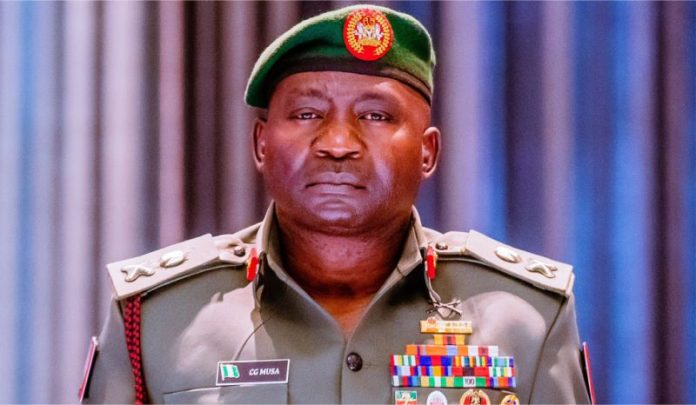
If General Christopher Musa and the Nigerian military are to reclaim public confidence, they must adopt a comprehensive approach to security—one that addresses root causes such as poverty, illiteracy, and systemic failure. This includes economic development, institutional reform, the use of artificial intelligence and geotagging, regional cooperation, temporary border closures, and, above all, decisive and visionary leadership.
Without this, the current service chiefs risk being remembered not as defenders of the nation, but as comfortable office-holders in uniform—mere beneficiaries of a failing system.
*** written by Erasmus Ikhide, a security analyst, contributed this piece via: ikhideluckyerasmus@gmail.com