Way back in the early 90s when I was involved in Sustainable Forests Resources Management as Community Relations Officer at a Participatory Community Forestry Project funded by then British Overseas Development Administration now called, Department for International Development – (DFID) in Cross River State, South-South Nigeria, there I had the inkling on environmental sustainability.
Simply put, if you exploit the environment sustainably, the consequence is better imagined than allowed to come to reality. I remember then we had many slogans deployed while on advocacy visits to host forests communities where government forests reserves and community forests were domiciled but this beautiful slogan is still fresh in my mind “the forest is the store house of God given resources in timber and non-timber products, use it wisely” This implies generally on the environment.
In Nigeria, deforestation, desert encroachment, desertification, coastal and sea rise threatens human existence and by extension pose security challenge to the citizenry. These phenomena affect millions of people as more arable and pasture lands are lost annually.

Worrisome for many is human economic activities which are some of the leading causes of climate change and its adverse effect. Expert opinion suggests that as a result of desertification in the north and seas rise, air pollution as well as oil spill in the southern part of Nigeria, landmass is lost and the people are forced to scramble for arable land.
The founder, Fight Against Desert Encroachment-FADE and Explorer who has crossed the world desert four times, Dr. Newton Jibunoh, in a chat on Nigerian Television Authority programme “Tuesday Live” in 2017 said the security challenge reared its head in the 70’s, during which a sizeable portion of the Saharan region went almost a few years without rainfall. This brought about immense drought which affected a number of countries in Africa; Sudan, Niger, as far as Ethiopia and about eleven federating states in northern Nigeria.
Once the greenery along the fringes of the Sahara disappeared, migration by the nomadic communities not only in Nigeria but from Niger, Chad, Northern Cameroun and far down from Mauritania started moving southwards along the cattle route in rural and urban centres given the porous borders with their herds in millions to find a bit of greenery. This over time became a big challenge. What will you do with millions of migrant nomads coming from within and outside Nigeria looking for pasture to graze and in the process host community’s farms are trampled on and crops destroyed?
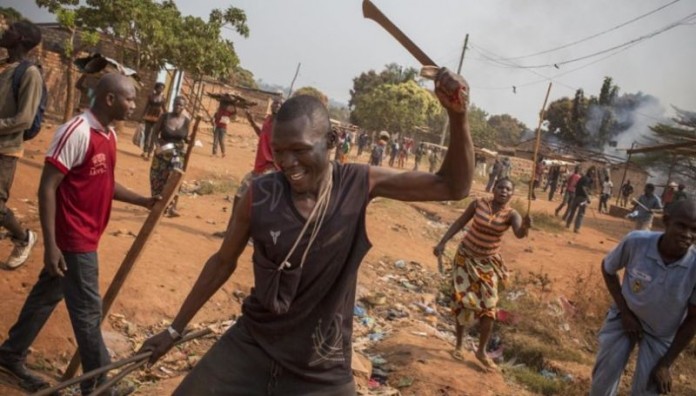
Judging from the account of an environmentalist, a Professor of Geography at the Nasarawa State University, Haruna Ayuba, he said “you have the drying up of the Lake Chad, desertification and drought threatening farmers.’’ According to him, there is also forced migration where people move from the north to the south and at the middle belt (Benue State axis), there is the “Sudanization” of the guinea savannah which is a buffer zone. The implication according to him is that there is conflict over resources as farmers and herdsmen scramble for green vegetation to make ends meet and this most times results in conflict due to trespass by the herders into farmlands leading to the destruction of crops and other economic plants.
While security agencies usually will make moves to restore peace, measures to mitigate the challenge stares on the face. What challenge for Nigeria?
Let me bend backwards to some key concerns that will give a clearer lead to this conversation; The Paris One-Planet Summit on Climate Change 2017 which reviewed the 2015 Global Paris Agreement on Climate Change; World leaders including Nigeria at the summit pleaded wide range commitments towards making the agreement on climate change a reality. United Nations Secretary General, Antonio Guterres said “Climate Change is a defining issue of our time-and we are at a defining moment. We need to mobilize resources and the international community to support the governments and communities of the developing countries to build resilience for their societies”. President of the World Bank, Jim Yong Kim saying “There is no African Head of State who hasn’t told me that the booth of climate change is on their neck, they fill it everyday”
Just like many other developing countries from Africa and Asia at the summit, Nigeria in making commitment to what is being done back home to remediate and mitigate the security challenge and other challenges posed by climate change in her Nationally Determined Contributions expressed the commitment to deliver on a climate change secure future.
Nigeria solicits her inclusion in climate regional programmes through the provision of strong financial support to the replenishment of the Lake Chad as well as long term solutions for a source of clean power. This position implies that Nigeria will not only create economic competiveness for industrialization and job creation but address permanently the conditions for the spread of violent extremism and illegal migration.
On a different plank, a Geo-Environmental Scientist and Expeditionist, Professor Hilary Inyang says besides mitigation, adaptation is key and it should be at the inceptive stage. Mitigation, he says is encased in policies at the international level so beyond regulation and policies there should be policy guidance systems that will help Nigeria in addressing these challenges. For instance, the Great Green Wall initiative in Nigeria needs to be very picky in planting and adapting tree species that will withstand desert encroachment. He went further, Nigeria’s Research Institutions should come up with measures that would address some of the problems. “By policy, government should get involved in Clean Energy like Solar; Institutions of Government should take the lead and adapt distributed electricity and not centralized electricity distribution”.
People have been talking about the political end of the problem the physiological and physio-graphic end is imperative; the vegetation, pattern of rainfall changes determines where one lives and most people in Nigeria are still farmers. The security aspect of it is that when people are displaced from their occupation as a result of climate you should expect social turmoil, in this instance it is not only in Nigeria but along the West African belt.
Nigeria’s Minister of State for Environment, Ibrahim Usman Jibril agrees that there is strong correlation between climate change, insurgency and migration; it is simply a competition for resources. He sees the problem as a difficult one but that problems are meant to be solved for the good of the people and Nigeria’s environment. He says one of the major problems is the shrinking of the Lake Chad from 25,000Sq Km in the 60’s to as low as 2000Sq Km presently. “When the Lake Chad was at its full capacity, there was a lot of economic activities; fishing, cattle rearing, animal husbandry and farming, all that is gone, no more farming, no more fishing, no more livestock meanwhile this is an area you had the highest number of cattle stocked”.
Meanwhile, Nigeria has developed a working document on climate change – “the Nationally Determined Contributions”, which focuses on Agriculture, Power, Transportation, Industry and Water Governance. By scientific findings, these are the major sectors that contribute the most to Green House Emissions in Nigeria.
While the Nigerian Government is doing everything possible to ensure that Climate Change induced security challenges are addressed, individuals are advised to unreservedly key-in by imbibing Environment friendly practices such as afforestation and other sustainable practices while utilizing the environment. This sums up the fact that in mitigating the challenge it requires collective effort by all including you.
*** Omini Oden (ACPA, FCAI), writes from Abuja, Nigeria. Email:ominioden@gmail.com, +2348095332022 (SMS only).