
June 03, (THEWILL) — Did you know that how we produce and consume food can have a huge impact on the environment? Some of these environmental impacts can include: water pollution, carbon and other harmful greenhouse gas emissions, deforestation, pesticide toxicity, biodiversity loss, and so on.
There is, therefore, an urgent need for us to re-examine how we produce and consume food to reduce negative impacts on our environment, economy and health, as well as to build resilience against shocks like economic disruptions. This would require a great transformation in our food systems and supply chain management, including everything from agricultural production, processing, packaging & distribution, to marketing, consumption, and waste disposal.
So, how can we attempt to build a food system that has minimal negative impacts on the environment, and that would be far more resilient to future economic shocks? One way we can do this is by shifting towards climate-smart agriculture – by using renewable energy sources in our agricultural production processes.

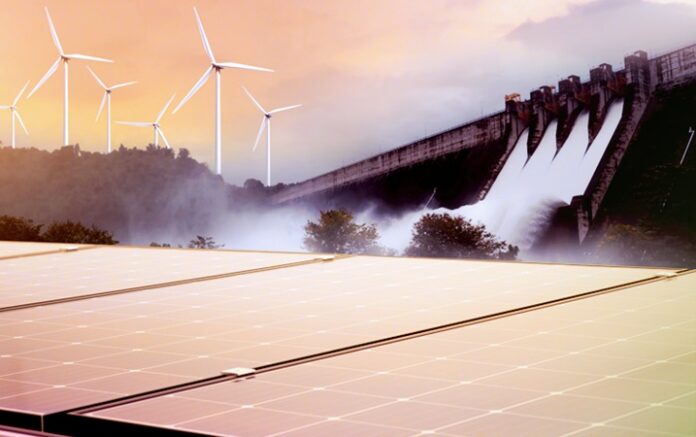
What is ‘Renewable Energy’? According to the United Nations’ website (www.un.org: “Renewable Energy is energy derived from natural sources that are replenished at a higher rate than they are consumed. Sunlight and wind, for example, are such sources that are constantly being replenished. Renewable Energy Sources are plentiful and all around us… A few common sources of renewable energy include: Solar Energy; Wind Energy; Geothermal Energy; Hydropower; Ocean Energy; and Bioenergy (produced from a variety of organic materials, called biomass, such as wood, charcoal, dung and other manures for heat and power production, and agricultural crops for liquid biofuels).”
However, it is important to note that although Biofuels, such as ethanol and biodiesel, are often portrayed as sustainable alternatives to fuel, the crops used to produce these fuels (such as corn and rapeseed) can occupy a great expanse of land, which could otherwise be used for things like food production, re-wilding and carbon storage.
Fossil fuels – coal, oil and gas – on the other hand, are non-renewable resources that take hundreds of millions of years to form. Fossil fuels, when burned to produce energy, cause harmful greenhouse gas emissions, such as carbon dioxide. On the other hand, generating renewable energy creates far lower emissions than burning fossil fuels. Therefore, to address growing concerns about global warming and climate change, the time has now come for us to make a transition from fossil fuels to renewable energy! Furthermore, renewables are now cheaper in most countries, and can even generate three times more jobs than fossil fuels!
Nowadays, it is very common for farmers and other agricultural experts to use Nitrogen-based fertilisers in their agricultural production processes. One of the key ingredients of nitrogen-based fertiliser is ‘Ammonia’. Ammonia (NH3) is a colourless, pungent-smelling gas that dissolves readily in water. Ammonia is usually produced using fossil fuels, and fossil fuels, including coal, oil and natural gas, are the primary drivers of global climate change. Therefore, in order to mitigate the worst impacts of global warming, societies are actively shifting away from fossil fuels in favour of renewable energy systems and cleaner industrial processes.
Have you heard about “green ammonia”? Green Ammonia refers to ammonia produced using renewable energy sources, including the sun and wind. Green Ammonia is used in agricultural/fertiliser production instead of fossil fuels. So, it is now possible to produce home-grown nitrogen-based fertiliser consisting of green ammonia when the sun shines and the wind blows.
According to an article by Professor Jasper Verschuur (an Assistant Professor in Engineering Systems & Climate Security at Delft University of Technology, the Netherlands) and Professor Paul Behrens (a British Academy Global Professor at the Oxford Martin School, University of Oxford), titled: “How the world can avoid millions going hungry when supply chains collapse”, and dated 18 May 2026, which I read up from the Oxford Martin School website (oxfordmartin.ox.co.uk, and which was originally published on 14 May 2026 in The Conversation www.theconversation.com, an independent news website: “The first green ammonia plants are now being constructed in sunny places such as Chile, Morocco, and Australia.” The article went on to state that although it is an expensive switch (from fossil fuels to green ammonia), the declining cost of renewable energy sources combined with wildly fluctuating fuel prices could soon make it a more competitive and secure alternative. However, as the article further stated: “A successful transition (from fossil fuels to green ammonia) will depend on sustained commitment (and investment) from governments.”
Another suggestion provided in the above-mentioned article is ‘Stockpiling’. There should be a rethink about the way food is stocked. A longer-term approach to stockpiling food should be implemented. It is also good for us to think beyond just stockpiling things like grains. We should also include other essential farm supplies like fertiliser, and so on. However, this needs to be done gradually so as not to distort already tight markets in the short-term.
Growing more plants is yet another suggestion put forth in the above-mentioned article. Eating more plant proteins (by both humans and animals) could swiftly improve food security and resilience. Plant proteins such as legumes (beans, lentils, peas) require much less fertiliser (they can even “create” their own fertiliser in their roots through nitrogen fixation). They also have other advantages, including improved nutrition and much reduced carbon emissions.
Building a more resilient food system cannot happen overnight, though. Things like changing our diet, switching our type of fuel, and changing our types of fertilisers take time. It will involve trade-offs as well as considerable governmental commitment/input, and commercial will. None of that is easy to achieve. However, if considerable effort is put into implementing all of these suggestions, it can help to accelerate the transition towards building more resilient food systems that can better withstand future disruptions.
***Written by Mr Daniel IGHAKPE (A Farmer, Teacher and Health Worker). ighakpe.dan@gmail.com.

