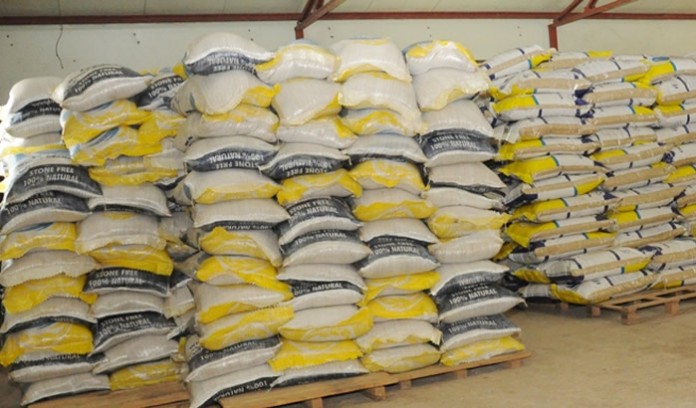
Many Nigerians are angry. They discovered that their prized garri, the cassava flakes staple food they assume proprietorial ownership over, is being imported from India! The outrage seems justified as we produce eighty percent of world cassava (Manihot Esculenta) across 33 of our 36 states. Also, we are the world’s largest exporter of cassava.
Again, based on the economics of scale; given the fact that cassava easily grows in Nigeria, there is cheap labour for its production and processing and a ready market, it seems inconceivable that garri can be produced in India, imported and sold in Nigeria. But there are other twists to the story; although the imported garri has an Indian-looking woman on the pack, the National Agency for Food and Drug Administration (NAFDAC) says it was actually produced in Ghana and packaged in United Kingdom before being imported into Nigeria.
The first thing is that cassava is dangerous for human consumption if not properly processed. So the fact that an uncertified type of garri has been imported into the country, is like selling a dangerous product to the populace. That NAFDAC, Customs, Consumer Council and related agencies have not been indicted for their failure to protect the citizenry, shows the type of country we live in.

Secondly, given the price, the poor will not buy imported garri from a supermarket. The product, given the upscale Ikoyi area it was discovered, is meant for the middle and upper classes; it is an indication of the gullibility of our elites that tend to fall for anything imported. Thirdly, the appearance of the packaged _garri_ is an indictment of Nigeria as a country which cannot carry out the basic development step of packaging its products. Fourthly, we cannot as a country accept to be the dumping ground of the world whether in the name of trade liberalization or imaginary ‘free trade’ Yes, many Nigerians are angered about the Indian garri, but I fear it is mainly for the wrong reason; that cassava is our indigenous product which no foreign entity should interfere with. But it is not. Actually, this rugged crop was brought to Nigeria from Brazil, today, that country is second only to us in cassava production. Apart from African countries like Tanzania, Ghana, Madagascar, Mozambique and Uganda that produce cassava, Asian countries like Thailand and Indonesia also do. So we need to know why exactly we are angry. Obviously, it cannot be based on the fact that we produce the crop in such large quantity and that we so liberally consume it. If this were so, we would over the decades have been angry over our massive importation of petroleum products when we are a leading producer of crude oil; or of textile products when we export cotton. Ordinarily, we should be angry or ashamed that we import gold, when the product is mined in our country or chocolate when from colonial times, we have been producing cocoa in large commercial quantity.
MAYBE WHAT NIGERIANS DON’T KNOW OR UNDERSTAND IS THAT SOME SMART AMERICAN OR EUROPEAN COMPANY CAN STOP US FROM PRODUCING, EXPORTING OR CONSUMING CASSAVA IF IT PATENTS IT; IN THAT CASE, WE WILL BE REQUIRED TO PAY ROYALTY FOR THE CROP. This may sound crazy, but it is not far-fetched. Nigeria, like most African countries sign all sorts of international agreements without critically, examining their implications for the country and its people. We have signed up to the World Trade Organisation (WTO) which has what it calls the Trade-Related Intellectual Property Rights (TRIPS) Under TRIPS, countries from the developed world are obtaining patents on indigenous products and knowledge and turning round to restrain the original owners from producing or using such them. In this dubious claims to living organism otherwise called biopiracy, a Japanese firm now has the patent for the Indian plant, Pomegranate (Puninca) Granatum, an antiviral agent.
An infamous case is the Neem Tree, a tree related to our mahogamy which is indigenous to the Indian subcontinent. India has a minimum 14 million Neem trees. The tree for over 2,000 years has been used by Indians for pesticides, toothbrush and tooth paste. Its leaves and bark have been used to treat ulcer, diabetes, leprosy and skin diseases. In 1988, an American company went to patent it and sold it to another American company, W.R. Grace. In 1992, W.R. Grace secured the rights and ordered Indian companies to stop using the tree unless they pay royalty to it. It began to sue Indian companies for allegedly violating its intellectual property rights. So you have an American company stealing the knowledge of indigenous Indians and pirating their practices, and then turning round to demand royalty payment.
I foresee that in the immediate future, some American or European company would patent our Dongoyaro Tree which is effective for curing fever especially malaria, and turn round to demand royalty.
Five months before the Indian _Garri_ (IG) case, was the plastic rice scandal. On October 24, 2016, Customs announced that it had seized 102 bags of poisonous fake plastic rice. The ‘rice’ is made up of a mixture of industrial synthetic resin and sweet potato cut into rice shape and sprayed with rice-like fragrance. The ‘rice’ packaged as ‘Best Tomato Rice’ was already being sold in Abuja, Lagos, Aba and Onitsha before the seizure was made. Officials were to later explain that it was” rice contaminated with micro-organisms above permissible limit”
Again, it is a question of failure by relevant agencies to protect the country from being used as a dump site, and the consumer from being exposed to food that may be poisonous. Part of the reason why there is a ready market for such food, is the culture of many Nigerians who assume that local goods are inferior to imported ones and therefore consume with little or no discrimination, any imported product. It is this lack of faith in local goods that makes producers of fine clothes, bags and shoes in the country to slap fake foreign labels on their designs and pass them off as imported ones. It is this mindset that makes some Nigerian consumers buy imported fruits like bananas, coconut and oranges, which are in abundance in our farms and backyards.
The hair of the African woman is very beautiful and their artistic hairdo sets them apart worldwide. But due to lack of consciousness, millions of our women now buy the human hair of Brazilian, Mongolian and Indian women to add to their natural hair.
Unless we have clear enforceable policies on fundamental matters like consumables, and a reorientation of our consciousness, we shall continue to be slaves to other cultures and peoples.
Written by Owei Lakemfa.