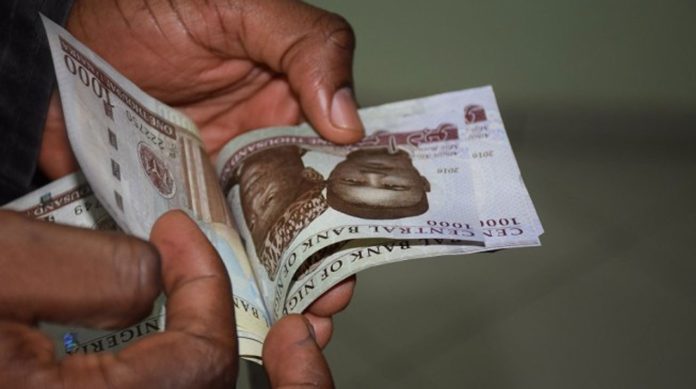
There cannot be politics without money, no doubt. But a situation where money is placed above every other factor is not democracy. It is a move towards plutocracy, where the government is in the hands of the richest class of people in the society.
This is not the beginning of this trend of politics. We have been on this route of monetisation of politics for a long time especially since the return of democracy in the Second Republic in 1979. Instead of politics of ideas, we have been playing politics of money. This, among other characteristics, has bedevilled our polity and led us to where we are today: Corruption, violence, poverty, insecurity, political instability and under-development.
It is therefore not surprising to this writer to learn about the kind of figures being mentioned by our two major political parties for the sale of nomination forms for the presidential, governorship and other elective positions in the 2023 general election

For the All Progressive Congress (APC), the nomination form for the post of president goes for N100 million, while the governorship form is N50 million.
The People’s Democratic Party (PDP) fixed its presidential nomination form at N40 million, while the form for the governorship position went for N21 million.
This idea of monetisation of politics in the country has negatively affected our polity. The result is that the nation has not enjoyed the main ingredients of democracy, which include free and fair elections, freedom of association, right to active participation by citizens by not only voting, but also having access to contest for the highest offices in the country, protection of human rights and respect for rule of law.
It has resulted in a situation where only the rich or money-bags can contest for political offices. Those who have ideas and are capable of delivering the results, but do not have money, will not be qualified as they cannot afford to buy forms. In the present circumstances, how many Nigerians with legitimate means of livelihood can afford to purchase these nomination forms?
If those who are capable but have no means are excluded, what will happen is that the forms will be available to those who are not likely to have acquired their resources through legitimate means. Those who claim to be sponsored will have to pay back their sponsors . To do that, they will be tempted to steal the resources of the state if elected.
This is why politics in the country is regarded as a commercial venture where the investors recoup their investments. It is a game where the winner takes all. To satisfy this end, all manner of tactics, including bribery and thuggery, are employed. It is a dirty game where the end justifies the means.
Privatisation of the state is a game where political actors are made to believe that resources meant for the people belong to them, their families and their allies and they can appropriate it the way they like.
Politics here is a game where the actors do not have to account for their stewardship. Why would they when they believe they bought rather than won their seats?
It has entrenched and deepened the level of corruption in the country. According to the Transparency International report of 2021, Nigeria ranked 154th out of 180 countries listed in the corruption index . Denmark was the least corrupt while South Sudan was the worst.
Besides these vices, monetisation of politics does not allow political actors to be loyal to the people or the Constitution , which they swore to uphold during their tenure.
Their loyalty is to themselves and their sponsors, who are sometimes called God fathers. Afterall, the people did not assist them to raise money for nomination forms, bribe delegates, do campaigns, hire thugs and arrange thanks-giving after “winning” the elections. This trend has over the years increased the level of poverty in the country. Unlike the 1970s when Nigeria was one of the richest countries in the world, today, we are one of the poorest.
According to the National Bureau of Statistics, 83 million Nigerians were living in poverty by 2020. This figure was expected to have risen to 90 million by 2021.While the exchange rate of the naira to the United States dollar was 70 kobo to a dollar in the 1970s, it is now N560 to one dollar. Like the situation in the seventies, crude oil export still remains our major source of foreign exchange earnings. There is no serious effort at diversification of the economy.
Continuing with this trend means our unemployment rate will continue to rise. As at 2021, the nation’s unemployment rate, according to Augusto and Co, a rating agency, was 35 per cent. In a country where there is no respect for statistics, this figure may not represent the actual situation. Suffice it to say that while an average secondary school leaver could easily secure a job in the early seventies, an average university graduate of today does not have the opportunity of getting a job after his or National Youth Service Scheme (NYSC) programme.
The high level of poverty and unemployment has escalated insecurity in the country. While the major crime in the seventies was armed robbery, we are today surrounded by terrorists, bandits and kidnappers. Kidnappers are everywhere. They are in the northern and southern parts of the country. Nowhere is safe.
Monetisation of politics is the reason for lack of governance in the country. Instead of governance, we celebrate non- achievements like building of 2-kilometre roads, painting of a school building and paying the school fee of a few disabled pupils in secondary school. Our political actors use these to siphon resources meant for the people
Is it any wonder that out of the 44 bills recently passed by the 9th National Assembly and transmitted to the state houses of assemblies, only one dealt with the socio- economic rights in Chapter 2 of the 1999 Constitution as amended. That provision is on free and compulsory basic education. The other aspect of education, like provision of free education up to university level, was not even discussed. Other socio-economic rights including provision of full employment and housing for the people were not touched. Also, the issue of state and community policing, which was canvassed by many as a way of helping the country to reduce the level of insecurity, was ignored by the Assembly.
In civilised democracies like the United States and the United Kingdom, politics is played essentially on the basis of ideological beliefs. It is therefore rare to hear of cross-carpeting by political actors. But because we are playing politics of money rather than politics of ideas, cross carpeting of politicians has become the order of the day. It is the same system of monetisation of politics that has discouraged the evolution and growth of political parties in the country. Unlike the situation in the First Republic, how many political parties can boost any known ideological disposition in the country today?
Until the nation embraces politics of ideas instead of politics of money, we will not only worsen the state of poverty, insecurity, political instability and under-development in the country, but also continue to neglect the primary purpose of government as enshrined in Section 14(b) of Chapter 2 of the 1999 Constitution which is the security and welfare of the people. This is antithetical to democracy.
*** Mack Ogbamosa, a legal practitioner/ Communications Consultant, can be reached via mack_ogbamosa@yahoo.com