May 26, (THEWILL) – Nigeria is a country that lives and breathes variety—literal and metaphorical. From endless debates over who owns the crown in the jollof wars to the deep-rooted pride in regional delicacies like Amala, Tuwo, and soups brimming with protein, Nigerians are hardwired to resist uniformity. This culinary mosaic mirrors our politics: colorful, competitive, and impossible to boil down to a single flavor. The idea of a one-party system in Nigeria? As implausible as nationwide agreement on the best dish.
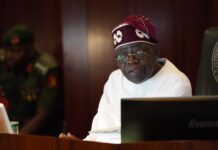
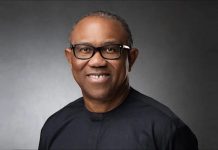
The 2023 presidential election is a prime example. It wasn’t a landslide, nor a coronation. Instead, it was a fragmented mandate that exposed the cracks in Nigeria’s political landscape. Bola Tinubu of the ruling All Progressives Congress (APC) won 8,794,726 votes (37%), narrowly beating Atiku Abubakar of the Peoples Democratic Party (PDP) with 6,984,520 votes (29%) and Peter Obi of the Labour Party (LP) with 6,101,533 votes (25%). Rabiu Kwankwaso of the New Nigeria Peoples Party (NNPP) followed with 1,496,687 votes (6%).
Tinubu’s victory—secured with the lowest winning percentage since 1999—was neither overwhelming nor invincible. In fact, the combined opposition vote (over 13 million) far outstripped his total. Had Kwankwaso joined forces with Obi or if Atiku had shelved his ambition, the APC might have been defeated. Instead, the opposition’s inability to unite sealed their collective fate.

But the problem wasn’t just tactical. It was existential.
The PDP, once the dominant force in Nigerian politics, now lumbers like a retirement home for outdated ideas. The LP’s impressive surge was largely built on Obi’s personal charisma, not on robust party structure. The NNPP remained a regional blip. Meanwhile, Tinubu governed with a fractured mandate in a country where 63% voted against him.
The election results also painted a vivid map of division. Tinubu, Atiku, and Obi each won roughly the same number of states—12, 12, and 11 respectively (plus the FCT for Obi). This split tells a deeper story: a nation unwilling to be conquered by a single power. Tinubu may have dominated the Southwest, Atiku the Northwest and Northeast, and Obi the Southeast and South-South, but none held sway across the board. Even in Lagos, Tinubu’s backyard, Obi caused an upset. In Kano, Kwankwaso’s NNPP upended the APC’s dominance. Nigeria, clearly, is no one-party playground.
Yet, despite this diverse playing field, our politics remains driven less by ideology and more by identity. Ethnicity and religion still dictate voting patterns. Obi’s Southeast support came from Christian Igbos. Atiku drew strength from the Muslim North. Tinubu’s “national victory” was more a patchwork of alliances than a cohesive vision.
As for the APC, the warning signs are already blinking. The party, having absorbed defectors from PDP and LP since 2023—governors, senators, influencers—boasts about its swelling ranks. But this influx is a double-edged sword. History reminds us: Nigerian defectors are opportunists, not ideologues. Think Governor Godwin Obaseki, who dumped APC for PDP, only to later clash with his new team. Or Senator Dino Melaye, whose loyalty changes with the wind.
These political nomads weaken party cohesion and invite chaos. What looks like strength might actually be a Trojan horse. A party bloated with rivals becomes a battleground. The APC could well be marching down the same self-destructive path the PDP took before its fall in 2015.
And while APC juggles internal instability, the opposition isn’t exactly gearing up for a renaissance. Their inertia is glaring. Beyond mouthing criticisms of APC’s failures—rampant insecurity, economic despair, widespread corruption—what fresh solutions have they tabled? Youth unemployment stands at 53%, yet neither PDP nor LP has presented a concrete plan to harness this demographic powder keg. What’s the plan for 92 million Nigerians lacking electricity? For reversing the healthcare brain drain?
Instead, we hear echoes of the past: “restructuring,” “unity,” and other buzzwords drained of meaning. Peter Obi, who lit up 2023 with youth-driven momentum, now leads a party that leans more on online theatrics than political groundwork. Atiku, at 77, keeps chasing a presidency in a country where 63% of the population is under 25. The opposition mistake anti-APC sentiment for genuine support. Nigerians want results—not recycled slogans.
But perhaps the loudest message from 2023 came not from those who voted—but those who didn’t.
A staggering 36 million registered voters stayed home. Only 24 million of 93 million registered voters turned up. That’s a turnout of 29%—down from 44% in 2015. It’s not just apathy. It’s protest. Nigerians are rejecting a system they believe is rigged against them. Why vote when courts “correct” electoral outcomes? When politicians switch sides as casually as models change clothes?
If 2027 repeats this pattern, Nigeria risks a legitimacy crisis: a government voted in by a disillusioned minority, ruling over a frustrated majority. With 70% of Nigerians living in poverty, the consequences could go far beyond politics.
Still, Nigerian politics thrives on unpredictability. Buhari lost three times before winning in 2015. Obi rose from LP obscurity to become a national force. Who’s next?
Watch the youth. With 42% of Nigerians under age 14, tomorrow’s power lies with digital natives raised on #EndSARS activism. A charismatic candidate tapping into youth anger and social media energy could redraw Nigeria’s political map. Imagine an “outsider”—a “zebra” candidate from civil society or grassroots activism—disrupting the status quo.
Also watch the states. Progressive governors like Babajide Sanwo-Olu (Lagos) and Alex Otti (Abia) are quietly building subnational models of governance that might outshine Abuja. A coalition of such leaders could challenge the federal centre with real reform.
Bottom line? Nigeria is not built for one-dish democracy.
The APC’s current dominance is no guarantee for 2027. And the opposition’s disarray isn’t permanent either. But if our democracy is to thrive, our parties must evolve—beyond transactional defections and tired rhetoric. Voters must also rise above apathy and demand accountability.
To the political class: adapt or be left behind. The youth are watching. The hungry are restless. The clock is ticking.
To Nigerians: The 2027 pot is already simmering. Will you stir it, or let others decide the taste?
In a nation where even jollof divides, political complacency is a recipe for disaster. Nigeria’s democracy thrives on spice, not sameness. The next act is coming. The audience is hungry for change.
May Nigeria win.
Written by Prince Charles Dickson Ph.D.