
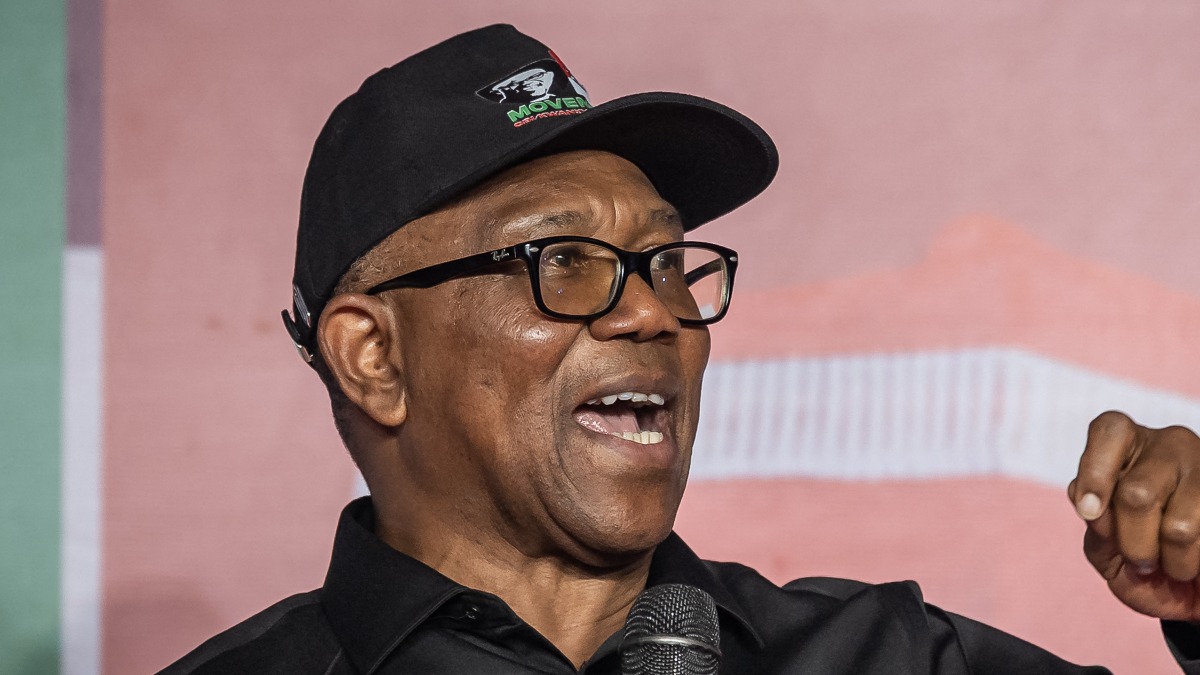
![Peter Obi, presidential candidate of the Nigeria Democratic Congress (NDC). [Photo Credit: Peter Obi/Facebook]](https://staging.thewillnews.com/wp-content/uploads/2026/07/FotoJet-60-696x392.jpg "Peter Obi")
August 03, (THEWILL) — In a country where political convictions often shift with changing tides and where public office is sometimes seen as personal entitlement; consistency has become one of the missing qualities in leadership. It is, therefore, significant that as Mr Peter Gregory Obi marks his 65th birthday, much of the national conversation is not merely about his age or political ambitions. It is about a defining characteristic that has followed him throughout his public life – consistency.
Consistency is not perfection. It does not mean that a leader never changes position when confronted with superior facts or changing realities. Rather, it means remaining faithful to enduring principles while adapting methods to solve emerging challenges. By this measure, Peter Obi has built a public reputation that distinguishes him from others in Nigeria’s political landscape.
From his years as Governor of Anambra State to his emergence as a national political figure, Obi has consistently projected the values of prudence, accountability, transparency, and disciplined governance. Whether one agrees with his politics or not, few would dispute that these themes have remained central to his public engagements for well over two decades.

His journey into politics was never an easy one. After winning the 2003 governorship election in Anambra State, he endured prolonged legal battles before reclaiming what the courts affirmed as his mandate. Many politicians would have abandoned the struggle or sought political compromise. Obi chose the path of constitutionalism, relying on the judiciary rather than violence or political intimidation. That episode revealed an early commitment to democratic institutions that would later become a defining feature of his political identity.
As governor, Peter Obi introduced a governance philosophy centred on fiscal discipline. While many state governments relied heavily on borrowing, he consistently argued that public resources should be managed with restraint and foresight. Reports at the end of his tenure indicated that he left substantial financial reserves and comparatively low debt obligations for Anambra State. More importantly, his administration invested significantly in education, healthcare, and infrastructure, demonstrating that prudent financial management need not come at the expense of development.
What made this remarkable was not simply the policies themselves but the consistency with which they were pursued. Government after government often begins with lofty promises only to abandon them midway. Obi maintained a clear focus on measurable outcomes, frequently insisting that every public expenditure should deliver value to the people.
Even after leaving office, his message hardly changed. Long before economic diversification became fashionable in national discourse, Obi consistently advocated investment in agriculture, education, manufacturing, and small businesses as pathways to sustainable economic growth. At political rallies, television interviews, academic lectures, and policy forums, he repeatedly emphasised production over consumption and human capital development over political patronage.
Critics sometimes argue that repetition is a political strategy. Yet consistency becomes credible when identical principles are expressed across different audiences, political circumstances, and personal interests. Peter Obi has largely demonstrated this pattern.
Perhaps nowhere has this consistency become more visible than in his personal lifestyle. In an era where public officials are frequently associated with lavish displays of wealth, Obi has consciously cultivated an image of modesty. Stories of his preference for commercial flights, relatively simple public appearances, and cautious approach to public spending have become widely known. While symbolism alone does not guarantee effective leadership, personal conduct often reinforces public credibility. Citizens are generally more inclined to trust leaders whose private behaviour reflects their public message.
Another remarkable aspect of Obi’s consistency is his communication style. Nigerian politics is increasingly characterised by inflammatory rhetoric, personal attacks, and ethnic or religious mobilisation. Although political contests are naturally competitive, Obi has generally maintained a calm, issue-based communication approach. He frequently supports his arguments with statistics, comparative examples, and references to public policy rather than relying solely on emotional appeals. Even his critics acknowledge his preference for discussing budgets, productivity, education, and economic indicators.
The emergence of the “Obidient” movement also illustrated the power of consistency. Political enthusiasm cannot be sustained by slogans alone. It grows when citizens perceive alignment between a leader’s words and long-standing actions. Many supporters were attracted less by campaign promises than by what they considered an established record of prudent governance and disciplined leadership.
Naturally, no public figure is beyond criticism. Peter Obi’s decisions have attracted scrutiny from political opponents, analysts, and sections of the electorate. Democracy demands such critical examination. Leadership should never be reduced to personality worship. Every public official must remain accountable for both achievements and shortcomings. Indeed, consistency should not imply infallibility. Rather, it provides a stable foundation upon which citizens can evaluate a leader’s performance.
One lesson from Obi’s public career is that consistency and credibility cannot be manufactured overnight. Reputation is accumulated gradually through repeated actions over many years. Political branding may attract temporary attention, but sustained public trust usually emerges from consistency between words and deeds.
As Nigeria confronts economic pressures, youth unemployment, insecurity, institutional weaknesses, and declining public confidence, the nation requires leaders whose convictions are not easily traded for convenience. Whether in government or opposition, public officials are expected to articulate coherent visions and remain committed to them through changing political seasons.
This expectation extends beyond Peter Obi alone. It is a standard that should apply equally to every political actor, irrespective of party affiliation. Nigeria’s democratic future depends not only on electoral victories but also on the character and consistency of those entrusted with leadership.
At 65, Peter Obi’s greatest political asset may not be any office he has occupied or may yet occupy. It may well be the perception that he has remained largely faithful to a recognisable philosophy of governance. In politics, where ideological flexibility is often mistaken for pragmatism, such consistency has become increasingly uncommon.
History ultimately judges leaders not by campaign speeches but by enduring values, institutional contributions, and the confidence they inspire among citizens. Peter Obi’s legacy will continue to be debated by historians, political scientists, and future generations. Yet one theme is likely to remain central to that discussion: the remarkable consistency that has characterised his public life.
As family, friends, associates, supporters, and even critics reflect on his 65th birthday, they celebrate not merely the passage of time but the resilience of a man who has remained steadfast in his convictions despite changing political circumstances. In a nation searching for trustworthy leadership, consistency is more than a personal virtue – it is a public resource.
For Peter Obi, turning 65 is therefore more than a personal milestone. It is an opportunity to reflect on a lifetime of public service shaped by discipline, prudence, and unwavering adherence to principles that have come to define his political identity. Whether viewed as a statesman, reform advocate, or opposition leader, his enduring consistency remains one of the most compelling features of his public journey.
In the final analysis, birthdays provide moments not only for celebration but also for reflection. Peter Obi’s 65th birthday invites Nigerians to consider a timeless truth: while charisma may inspire, promises may excite, and popularity may fluctuate, it is consistency that ultimately earns lasting respect. That, perhaps, is the enduring story of the man many Nigerians simply know as Peter Obi.
Sunday Onyemaechi Eze is a lecturer in the Department of Mass Communication and Head, Internationalisation and Partnership, Coal City University, Enugu

Sunday Onyemaechi Eze
