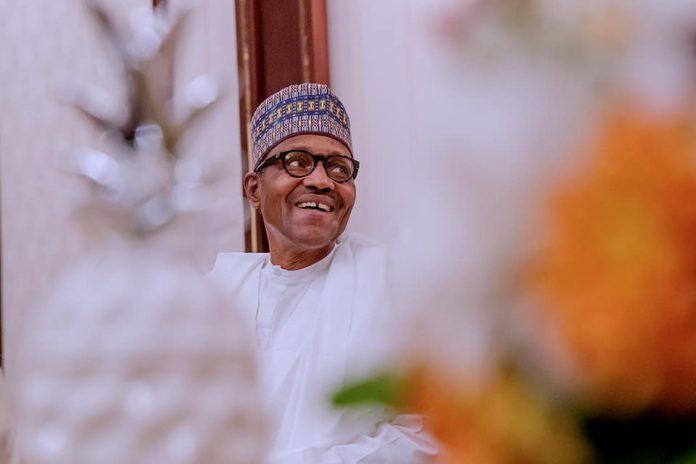
On May 29, 2015, when the then 72-year-old ex-military Head of State, retired General Mohammadu Buhari was sworn in as the first opposition figure to win a presidential election in Nigeria since independence in 1960, he came in on a wave of optimistic goodwill that signalled the onset of fresh beginnings, a restart towards change and the hope for a march towards better life for all Nigerians.
Riding on the momentum of that goodwill, the President exemplified that strict disciplinarian facade that endeared him to many with his firm and oft-chorused declaration that “I belong to everybody and I belong to nobody”. These words reverberated across the country even as they were met with raucous applause from the celebrant crowds witnessing the event live in Abuja and expectant compatriots following the activities live at home and abroad.
When the President spoke, his voice carried through his determination to bring “increased prosperity” to Africa’s most populous country and reached the ears of his countrymen and women wearied by years of flashy promises from men and women of the political class, which ended on the political soapbox without translating to any remarkable difference in the daily struggles of the average Nigerian.

Yet, there was hope being rekindled on that fateful Friday in 2015. Vowing to tackle “head on” the issues of corruption and the insurgency from militant Islamist group Boko Haram, the soldier-turned-electoral-victor assured his economically-challenged, terrorist-threatened and socioculturally-wearied compatriots that the Calvary had arrived.
That was in May, 2015.
Fast-forward to December 2021, after six years on the saddle and in the second year of President Buhari’s second tenure, the administration of the six-year-old government tells a story of incremental progress in several critical segments of the economy. Key performance indicators further reveal observable developments that have helped to shore up the economy from a nose dive, at the earliest phases of takeover from the previous frivolous administration, and during the unprecedented lockdowns that characterised the global response to the coronavirus pandemic, which threatened to destabilise the country’s economy.
To better appreciate this perspective, the vantage point must shift to a macro-economic outlook for the judgement call on the Buhari administration. This will demonstrate the trackable progress made within the duration of the Buhari administration.
In terms of fiscal measures, data which is tracked by the International Monetary Fund (IMF) show that Nigeria outperformed some of the largest African economies after South Africa especially in handling the strain that the COVID-related crises put on economies on the continent and beyond. Nigeria’s comparatively strong fiscal spending helped her overcome the COVID-19 recession faster than Ghana, Zambia, and Kenya, which all exited in the first quarter of 2021, while Lesotho exited in the second quarter of 2021.
During the COVID-induced recession, Nigeria witnessed negative GDP growth of -6.10% and -3.62% in the second and third quarters of 2020. Nigeria’s inflation trajectory shows that the President Buhari Administration is putting tremendous efforts to reduce the rate of inflation in Nigeria. The headline inflation rate in Nigeria decreased for eight consecutive months to 15.99 percent in October 2021 from 18.17 percent in March 2020.
By contrast, Ghana and Kenya, on the other hand, have seen their inflation trajectory rise for five consecutive months. Although COVID-19 led to high inflation in most African economies, Nigeria’s case shows a declining inflation trajectory which is a sign of positive macroeconomic performance.
Combined with a robust increment of external reserves is the Buhari administration’s goal to meet Nigeria’s importation obligations. The country’s reserves reached nearly $41.75bn in October 2021, comfortably above the $40bn global benchmark. Current figures from October and September places Nigeria’s external reserve higher than the external reserves of some large African economies such as Angola ($9.8bn), Kenya ($14.09bn), Ghana ($9.5bn), and Egypt ($40.85bn)
A total amount of ₦714.26 billion was disbursed to 663 projects under the Commercial Agric Credit Scheme (CACS) in November 2021 and about ₦884.91 billion, for the Anchor Borrowers Programme, to smallholder farmers. These interventions have greatly improved agricultural output and productivity in the country. The Administration also introduced the 100 for 100 Production and Productivity policy, which is anchored by the CBN with the core objective of boosting production and productivity in the country’s manufacturing sector while reversing the nation’s overreliance on imports. This achievement led to a price reduction in fertiliser from ₦9,000-₦11,000 per bag to ₦5,500 per bag, foreign exchange (FX) savings of $150m annually through the substitution of imported components with locally manufactured ones, and subsidy savings of ₦50 billion annually.
As a way of health intervention, a total of ₦108.22 billion was disbursed to 117 projects under various sectors of the Healthcare Industry. This intervention has increased the capacity of hospitals, pharmaceutical companies, laboratories and other health establishments in delivering healthcare services. Also, a total of ₦172.90 million has been spent on the development of vaccines, drugs and herbal medicines under the Health Sector Research and Development Intervention (Grants) Scheme (HSRDIS).
In terms of Energy and infrastructure, a total disbursement of ₦313.76 billion was made to power and airline companies under the Power and Airlines Intervention Facility (PAIF) scheme. A total of ₦1.24 trillion has been spent under the Nigeria Bulk Electricity Trading-Payment Assurance Facility (NBET-PAF), while ₦47.83 billion has been released for the procurement and installation of 858,026 electricity metres. As of the last quarter of 2021, 753,197 metres have been installed in homes and businesses across the country under the National Mass Metering Programme (NMMP). A further ₦363.04 billion has been released for 19 projects under the Nigeria Electricity Market Stabilisation Facility (NEMSF) intervention.
As part of the government’s intention to take care of all strata of the country’s population, the administration’s Social Intervention Programmes (SIP) approved the expansion of the National Social Register (NSR) by 1 million additional households. A total amount of ₦363.49 billion was released under the Targeted Credit Facility (TCF), designed to help individuals and businesses mitigate the negative effects of the COVID-19 pandemic. The scheme has increased the purchasing power of beneficiaries, thereby stimulating trade within the country. The Administration has also established the ₦75 billion Nigerian Youth Investment Fund created to boost the Nigerian economy through leverage and access to finance for youths.
The Administration has also launched the Nigeria Innovation Fund which is anchored by the Nigerian Sovereign Investment Authority (NSIA). The Fund is aimed at addressing investment opportunities in the domestic technology sector particularly in the data networking, data centres, software, Agri-tech and Bio-tech subsectors. Coupled to this is the $1bn Presidential Infrastructure Development Fund, managed by the Nigeria Sovereign Investment Authority, and invested specifically in critical road and power projects across the country, another demonstration of a single-minded commitment to upgrade and develop Nigeria’s Transport, Power and Health Infrastructure. The Bank of Industry has disbursed more than 400 billion in loans to large, medium, small and micro enterprises.
In the financing of businesses, a US$1.3 billion (₦396.5 billion) fund was issued by the Development Bank of Nigeria (DBN) for medium and long-term loans to MSMEs, even as the Bank of Industry has disbursed more than ₦400 billion in loans to large, medium, small and micro enterprises. Progress in virtual business is evident in the eNaira project, which will enhance the effective conduct of monetary policy, increase remittances inflows, increase financial inclusion and reduce cash management costs.
All these have helped Nigeria move up 39 places on the World Bank’s Ease of Doing Business rankings since 2016. Also, the Nigerian Investment Promotion Council (NIPC) in 2017 published a Compendium of all Investment incentives in Nigeria. To keep these indices positive across board, the Buhari administration has extended more than ₦2 trillion in bailout packages to State Governments, so that they can meet their salary and pension obligations, especially in the face of dwindling oil revenues in the first 3 years of the Administration.
Though insecurity orchestrated by terrorists and bandits particularly in northern Nigerian continues to pose a challenge to economic development in the region, these macro-economic statistics have provided evidence to demonstrate that there are laudable milestones in the six years of the current administration, which are altogether a realisation of government objective towards the welfare and security of the Nigerian people. Despite the dire straits and pressure on the pockets of the average Nigerian, all these statistics point to the admirable and comparatively wholesome macroeconomic strides the government is making to ameliorate the harm economic realities may be putting the country through at the moment. Before long, these will translate to the benefits of all and sundry.
***Precious Nwankwo writes from Abuja.