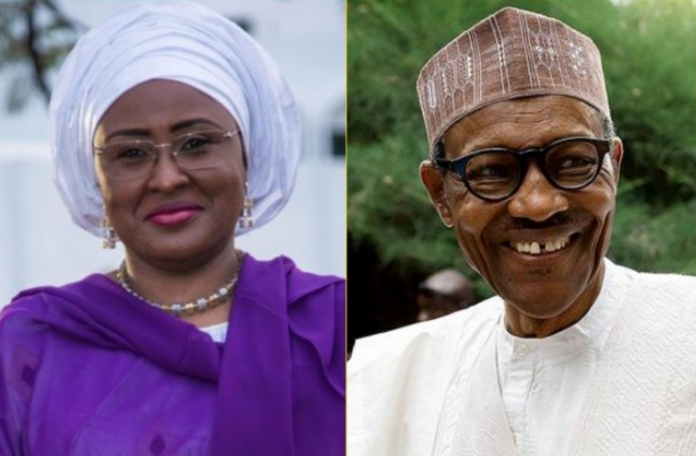
Tales emanating from the State House in Abuja, recently suggest that the Villa and other spheres of national leadership is populated with clowns: from “what are there for” Minister, to the overzealous aide who labeled all critics of this administration as wailing -wailers to the Oga himself who traveled all the way from Nigeria to Germany to give a joke on male chauvinist.
Every week, events unfold in Nigeria that keeps the masses away from the daily worries of life. Today, Nigerians are not debating issues relating to Buhari’s failed electioneering promises or his fecklessness to the state of the nation, we are engrossed in the affairs of who said what, to whom and on what occasion? We are discussing who stole what and how much and what year? Sometimes we occupy ourselves analyzing what laws are abused, how they have been abused and why they have been abused and why they ought not to have been abused.
Yes, these issues help to shape the polity, however, there are many who believe that most of these events that unfold in tidbits are deliberate red herring introduced by this administration to distract the people from the weakness of this administration. Whether these events are deliberate or not, one cannot deny the importance of these supposedly comic events in the society; they are part the events helping to shape the polity and all these events serve as a rich resources for many writers, journalists, historians and commentators. Today, there are many who will be debating in the literary circle if President Buhari is a chauvinist, going by his response to his wife’s interview with BBC Hausa Service. Social commentators are deliberating to what extent can Aisha Buhari be called an activist, or is it that she is simply a woman just struggling for her voice to be heard. Of course, political scientists and philosophers are ratiocinating the political correctness of Dr. Bukola Sarak, the Nigerian Senate President’s assertion that there is a government within a government in Buhari’s government. Political sociologist would also be seeking to know what significance Aisha Buhari’s interview would have in the Nigerian polity.

Aisha Buhari’s interview with BBC Hausa Service was a bombshell; it is the first time you would hear the spouse of a President differ with her husband on the state of the nation in Nigeria, more surprising even is the fact that Aisha Buhari is coming from an environment and culture where the women folk are not really given the opportunity to express their opinion freely, she is coming from an environment where many men erroneously hold the view that women’s role should be restricted to the kitchen or the other room (bedroom).
The interview of Aisha, tells the story of frustration of a President’s wife concerning her husband’s seeming failure to live up to the expectations of Nigerians – changing the status quo, especially as it relate to delivering hope to the common man. Yes, many have argued that Aisha’s interview was not really a pro-masses advocacy; they say it was an elitist advocacy. These commentators believe that Aisha’s anger was hinged on why her husband would abandon most of the people who worked for him and appoint strangers into positions of authority. “The president does not know 45 out of 50 of the people he appointed and I don’t know them either, despite being his wife of 27.” She said.
Valid as these views may be, Aisha Buhari’s interview is varied: some aspects of the interview focused on the failing economy, the frustrations of many Nigerians and the betrayal of trust and hope by President Buhari to Nigerians. In short, the hallmark of the interview can be said to be a condemnation of President Buhari economic policies. Her interview acknowledged the reality on ground that President Buhari not been living to the expectations of many Nigerians and if an election is to be conducted today many who voted for Buhari in 2015 will not vote for him. The message Aisha Buhari was sending out is that Nigerians seeing can’t see the change Buhari promised. This she succinctly stated: “He is yet to tell me but I have decided as his wife, that if things continue like this up to 2019, I will not go out and campaign again and ask any woman to vote like I did before. I will never do it again.”
Aisha’s position is not different from the position of most Nigerians, Buhari has not given Nigerians reasons to be happy since coming to power, rather he has preoccupied himself with tales of lamination; why the Nigerian masses mustn’t expect change if they refuse to change. The interview is indicative of two things; it’s either the President does not listen to her advice or he simply does not care about what the people including his wife are saying. I am sure; Aisha must have raised these issues with her husband privately before going to press.
No doubt, Aisha Buhari’s interview sounds offensive to her husband, nevertheless, the way President Buhari reacted to his wife’s statement was totally out of place. “I don’t know which party my wife belongs to, but she belongs to my kitchen and my living room and the other room,” he said. The response of the President does not only project him as a chauvinist it also shows the degree of intolerance and lack of tact of the Nigeria leader. In the world of President Buahri, every critic of the government is an opposition element.
Of a truth, these are very interesting times in our polity as Nigerians await eagerly what the next episode will be in this the Villa Sitcom. I hope Professor John Paden, Buhari’s biographer, would include these events whenever he decides to do a revised edition of “Muhammadu Buhari: The Challenge of Leadership in Nigeria.”
Written by Ominabo Wealth Dickson.
@OminaboWealth