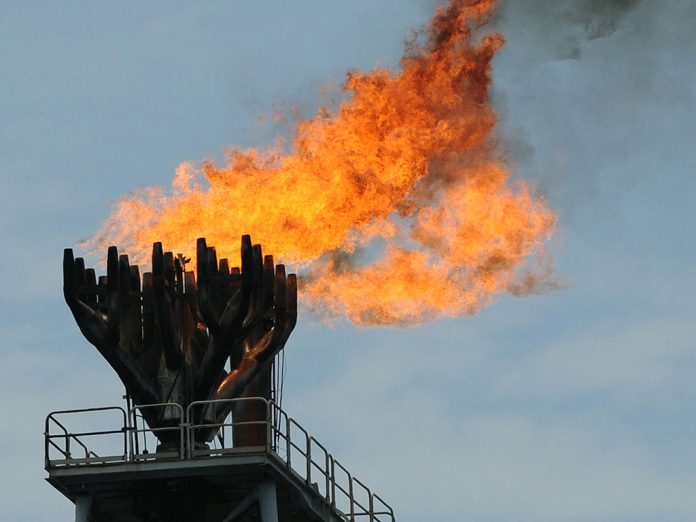
The Department of Petroleum Resources (DPR) has stated that over 200 bidders are competing for the available 45 gas flaring sites in Nigeria, adding that the national gas flare commercialization programme will be implemented from those sites at the initial stage. Specifically, the department stated that there are other gas flaring sites coming onboard, maintaining that the 200 bidders were selected based on quality, quantity and capacity they have to deliver on projects timely.
The Director, DPR, Sarki Auwalu, at a stakeholders’ engagement on national gas flare commercialisation programme to eliminate gas flaring and create value from gas in Lagos, the emergence of preferred bidders is on and would take about 60 days after which the bidders must have given a timeframe for completed projects. In his words, “There are 200 bidders that have been shortlisted were over 800 bided. We looked at the capacity, the quantity and quality of what they have. These 200 bidders are competing for 45 gas flaring sites for now and there are other flaring sites coming on board. This also shows that the world is interested in Nigeria because of its potential. Ordinarily, we did not expect that much even though we disqualified over 600.”
ALSO READ: DPR Seals 10 Gas Plants, 40 Retail Outlets In Delta
According to him, over 200 trillion cubic feet (TCF) of gas has been discovered with Nigeria producing over 800 billion on a daily basis, pointing out that the gas industry is filled with opportunities begging for local and foreign investments. “We currently have over 200 trillion CBF of gas already discovered and we produce 800 billion daily were to utilise some percentage of it while we export some other percentage and about 11 per cent being flared. We are taking that 11 per cent which is part of Nigeria’s commitment that we signed in 2015 in Paris,” he said.

He stated that the commitment puts Nigeria in a global perspective to end the practice of gas flaring. “This particular aspect is to realise that 2015 commitment to the climate which we will take that 11 per cent flared volume to market, creating opportunities for employment and supporting gas-based industries. “This is a great day for Nigeria, the gas producers and bidders. This is a process that is first of its kind in the whole world. We are taking a resource which is ordinarily being flared while adding value to it while also creating opportunities for investors to come and take this flared volume and make it quality for their investment and improving the quality lives of Nigerians,” he added.
While assuring Nigerians that no aspect of the gas sector would be saturated, the Auwalu said the 45 sites would create an opportunity not only for existing investors qualified for the programmes but also drive competition in the industry. “Before now it was gas to power, but it is now gas to people of Nigeria. This is the year of gas and all that is needed is to guarantee access to gas and utilizing the excess gas, making sure Nigerians feel that there is gas resource the country is blessed with. Before now there is no unified gas sales agreement, but with programmes such as this, it can bring about an equitable gas pricing across the gas value chain and access to all the gas-related industries because we have set up a process in which you will equate the price, maintain the access of the gas, making it easy and simple unifying the approach all over,” he said.
The policy position of the Federal Government of Nigeria (FGN) is that gas flaring is unacceptable and the FGN has initiated a number of actions to reaffirm its commitment to ending the practice of gas flaring in our oil fields. Specifically, the FGN has ratified the Paris Climate Change Agreement and is a signatory to the Global Gas Flaring Partnership (GGFR) principles for global flare-out by 2030 whilst committing to a national flare-out target by the year 2020.
Furthermore, in recognition that flared gas could be harnessed to stimulate economic growth, drive investments and provide jobs in oil-producing communities and indeed for Nigerians through the utilization of widely available innovative technologies, the Federal Executive Council (Nigeria’s cabinet) has approved the Nigerian Gas Flare Commercialisation Programme (“NGFCP”). This programme was launched by the Minister of State for Petroleum Resources (“Minister”) on December 13, 2016.
The NGFCP is designed as the strategy to implement the policy objectives of the FGN for the elimination of gas flares with potentially enormous multiplier and development outcomes for Nigeria. The objective of the NGFCP is to eliminate gas flaring through technically and commercially sustainable gas utilization projects developed by competent third-party investors who will be invited to participate in a competitive and transparent bid process. The commercialisation approach has been considered from legal, technical, economic, commercial and developmental standpoints. It is a unique and historic opportunity to attract major investment in economically viable gas flare capture projects whilst permanently addressing a 60-year environmental problem in Nigeria.
Previous efforts by the FGN to curb incidences of gas flaring have yielded little fruit. The gas-flaring charges imposed by the Associated Gas Reinjection Act (AGRA) on oil-producing companies are comparably negligible. To compound this issue, the Tax Appeal Tribunal has held2 that levies paid for flaring gas under the AGRA are tax-deductible. The implication is that oil-producing companies can flare as much gas as they want to, and deduct the levies they pay for flaring this gas from their taxable income. To stem the tide of significant economic losses arising from gas flaring and the attendant environmental damage, the FGN introduced the NGFCP.
Under the NGFCP, the FGN shall exercise its ownership rights of all gas flared in Nigeria. Paragraph 35(b)(i) of the 1st Schedule to the Petroleum Act CAP P10, LFN 2004 provides that the Minister of Petroleum may, in the public interest, impose terms and conditions applying to any natural gas discovered, including the right of the FGN to take any associated gas that would have been flared either free of cost at the flare or at an agreed cost. To this end, the FGN shall, under the NGFCP, grant licences to third parties (i.e. licensees) to access and collect such gas on behalf of the FGN from the flare points of oil-producing companies. The licensees will then be required to use the necessary technology to set up the facilities for the delivery and collection of gas at the flare points. Under the NGFCP, all identified gas flare points are part of the programme and compliance with the programme will be a licence condition for the award and renewal of all Oil Mining Leases and Marginal Fields.
Nigeria flares 17.2 billion m3 of natural gas per year in conjunction with the exploration of crude oil in the Niger Delta. This high level of gas flaring is equal to approximately one-quarter of the current power consumption of the African continent. Even though we have grown to be fairly dependent on oil and it has become the centre of current industrial development and economic activities, we rarely consider how oil exploration and exploitation processes create environmental, health, and social problems in local communities near oil-producing fields.
The Nigerian government has not enforced environmental regulations effectively because of the overlapping and conflicting jurisdiction of separate governmental agencies governing petroleum and the environment as well as because of non-transparent governance mechanisms. Neither the Federal Environmental Protection Agency (FEPA) nor the Department of Petroleum Resources (DPR) has implemented anti-flaring policies for natural gas waste from oil production, nor have they monitored the emissions to ensure compliance. The Federal Environmental Protection Agency (FEPA) has had the authority to issue standards for water, air and land pollution and has had the authority to make regulations for the oil industry. However, in some cases, their regulations conflict with the Department of Petroleum Resources (DPR)’s regulations started in 1991 for oil exploration.
From an economic perspective, the Nigerian government’s main interest in the oil industry is to maximize its monetary profits from oil production. Oil companies find it more economically expedient to flare the natural gas and pay the insignificant fine than to re-inject the gas back into the oil wells. Additionally, because there is an insufficient energy market especially in rural areas, oil companies do not see an economic incentive to collect the gas. From a social perspective, the oil-producing communities have experienced severe marginalization and neglect. The environment and human health have frequently been a secondary consideration for oil companies and the Nigerian government. However, although there may be reasons for the continuous gas flaring, there are many strong arguments suggesting that it should be stopped. Corporations’ accountability to the people and environment surrounding them imply that oil companies should be required to re-inject the gas, to recover it, or to shut down any extraction facilities in which the gas flaring is occurring. Because of this massive oil exploration in the Niger Delta, the ramifications for human health, local culture, indigenous self-determination, and the environment are severe.
Gas flaring contributes to climate change, which has serious implications for both Nigeria and the rest of the world. The burning of fossil fuel, mainly coal, oil and gas-greenhouse gases-has led to warming up the world and is projected to get much, much worse during the course of the 21st century according to the intergovernmental panel on climate change (IPCC). This scientific body was set up in 1988 by the UN and the World Meteorological Organization to consider climate change. Climate change is particularly serious for developing countries, and Africa as a continent is regarded as highly vulnerable with limited ability to adapt. Gas flaring contributes to climate change by the emission of carbon dioxide, the main greenhouse gas. Venting of the gas without burning, a practice for which flaring seems often to be treated as a synonym, releases methane, the second main greenhouse gas. Together these gases make up about 80% of global warming to date.
*** Written by Jide Ayobolu