May 25, (THEWILL) – When Fatoumata, a single mother of three in Bamako, Mali, began her otherwise modest food processing business from her backyard in 2021, she never imagined that her packaged groundnut paste, which began in her backyard, would one day be sold in neighbouring countries. Today, the business employs hundreds of African girls who are also building their families and their communities.
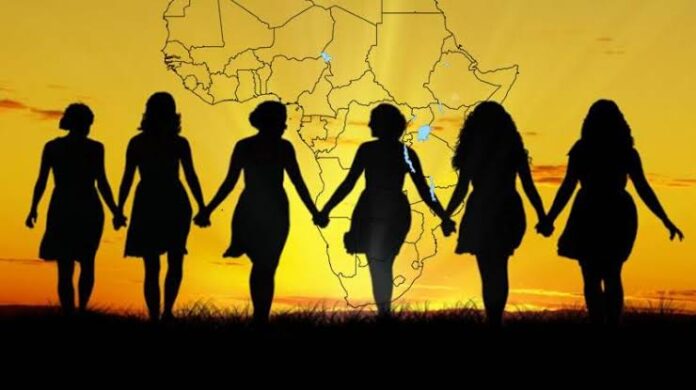
Her story, though personal, is not unique. Across the continent, millions of African women like Fatoumata are quietly and powerfully transforming their communities. They are the true builders of nations, often working behind the scenes, yet forming the bedrock of Africa’s resilience and progress.
History bears the imprint of formidable African women who shaped empires and led with vision. From Queen Amina of Zazzau to Yaa Asantewaa of the Ashanti Kingdom, women have been central figures in defending sovereignty, advancing knowledge, and uniting people. They were strategists, warriors, scholars, and spiritual leaders – proof that leadership is deeply rooted in the African woman’s genes.

The legacy lives on –African women are not just participants in nation building; they are leaders in every sense of the word: in governance, finance, education, agriculture, science, and the creative industries.
In Nigeria, for instance, women like Dr Ngozi Okonjo-Iweala, the current Director-General of the World Trade Organisation (WTO), exemplify the heights of influence and capacity. In Rwanda, the parliament boasts one of the highest female representations globally, showing that inclusive leadership is not just idealistic: it is achievable.
Across industries and nations, African women have consistently injected energy, innovation, and resilience into society. In business, women like Divine Ndhlukula in Zimbabwe have redefined what it means to lead in male-dominated industries such as security, while tech innovators like Rebecca Enonchong in Cameroon are building Africa’s digital infrastructure.
In politics, women such as Ellen Johnson Sirleaf, Africa’s first elected female president, have demonstrated that transformative leadership is possible when women are at the helm. In the arts, icons like Chimamanda Ngozi Adichie and Angélique Kidjo are not only exporting African culture globally but also using their platforms to advocate for equality and social justice.
Whether they are managing multinational companies, driving community health initiatives, or cultivating sustainable agriculture, African women are breathing life into the fabric of the continent.
The fact remains that it is impossible to talk about African economies without acknowledging the disproportionate contribution of women. From rural farmers sustaining food systems, to market traders powering local economies, to digital entrepreneurs reshaping tech spaces, African women are everywhere – innovating, adapting, and excelling.
Statistics reveal that they make up over 60% of the informal economy and are responsible for the majority of food production on the continent. Yet, despite these numbers, access to finance, land, healthcare, and education remains unequally distributed.
African women face a unique set of challenges. Access to finance, quality education, and healthcare remains disproportionately limited, especially in rural and underserved areas. Patriarchal norms and legal barriers continue to hinder women’s property rights, political participation, and career advancement. In many regions, gender-based violence, early marriage, and limited reproductive rights further undermine their potential.
Additionally, even where policies exist to protect women’s rights, enforcement is often weak. These challenges do not reflect a lack of ability but a lack of systems that enable women to thrive. Addressing these issues with intentional policies and sustained investment is critical, not only for the sake of justice, but for the overall development of African nations.
Recognising this imbalance, United Bank for Africa (UBA) has positioned female empowerment at the core of its strategy, not only as a social obligation, but as smart economics. Women-led businesses are among the most impactful and sustainable, and supporting these women creates ripple effects across families and communities.
In underserved communities where education for girls is often undervalued, these interventions are life-changing. They speak to the deeper philosophy of Africa by Africans, Africans solving African problems with African solutions.
Just like the UBA Chairman, Tony Elumelu, always says: Representation matters, not just for today, but for what it inspires in tomorrow’s leaders. UBA’s internal leadership structure reflects this belief, with a significant number of women on the UBA Board and in executive management. The bank keeps setting the standard for gender inclusion in African corporate leadership.
Nation-building is long-term. It is often quiet, sometimes thankless, but always impactful. And if there is one force that consistently pushes the continent forward, it is the African woman, tenacious, visionary, and deeply rooted in the soil of her homeland.
There is a need to celebrate women like Fatoumata in Mali, Mariam in Lagos teaching STEM to girls in her local school, Achieng in Nairobi building green tech for waste recycling, and thousands more leading revolutions in everyday spaces.
And as the continent marks Africa Day 2025, we are reminded that nation-building is not only about infrastructure or policy –it is about people. At the heart of this human engine are African women. This year, there should be a renewed collective call for Africa for Africans, Africa by Africans, and Partnering for Progress Together.
This is what Africa Day is about – owning our stories, lifting our people, and partnering to build a continent that thrives on its own terms.
We need to continue to champion the African woman, to give her the tools, the space, the capital, and the opportunity. Because when she rises, Africa rises with her, and when women thrive, nations rise, because the Future Is Female – and African.
*** written by Udeme Ekwere