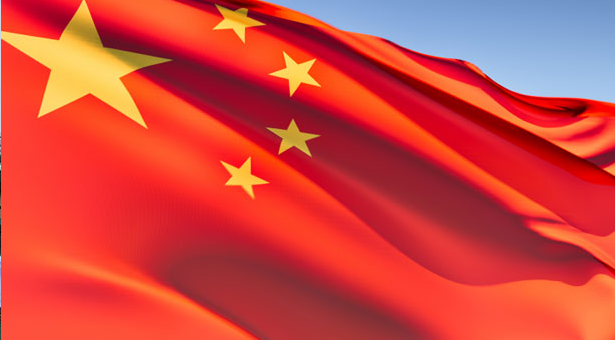
The China I returned from a fortnight ago, is a bullet train rifling through the universe towards unprecedented development. The Africans had through Egypt and Nubia, evolved and built the foundations of modern civilization. The Greeks who studied in Egyptian universities, had developed Western Thought and Civilization. The British, riding on the steam engine of the Industrial Revolution had become the dominant power, sailing round the world singing the Scottish, James Thomson’s 1740 song: “Rule Britannia! Britannia rule the waves. Britons never, never, never will be slaves.”
Then in the New Age, former British colony, America overtook Britain. Now in the Age of Globalization, China is like a rocket fired from the Third World, zooming through the Developed World.
The ideas which propelled Britain, rested on private ownership of land, capital and means of production. They promoted mass production, labour expropriation and unrestricted international trade. This constellation of ideas became known as capitalism.

Adam Smith, the 18th Century Scottish philosopher, economist and thinker is the ‘Father of Capitalism’ He argued that since the right to liberty, belief and property exists, there must be freedom of trade including: “the liberal system of free exportation and free importation” He however warned that capitalism has serious pitfalls which humanity must check. He explained: “Under capitalism the more money you have, the easier it is to make money, and the less money you have, the harder. Wherever there is great property there is great inequality. The affluence of the rich supposes the indigence of the many.” He identified businessmen as constituting the political leadership and warned that: “The interest of [businessmen] is always in some respects different from, and even opposite to, that of the public … Civil government, so far as it is instituted for the security of property, is in reality instituted for the defense of the rich against the poor, or of those who have some property against those who have none at all.”
The German philosopher and thinker, Karl Marx built on this thesis of Adam Smith. He theorized that the two groups of the rich and poor, were actually, classes; the rich, he characterized as the bourgeoisie (French word for the middle class) The poor, he called the proletariat (From the Latin word, proletarius) meaning people from the low or working class. He agreed with Adam Smith on the character of government and argued that for a just society, the proletariat must remove the rich and enthrone the government of the working people. This became known as Marxism. Ninety six years ago, the ruling Communist Party of China (CPC) was founded on the ideas of Karl Marx whose seminal book, DAS CAPITAL will be one 150 years old on September 14, 2017. Vladimir Ilyich Ulyanov (alias Lenin) led the Russian proletariat to put the ideas of Karl Marx into practice by overthrowing the Ruling class in what became known as the Bolshevik Revolution. That revolution will be 100 years on November 7, 2017 (October 25, under the former Julian Calendar)
On October 1, 1949, Mao Tes-tung (Chairman Mao) led the CPC which combined the ideas of Marx and Lenin to carry out the Chinese Revolution. After years of building its strength internally, China, led by Dieng Xiaping, like the morning flower, opened to the world. Despite its huge success and enormous wealth, China continues to run and operate on its core socialist principles including the public control of the commanding heights of the economy. It fixes it foreign exchange and interest rate rather than allow the invisible ‘market forces’ If a Chinese decides to build a bigger house, he forfeits the old one. Currently, it is trying to check the rising costs of property because it says it could have a negative effect.
IN CONSTANTLY REDISTRIBUTING WEALTH AMONGST THE POPULACE, CHINA INTRODUCED SUBSIDY PAYMENT FOR URBAN DWELLERS AND HAS VIRTUALLY WIPED OUT POVERTY AMONGST ITS 800 MILLION URBAN DWELLERS. The World Bank says in the last 27 years, the country lifted 730 million people from extreme poverty. China also has in place, rural pension which may help realize the plan to eradicate mass poverty within the next three years. China which has been adopted by the United Nations as the model for poverty reduction is responsible for three quarters of poverty reduction in the world.
One major means the Chinese adopted in eliminating poverty is attracting villagers in mountainous areas to come down. It does so by building wide, smooth roads and basic infrastructure, then inviting the villagers to relocate. I visited two of the over four hundred villages listed to have so relocated. Yangguang in the small city of Yiwu was a village in the mountains which was persuaded to relocate twenty years ago. The inhabitants seemed happy by their new environment with ownership of houses that would shame many in the Nigerian Upper Middle Class. The UN adopted Yangguang as the model for poverty eradication. It took time for the village of Xinxing to be persuaded to come down, it did ten years ago, and speaking with the villagers, you detect an infectious glow.
China’s political leaders and top civil servants in the directorate cadre and their families are not allowed to engage in private business or espouse any religion; religion remains strictly the individual’s private business. The type of parasitism in Nigeria where individuals are allocated oil blocs that belong to the country, is not possible in China. I found that many of the business leaders are members of the 89 million-member CPC.
The West and America have for centuries dominated the world. China had teamed up with Brazil, Russia, India and South Africa to establish the BRICS in an attempt to challenge this hegemony. But China has far more ambitious plans; building a broad economic movement mainly of developing and underdeveloped countries that aims at a fair globalization. Proposed on September 7, 2013 by President Xi Jinping during a visit to Kazakhstan, the Belt and Road Initiative which has attracted many countries, is more a people-to-people project and aims to connect first, the Asian, African and European continents by train, road and sea. Along the way, it plans to build industrial parks, promote trade and investment, currency stability system and bilateral currency swap. Not lost on me is that China is experiencing over-production, and this Initiative would open more global opportunities for it. China is already deploying its bilateral provision of infrastructure in many countries, to advance its diplomacy.
China is of course not a perfect society; all it has set out to do, is build a country based on social justice. Africa can follow China’s development path; like the Chinese philosopher, Lao Tzu said, “A journey of a thousand miles begins with a single step.”
Written by Owei Lakemfa.