
April 02, (THEWILL) – A prisoner is told, “If you tell a lie, we will hang you, and if you tell the truth, we will shoot you.”
What did the prisoner say to save himself?1
The prisoner can create a paradoxical statement that prevents the guards from carrying out either punishment consistently. By saying: “You will hang me.”

This creates a logical contradiction:
If the statement is true (they hang him), then he should have been shot for telling the truth.
If the statement is false (they don’t hang him), then he should have been hanged for lying.
Neither punishment can be applied without violating the original rule, forcing the guards to spare him.
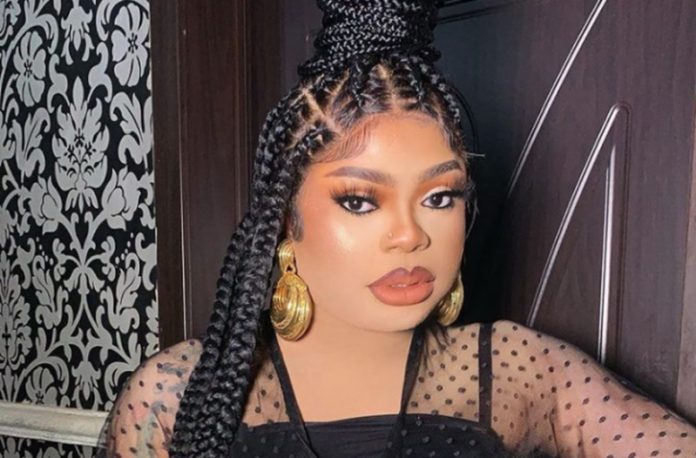
Nigeria’s social media sphere has seemingly “forgotten Bobrisky.” The self-styled transgender icon and socialite vanished after his arrest in April 2024 for naira abuse, leaving gossip mills momentarily silenced. Yet, whilst Bobrisky has receded from captivating the tabloids, a far deeper narrative unfolds—one that transcends celebrity scandal and speaks to Nigeria’s democratic resilience. To understand this, we must look beyond the superficial noise and interrogate history: How does Nigeria’s 25-year democratic journey since 1999 compare to the formative decades of even the world’s oldest democracies, like the United States? The answer reveals a story of paradoxical progress, where flaws coexist with strides forward, much like the prisoner’s clever escape from his captors’ logic.
The prisoner’s dilemma—“If you lie, we hang you; if you tell the truth, we shoot you”—is resolved through a statement that collapses the system’s logic. Nigeria’s democracy, too, operates within contradictions. Critics rightly highlight its imperfections: electoral violence, corruption, and inequality. Yet, like the prisoner’s paradox, Nigeria’s progress defies simplistic judgments. When measured against the early years of the United States (1776–1806), a period often romanticised as democracy’s “golden age,” Nigeria’s Fourth Republic emerges not as a failure but as a work in progress—messy, flawed, but undeniably alive.
Existential crises marked the United States’ first 30 years. The Articles of Confederation collapsed under economic chaos, Shays’ Rebellion exposed federal weakness, and the 1800 Jefferson-Burr electoral tie nearly triggered a civil war. Voting was restricted to white male landowners, and dissent was criminalised under the Alien and Sedition Acts. Progress was halting, violent, and exclusionary.
Nigeria’s Fourth Republic, by contrast, has maintained uninterrupted civilian rule since 1999—a significant feat in coup-prone West Africa. Despite flawed polls, four presidents have handed power to rivals, including the landmark 2015 defeat of Goodluck Jonathan, a first in Nigeria’s history. The Independent National Electoral Commission (INEC) has digitised voter registration, with 93 million Nigerians registered in 2023—a figure unimaginable in 1800s America, where voter participation rarely topped 10%. Nigeria’s system is imperfect, but its continuity amidst significant ethnic diversity (250+ groups) and extremist threats like Boko Haram underscores a resilience the early U.S. lacked.
In 1806, the U.S. economy heavily relied on enslaved labour and small-scale farming. Infrastructure was sparse, and innovation lagged. Nigeria, however, has leveraged globalisation to diversify beyond oil. Start-ups like Flutterwave and Paystack dominate African fintech, attracting $2 billion in investments since 2020. Lagos, once primarily known as a congested megacity, now increasingly rivals Nairobi and Cape Town as a burgeoning tech hub. Agricultural reforms have contributed to the revival of cocoa exports and a significant 60% reduction in rice imports since 2015. Whilst approximately 40% of the population still lives in poverty, Nigeria’s GDP has tripled since 1999, and the middle class has surged from 4% to 23% of the population.
This economic trajectory, despite its challenges, mirrors America’s 19th-century industrial rise but at an accelerated 21st-century pace. Where the U.S. needed a century to build extensive railways, Nigeria’s digital economy leapfrogs traditional developmental stages—mobile money adoption outpaces traditional banking infrastructure, and remote villages gain access to global markets via platforms like WhatsApp. The challenges of corruption and inequality are undeniable realities, but so is the tangible progress being made.
The U.S. Founding Fathers harboured fears of direct democracy, leading them to design a republic intended to be buffered from what they termed “mob rule.” Nigeria’s civil society, however, thrives on a vibrant, and at times chaotic, public sphere. Movements like #EndSARS (2020), which successfully forced the dissolution of a brutal police unit, showcase a digitally empowered populace actively demanding accountability. Courts have, on occasion, overturned fraudulent elections and even jailed previously untouchable figures—former governors, ministers, and indeed, Bobrisky, whose prosecution, however performative some may argue, signals a declining, albeit sometimes inconsistent, tolerance for impunity.
Contrast this with early America: the 1798 Sedition Act led to the jailing of critics of President Adams, whilst the Supreme Court’s infamous 1857 Dred Scott decision further entrenched the institution of slavery. Nigeria’s judiciary, whilst often criticised for its slowness, has no equivalent historical stain, despite its controversial rulings like the one in Imo State. Its media landscape, consistently ranked among the freest in West Africa, amplifies dissenting voices in ways America’s highly partisan 18th-century press could not.
Nigeria’s persistent struggles—corruption, terrorism, and ethno-religious strife—are significant but not unique in the historical context of nation-building. The early U.S. normalised slavery, engaged in the genocide of Native Americans, and ultimately endured a bloody Civil War. Nigeria’s Boko Haram insurgency and farmer-herder clashes are devastating, yet the state has persevered. Corruption, whilst undeniably rampant, is facing increasing challenges: the Economic and Financial Crimes Commission (EFCC) recovers billions annually, and whistle-blowers increasingly leverage social media to expose graft.
Even Bobrisky’s trial, despite criticisms of its selective nature, reflects this complex duality. His arrest for naira abuse, whilst questioned by some, ignited broader public debates about the importance of respecting the national currency—a discourse largely inconceivable in 1800s America, where financial elites often manipulated the system without significant consequence.
Bobrisky’s absence from the limelight symbolises a shifting Nigeria. His fame was largely predicated on generating outrage—reflecting a society grappling with evolving gender norms, ostentatious displays of wealth, and underlying moral hypocrisies. However, as Nigeria continues to mature as a democratic entity, a new generation is increasingly seeking substance over fleeting spectacle. They are less captivated by transient social media dramas and more focused on holding their leaders accountable. They are actively building tech start-ups, exercising their right to vote with their Permanent Voter Cards (PVCs), and demanding meaningful action on critical issues like climate change.
Nigeria’s democracy, much like America’s at its 25-year mark, remains raw and fragile. However, historical analysis teaches us that democracies often grow stronger through navigating crises. The U.S. required centuries to progressively expand civil rights; Nigeria, in just 25 years, has navigated coups, insurgencies, and global pandemics whilst simultaneously expanding its civic space.
The prisoner’s paradox aptly illustrates how established systems can be confounded by their inherent contradictions. Nigeria’s democracy, too, often defies pessimistic prophecies of imminent collapse. Its progress is rarely linear—more accurately characterised as a complex dance of setbacks and significant breakthroughs. Whilst the theatrics of figures like Bobrisky may fade from the immediate public consciousness, the enduring spirit, technological innovation, and inherent tenacity of Nigeria’s youth remain.
Where is Bobrisky? In the grand scheme of Nigeria’s unfolding story, he is but a fleeting footnote. The real and far more compelling narrative is that of Nigeria itself—a nation actively scripting its future, not in isolation, but as an integral part of democracy’s arduous and ongoing global march. As America’s own formative history vividly demonstrates, the path to lasting stability is a long and often challenging one. Yet, Nigeria, against considerable odds, is demonstrably walking that path. May Nigeria ultimately prevail!

Prince Charles Dickson PhD
