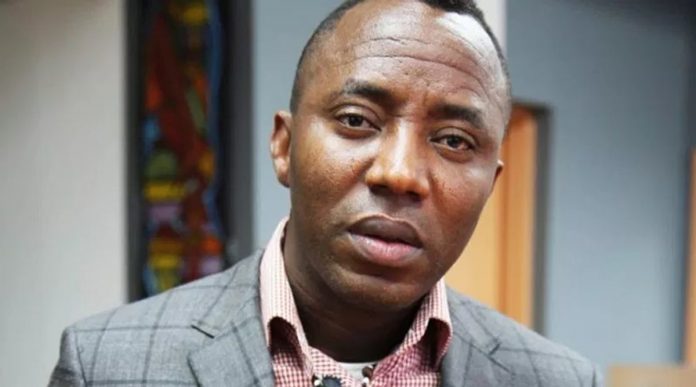
July 16, (THEWILL) — In a country where social unrest simmers just beneath the surface and public confidence in security institutions remains fragile, it’s hardly surprising that Omoyele Sowore, perennial presidential candidate and self-styled activist, has once again chosen the path of confrontation.
His latest crusade? A planned protest against the Nigeria Police Force, announced with his signature theatrical flair.
But beyond the noise and symbolism, there are compelling reasons why this protest is bound to fail, not just logistically, but also politically and morally.

To begin with, protests only succeed when they genuinely reflect the people’s pain.
While Nigerians certainly have valid concerns about police misconduct, Sowore’s planned protest lacks grassroots credibility.
Unlike the #EndSARS movement, which rose organically from the frustrations of everyday Nigerians, particularly the youth, this appears more like a top-down initiative designed to revive Sowore’s waning relevance than to deliver meaningful reform.
There is also a growing weariness among Nigerians over one-man activism disguised as mass resistance.
Over the years, Sowore has turned nearly every national grievance into a campaign prop, blurring the lines between political ambition and social advocacy.
The public is increasingly reluctant to rally behind performative activism that ends in empty headlines and no change.
Even more concerning is the timing. The Nigeria Police Force is currently undergoing a slow but necessary transformation.
Under Inspector General Kayode Egbetokun, institutional reforms have been rolled out focusing on welfare, training, professionalism, and human rights compliance.
The journey is far from perfect, but calling for mass protest just as the reforms begin to take root seems not only premature but dangerously counterproductive.
Instead of reinforcing reform or bridging gaps between law enforcement and the public, Sowore’s protest risks undoing fragile gains.
It sends a dangerous message—that confrontation is superior to collaboration, that chaos is more effective than consultation.
Moreover, Sowore’s past protest records don’t inspire confidence. From Revolution Now to countless Twitter tirades, his activism has been marked by legal pushback, poor turnout, and security clampdowns.
The Nigerian state will not sit idly by while what it views as an anti-police rally is staged, especially by a figure with a history of incendiary tactics.
Law enforcement will be on high alert, and the state has more than enough legal instruments to disrupt any action it sees as a threat to public order.
The national security context further complicates things. With banditry, terrorism, and communal conflicts stretching the capacity of security agencies, a disruptive protest could invite a disproportionate response—alienating even those who might agree with Sowore’s larger message.
Beyond that, Nigeria’s political landscape has changed. Today’s young Nigerians are more strategic, more policy-oriented, and more discerning about who speaks for them.
The 2023 elections marked a generational pivot: structure, organisation, and long-term planning now matter more than loud protests and grandstanding.
Unlike #EndSARS, which united diverse social groups under a clear, non-partisan goal, Sowore’s protest feels like a personal vendetta cloaked in activist garb.
Without a shared vision or collective ownership, it’s doomed to fizzle.
Sowore has cried wolf too many times. Nigerians have seen this act before. They’ve grown immune to the cycle of noise, arrest, hashtags, and silence. Activism without consistency and credibility is just noise.
Nigerians want results, not rhetoric. They want policy reforms, legislative advocacy, improved community policing, and strategic partnerships—not endless, ineffective protests.
In conclusion, Omoyele Sowore’s planned protest against the Nigeria Police may trend online or grab headlines, but it won’t move the needle.
Not because Nigerians are content with the police. Not because they’ve given up on reform. But because change requires more than outrage—it requires vision, patience, and trust-building leadership.
Sowore’s playbook belongs to a bygone era—one where spectacle was mistaken for substance. Nigeria has evolved. It’s time he did, too.
***Written by Adenike Ajanlekoko.
Adenike Ajanlekoko is the Publicity Director of the South West Youth Alliance and writes from Lagos State.